Search


06 Apr 2026
Search
06 Apr 2026

Please allow ads as they help fund our trusted local news content.
Kindly add us to your ad blocker whitelist.
If you want further access to Ireland's best local journalism, consider contributing and/or subscribing to our free daily Newsletter .
Support our mission and join our community now.
To continue reading this article, you can subscribe for as little as €0.50 per week which will also give you access to all of our premium content and archived articles!
Alternatively, you can pay €0.50 per article, capped at €1 per day.
Thank you for supporting Ireland's best local journalism!


Astronauts on the first manned Moon mission in more than 50 years have travelled deeper into space than any human has gone before.
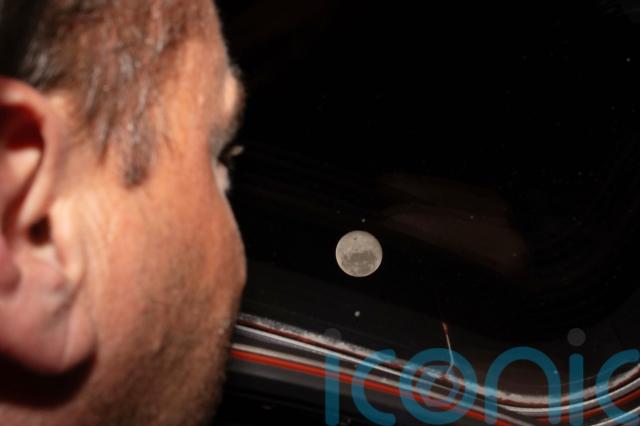
The historic record was set by the Artemis II crew during a lunar flyby that will take them on the far side of the natural satellite not visible from Earth, plunging them into darkness and a short communications blackout with mission control in Florida.
The four-strong team of three Americans and one Canadian overtook the distance milestone of 248,655 miles (400,171 kilometres) held by the Apollo 13 crew for 56 years.
They are expected to ultimately reach about 252,760 miles (406,778 kilometres) from Earth, smashing the record by some 4,100 miles (6,600 kilometres).
The astronauts aboard the Orion spacecraft were woken on the sixth day of the mission with a recorded message from late Apollo 8 and 13 astronaut Jim Lovell.
The former commander, who died last year aged 97, said: “Welcome to my old neighbourhood.
“It’s a historic day, and I know how busy you’ll be, but don’t forget to enjoy the view… good luck and Godspeed.”
During the flyby, the crew will use professional cameras to take detailed photos of the moon’s surface, usually hidden from view, and enjoy the rare sight of their distant home planet.
Artemis II is using the same manoeuvre that Apollo 13 did after its infamous “Houston, we’ve had a problem” incident, when an oxygen tank explosion ended hope of a moon landing and became a fight for survival.
The capsule is on a trajectory that will take it around the Moon and then use its gravity for a “free” return journey.
It will take the crew four days to get back, with a splashdown in the Pacific on Friday.
The Goonhilly Earth Station, near Helston, in Cornwall, has been helping track the flight.
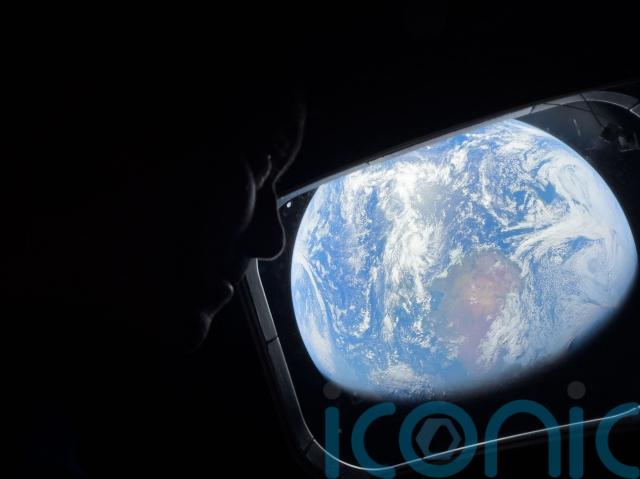
While the astronauts will not touch down on the Moon, the mission paves the way for a future lunar landing and also lays the foundation to send a crew to Mars.
The launch previously had to be postponed by two months because of hydrogen fuel leaks and clogged helium lines.
The last time Nasa sent astronauts to the Moon was as part of the Apollo 17 mission in 1972.
The agency is seeking to return a crew to the lunar surface by 2028, before China does in about 2030.

Subscribe or register today to discover more from DonegalLive.ie
Buy the e-paper of the Donegal Democrat, Donegal People's Press, Donegal Post and Inish Times here for instant access to Donegal's premier news titles.
Keep up with the latest news from Donegal with our daily newsletter featuring the most important stories of the day delivered to your inbox every evening at 5pm.

This publication supports the work of the Press Council of Ireland and Office of the Press Ombudsman, and our staff operate within the Code of Practice of the Press Council. You can obtain a copy of the Code, or contact the Council, at www.presscouncil.ie, Lo-call 1800 208 080 or email: info@presscouncil.ie.