Search


07 Apr 2026
Search
07 Apr 2026

Please allow ads as they help fund our trusted local news content.
Kindly add us to your ad blocker whitelist.
If you want further access to Ireland's best local journalism, consider contributing and/or subscribing to our free daily Newsletter .
Support our mission and join our community now.
To continue reading this article, you can subscribe for as little as €0.50 per week which will also give you access to all of our premium content and archived articles!
Alternatively, you can pay €0.50 per article, capped at €1 per day.
Thank you for supporting Ireland's best local journalism!


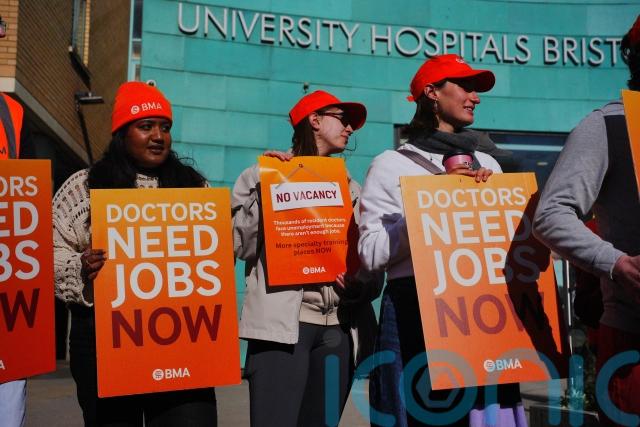
Opposition to resident doctor strikes among the public is growing, new polling suggests, after it emerged that the cumulative cost of resident doctor strikes has exceeded £3 billion in three years.
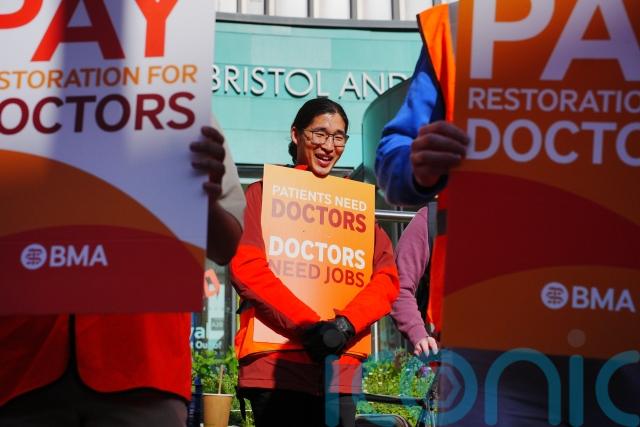
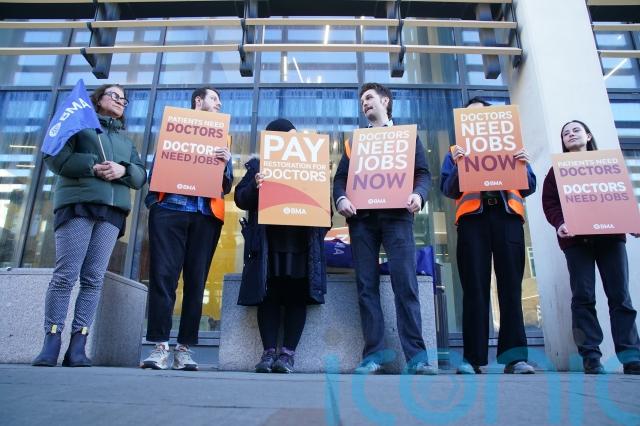
Resident doctors, formerly known as junior doctors, began their 15th strike since 2023 on Tuesday.
New YouGov polling, conducted on Tuesday, found that 55% of British adults oppose resident doctors going on strike.
Some 37% said they support the action, according to the survey of 4,385 adults in Great Britain.
Similar polling in March revealed that 53% of the public opposed the action and 38% said they supported it.
In April 2023 a third (33%) of people said they opposed strike action while around three in five (59%) said they supported it.
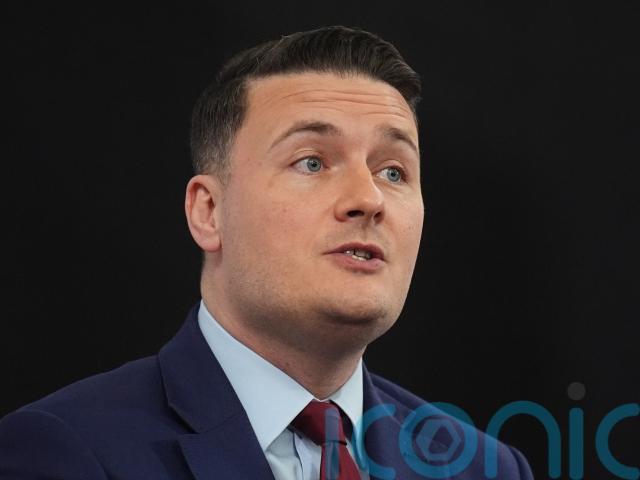
Health Secretary Wes Streeting said: “People and patients are understandably fed up.
“I share their frustration, given the BMA have walked away from a ground-breaking deal, which would have seen their members 35.2% better off on average than four years ago, reimbursed mandatory exam fees worth thousands of pounds, and created up to 4,500 new speciality training places.
Today, doctors across the country are out taking strike action.
This dispute is driven by an entirely avoidable crisis on jobs and pay. Right now, resident doctors are facing a real terms pay cut and growing unemployment. They need jobs and fair pay for the work they do.
No… pic.twitter.com/6QI2t5KECx
— The BMA (@TheBMA) April 7, 2026
“That’s alongside record investment in the NHS, and legislation we’ve passed to prioritise UK graduate doctors for new jobs.”
He added: “I want to reassure the public that the NHS is still here for you this week, and my thanks go out to all those NHS workers hard at work covering gaps.
“My priority is now protecting patients and staff by minimising disruption to the health service.”
It comes after Mr Streeting said the Government could have built a “few” hospitals or slashed NHS waiting lists faster with the £3 billion.
He also said that the health service would “be able to sustain and withstand strike action on an ongoing basis”.
Asked by LBC’s Nick Ferrari what could have been done with those funds, Mr Streeting said: “We can do a few hospitals for that.
“We could have run far more appointments and procedures with that money to cut waiting lists faster. Those would probably be the things that I would have chosen to prioritise.”
Mr Streeting went on: “We will be able to sustain and withstand strike action on an ongoing basis, if that’s the way the BMA take things.
“But that comes in enormous waste of time, money and potential. You know, the NHS is finally moving in the right direction. It is on the road to recovery.”
The latest six-day strike, which began at 7am on April 7, will cost the NHS £300 million, the Health Secretary said.
Meanwhile, the minister said that additional training places for resident doctors are not needed for the NHS or for patients.
Mr Streeting said the public would think he had “lost the plot” if he pressed ahead with the offer of 1,000 additional training places for resident doctors after they rejected the Government’s deal on pay and jobs.
The proposal included a 4.9% increase in average basic pay, which, according to Mr Streeting, would have left resident doctors 35.2% better off than four years ago.
NHS officials have said the strike – the joint longest walkout by resident doctors – will be “difficult” but urged patients to come forward as normal.
Rory Deighton, director of acute and ambulance care at the NHS Alliance, which represents NHS trusts, said: “Once again health leaders are working flat out with frontline staff to minimise the impact of another strike, but it’s bitterly disappointing that it’s come to this.
“We are hearing from members that the timing of this walkout, coming off the back of an extended bank holiday weekend, has compounded the usual pressures you would expect to see at this time.
“That’s adding to disruption and delays for patients and is hard to take for the many staff who have given so much to maintain standards of care throughout this long and damaging dispute.
“There’s also a heavy cost both to patients and financially for the health service in ensuring cover and rescheduling work that should have gone ahead.
“However, it’s important that patients don’t put off any care they need and come to scheduled appointments unless they’ve been advised not to.”
Speaking outside St Thomas’ Hospital, Dr Jack Fletcher, chairman of the BMA resident doctors committee, told the Press Association: “Nobody’s asking for anything in one go, and nobody’s asking for anything overnight. But the Government does need to move.
“We recognise there’s been progress on a number of fronts, but ultimately the Government needs to move on both jobs and pay to resolve these disputes for not only doctors, but crucially for patients as well.
“What the Health Secretary is asking us to reconsider now is essentially will you bake in more real terms pay cuts, not just this year, but for future years?
“So we’re more than willing to reconsider, or meet the Health Secretary and reconsider any offer that he puts to us. However, we can’t accept further real terms pay cuts.”
He added: “I’m genuinely very sorry and it is regrettable that we’re having to take this action and I’m very sorry to patients, however, we feel like we had no choice.”
We offered to bring forward 1,000 specialty training places for resident doctors. The BMA rejected this.
It's now impossible to get those places live in time for this year.
This doesn't mean fewer doctors. Resident doctors will still be in post, treating patients. pic.twitter.com/eNRKjQKjhq
— Department of Health and Social Care (@DHSCgovuk) April 4, 2026
Elsewhere, hundreds of BMA staff are also on strike in an ongoing row over pay.
The 48-hour walkout started on Monday.
On the dispute, Mr Streeting told BBC Breakfast: “Here’s the real kicker, having rejected this deal because the pay offer apparently wasn’t good enough at 4.9%, the BMA are offering their own staff 2.75% on affordability grounds.
“Why does the BMA think they can get away with telling their own staff they only get 2.75% because that’s all they can afford, whilst rejecting a 4.9% offer because that’s all the Government can afford.
“It seems to me the BMA aren’t willing to put their hands in their own pockets to pay their own staff, but they’re very happy to try and fleece your viewers, asking them to pay even more in tax than I think this country can afford.”
And last week it emerged that senior medics will also be balloted on industrial action after ministers announced a 3.5% pay award.
Simultaneous ballots of consultants and specialists, associate specialists and speciality (SAS) doctors will run from May 11 until July 6.

Subscribe or register today to discover more from DonegalLive.ie
Buy the e-paper of the Donegal Democrat, Donegal People's Press, Donegal Post and Inish Times here for instant access to Donegal's premier news titles.
Keep up with the latest news from Donegal with our daily newsletter featuring the most important stories of the day delivered to your inbox every evening at 5pm.

This publication supports the work of the Press Council of Ireland and Office of the Press Ombudsman, and our staff operate within the Code of Practice of the Press Council. You can obtain a copy of the Code, or contact the Council, at www.presscouncil.ie, Lo-call 1800 208 080 or email: info@presscouncil.ie.