'We have a rule of law in this country' - Army deployed across Ireland amid fuel protests
Search


09 Apr 2026

Please allow ads as they help fund our trusted local news content.
Kindly add us to your ad blocker whitelist.
If you want further access to Ireland's best local journalism, consider contributing and/or subscribing to our free daily Newsletter .
Support our mission and join our community now.
To continue reading this article, you can subscribe for as little as €0.50 per week which will also give you access to all of our premium content and archived articles!
Alternatively, you can pay €0.50 per article, capped at €1 per day.
Thank you for supporting Ireland's best local journalism!


Britain leading an international push to ensure the future security of the Strait of Hormuz shipping lane shows a change in the “mindset” of Nato members away from an “unhealthy” dependence on the US, the head of the military alliance has said.
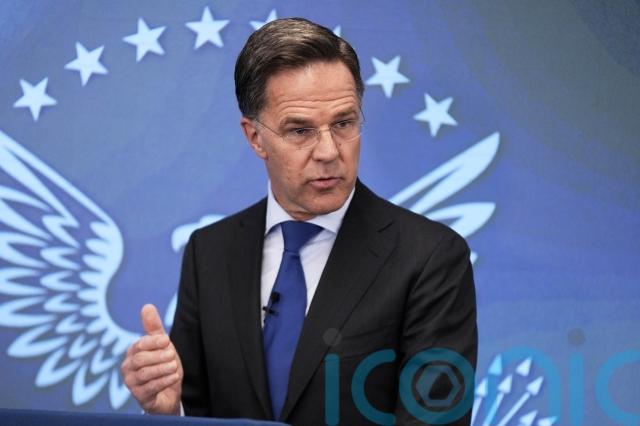
Mark Rutte said a commitment by members, including the UK, to hike defence and security spending should also reassure America that it had “capable partners” ready to step up.
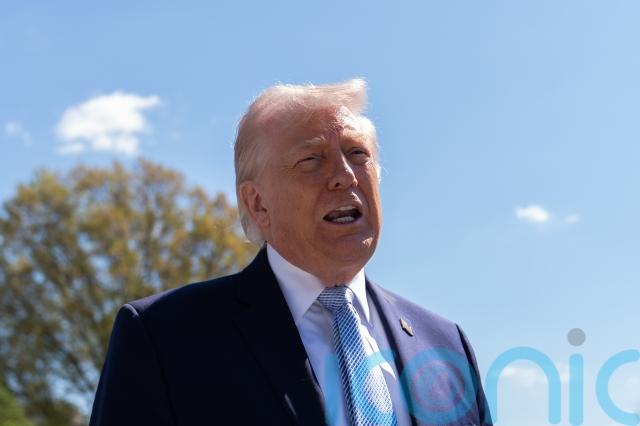
Nato’s secretary-general made his comments during a speech in Washington, following a “frank and open discussion” with Donald Trump, who has been highly critical of the organisation’s response to the Iran war.
Following the talks, the US president made clear his continued displeasure with a post on his Truth Social platform, in which he said: “NATO WASN’T THERE WHEN WE NEEDED THEM, AND THEY WON’T BE THERE IF WE NEED THEM AGAIN.”
He has previously raised the possibility of the US quitting Nato, branding it a “paper tiger”.
The refusal by the UK to be drawn into the offensive against Iran and to restrict the use of its bases by American forces has put a severe strain on relations between Sir Keir Starmer and Mr Trump.
The US president has previously complained about the contributions paid by fellow Nato members, arguing America has been carrying other countries financially.
Ahead of the US-Iran ceasefire being announced, the UK chaired a meeting of military planners from a coalition of more than 30 nations examining long-term measures to secure the strait, which had been all but closed by Tehran during the conflict, causing a shock to global trade.
Following the truce, a joint statement by world leaders, including Sir Keir, said they would “contribute to ensuring freedom of navigation in the Strait of Hormuz”.
While these efforts were dismissed by the White House, Mr Rutte said it demonstrated a shift, where allies were willing to share the burden with the US.
He said: “The United Kingdom is leading a coalition of countries that are aligning the military, the political and economic tools that will be required to ensure free passage through the Strait of Hormuz.
“This is evidence of a mindset shift.”
Mr Rutte also pointed out it was the British Prime Minister “who took the leadership role here”.
He added: “Right now, European allies play leading roles in Nato’s operations to secure our eastern flank, the Baltic Sea and the Arctic, acting rapidly to field personnel, aircraft, naval vessels and more, to bolster our security in the face of emerging threats in these regions.”
Mr Rutte went on: “Thanks to the mindset shift that is happening, I see a true partnership on the transatlantic horizon.”
He also insisted European allies had provided “a massive amount of support” to the US during the Iran conflict and delivered on their commitments.
While some “were a bit slow”, Mr Rutte added: “In fairness, they were also a bit surprised. To maintain the element of surprise for the initial strikes, President Trump opted not to inform allies ahead of time, and I understand that.
“But what I see when I look across Europe today is allies providing a massive amount of support, basing, logistics and other measures to ensure the powerful US military succeeds in denying Iran a nuclear weapon and degrading its capacity to export chaos.
“Nearly without exception, allies are doing everything the United States is asking. They have heard and are responding to president Trump’s request.”
Following the Cold War, an “unhealthy co-dependence” developed among Nato members with an assumption that the US would tackle any threats, argued Mr Rutte, but Mr Trump had reminded Europe “that values must be backed by hard power”.
He said it was the president who “drove” allies at last year’s Nato summit to commit to investing 5% of GDP annually on defence and security by 2035.
He added: “This will help to ensure that the Nato of the future is not an alliance in which allies are unhealthily dependent on the United States, and in which United States knows that it has capable partners who are ready, willing and able to defend our freedom and security.”
Mr Rutte went on: “Allies recognise, and I recognise, we are in a period of profound change in the transatlantic alliance.
“Europe is assuming a greater and fairer share of the task of providing for its conventional defence, and from that, there will be no going back, and nor should there be.
“This is a move from unhealthy co-dependence to a transatlantic alliance grounded in true partnership.”

Subscribe or register today to discover more from DonegalLive.ie
Buy the e-paper of the Donegal Democrat, Donegal People's Press, Donegal Post and Inish Times here for instant access to Donegal's premier news titles.
Keep up with the latest news from Donegal with our daily newsletter featuring the most important stories of the day delivered to your inbox every evening at 5pm.

This publication supports the work of the Press Council of Ireland and Office of the Press Ombudsman, and our staff operate within the Code of Practice of the Press Council. You can obtain a copy of the Code, or contact the Council, at www.presscouncil.ie, Lo-call 1800 208 080 or email: info@presscouncil.ie.