Search


14 Apr 2026
Search
14 Apr 2026

Please allow ads as they help fund our trusted local news content.
Kindly add us to your ad blocker whitelist.
If you want further access to Ireland's best local journalism, consider contributing and/or subscribing to our free daily Newsletter .
Support our mission and join our community now.
To continue reading this article, you can subscribe for as little as €0.50 per week which will also give you access to all of our premium content and archived articles!
Alternatively, you can pay €0.50 per article, capped at €1 per day.
Thank you for supporting Ireland's best local journalism!


The UK has suffered the sharpest cut to growth forecasts of the largest global economies after the conflict in the Middle East raised the prospect of a “major energy crisis”, according to the International Monetary Fund (IMF).
The influential financial body said the spike in energy prices caused by the war will help push UK inflation towards 4% – double the Bank of England’s inflation target – and contribute to higher costs for households.
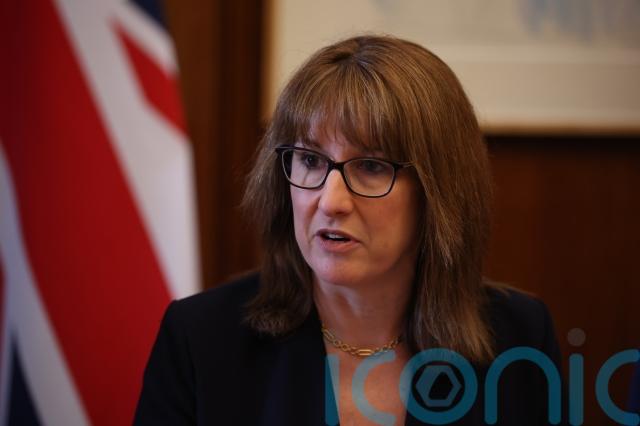
Chancellor Rachel Reeves said the war “will come at a cost to the UK” following the IMF’s gloomy outlook.
Nevertheless, the IMF said the war and weaker UK economic growth late last year were both to blame for the downgrade in its growth forecasts.
It came as the organisation said on Tuesday that a global recession could be a “close call” in a severe scenario, which would see further turmoil linked to the conflict.
The IMF laid out its first set of forecasts since the global economy was rocked by the conflict between US-Israeli and Iranian forces since the end of February.
Oil and gas prices have surged higher in the following weeks, with energy production and transporting impacted by attacks on facilities and the blockade of the Strait of Hormuz.
In its latest economic outlook, the IMF said UK economic growth will be weaker than previously expected as a result.
It said UK gross domestic product (GDP) is set to grow by 0.8% in 2026, with this improving to 1.3% in 2027.
IMF Growth Forecast 2026: 🇺🇸 US: 2.3% 🇩🇪 Germany: 0.8% 🇫🇷 France: 0.9% 🇮🇹 Italy: 0.5% 🇪🇸 Spain: 2.1% 🇬🇧 UK: 0.8% 🇯🇵 Japan:0.7% 🇨🇦 Canada: 1.5% 🇨🇳 China: 4.4% 🇮🇳 India: 6.5% 🇷🇺 Russia: 1.1% 🇧🇷 Brazil: 1.9% 🇲🇽 Mexico: 1.6% 🇸🇦 Saudi Arabia: 3.1% 🇳🇬 Nigeria: 4.1% 🇿🇦… pic.twitter.com/hs7T3ebF1v
— IMF (@IMFNews) April 14, 2026
However, as recently as January, the IMF had predicted 1.3% growth in 2026 and 1.5% in 2027.
The UK economy grew by 1.4% last year after being recently revised higher by the Office for National Statistics (ONS).
The downgrade to the 2026 forecast is the largest of the G7 group of the world’s richest economies, with the IMF indicating that weak UK growth late last year was also to blame.
IMF economic counsellor Pierre-Olivier Gourinchas said: “There are two main reasons for the downgrade.
“The first is the war in the Middle East, but there was also the fact that there was a relatively weak performance in the UK economy for the second half of last year, and the way the numbers are computed, there is then a carry-over.”
Forecasts also showed that UK inflation – which reflects the increase in the price of goods and services – is expected to average 3.2% this year and 2.4% next year.
Previous forecasts had pointed towards 2.5% inflation for 2026, indicating that it would drop to the 2% target level in 2027.
The IMF said that UK inflation is likely to move towards 4% in the coming months before easing back, amid hopes that there will be a resolution to the conflict later in the year.
Experts expect higher energy prices, more expensive fuel and increased food inflation to contribute to elevated inflation following the conflict.
Petrol prices have already risen 19% since the conflict started, with costs of diesel rising by more than a third.
Unemployment is also expected to worsen further, with the IMF predicting it will rise to 5.6% in 2026 from 4.9% last year.
Politicians, including Chancellor Rachel Reeves, and central bank bosses, such as the Bank of England’s Andrew Bailey, are in Washington for the latest IMF annual meeting.
The IMF said in its outlook that “the global economy is threatened with being thrown off course” by the outbreak of war.
Mr Gourinchas said in a foreword alongside the latest report that the global outlook has “abruptly darkened”, knocking the global economy off a steady growth trajectory.
He added: “The closure of the Strait of Hormuz and serious damage to critical production facilities in a region central to global hydrocarbon supply could cause an energy crisis on an unprecedented scale.”
Mr Gourinchas also told reporters: “The closing of the Strait of Hormuz and serious damage to critical energy facilities in the Middle East has raised the prospect of a major energy crisis, should a durable solution not be found soon.”
The IMF said a severe scenario for the conflict over the coming months would mean that global growth would be reduced by 1.3 percentage points in 2026.
War in the Middle East has tested the resilience of markets, which have been broadly orderly so far. But financial stability risks are elevated and should not be underestimated. See our blog: https://t.co/pMMXGK7oPn pic.twitter.com/LpRvvllIOx
— IMF (@IMFNews) April 14, 2026
“This would mean a close call for a global recession (growth rate below 2%), which has happened only four times since 1980, with the latest two occasions corresponding to the global financial crisis and the Covid-19 pandemic,” according to the report.
Ms Reeves said: “The war in Iran is not our war but it will come at a cost to the UK.
“These are not costs I wanted but they are costs we will have to respond to.
“I have vowed that my economic approach to this crisis will be both responsive to a changing world and responsible in the national interest, keeping inflation and interest rates in check to protect households and businesses.”
Shadow chancellor Sir Mel Stride said: “Being handed the biggest downgrade in the G7 is a clear verdict on Rachel Reeves’ choices – and she’s got no-one to blame but herself.
“Her ‘plan’ to keep costs down has left us with the highest inflation in the G7, with businesses closing and the cost of living skyrocketing.”

Subscribe or register today to discover more from DonegalLive.ie
Buy the e-paper of the Donegal Democrat, Donegal People's Press, Donegal Post and Inish Times here for instant access to Donegal's premier news titles.
Keep up with the latest news from Donegal with our daily newsletter featuring the most important stories of the day delivered to your inbox every evening at 5pm.

This publication supports the work of the Press Council of Ireland and Office of the Press Ombudsman, and our staff operate within the Code of Practice of the Press Council. You can obtain a copy of the Code, or contact the Council, at www.presscouncil.ie, Lo-call 1800 208 080 or email: info@presscouncil.ie.