Search


15 Apr 2026
Search
15 Apr 2026

Please allow ads as they help fund our trusted local news content.
Kindly add us to your ad blocker whitelist.
If you want further access to Ireland's best local journalism, consider contributing and/or subscribing to our free daily Newsletter .
Support our mission and join our community now.
To continue reading this article, you can subscribe for as little as €0.50 per week which will also give you access to all of our premium content and archived articles!
Alternatively, you can pay €0.50 per article, capped at €1 per day.
Thank you for supporting Ireland's best local journalism!


The NHS has an “appalling culture of medical misogyny”, the Health Secretary has said as he set out a range of measures to stop women from being “ignored, gaslit, humiliated and disrespected”.
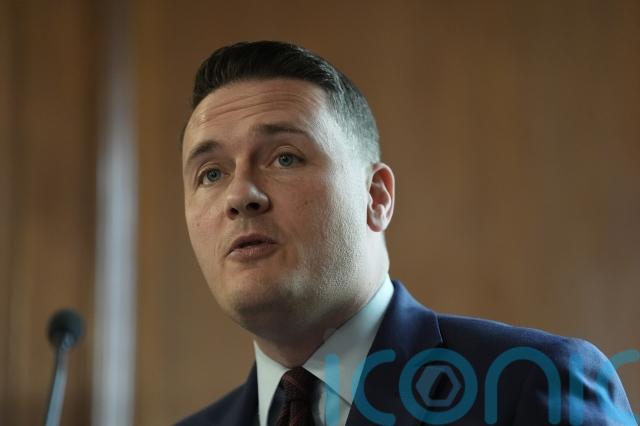
Wes Streeting said the NHS has a “problem with basic, everyday sexism” as he launched a renewed Women’s Health Strategy.
The Cabinet minister said the NHS is “failing women and girls on even the most basic measures of healthcare”.
He said the new strategy is the Government’s response to these “injustices” and set out how the NHS will “finally listen with respect, dignity and compassion to the voices and the choices of every woman and every girl, every time”.
The strategy highlights how women’s health outcomes “have gone in the wrong direction”, including a drop in female life expectancy, and how only the wealthiest third of women can expect to remain in good health until retirement.
NHS performance data “shows that the NHS fails women badly”, the authors said, highlighting how gynaecology waiting times have more than doubled in eight years, how misdiagnosis of heart attack is more common among women and how women with endometriosis are, on average, only diagnosed with the painful condition a decade after first seeing a doctor with symptoms.
It also highlights issues in cancer care and reviews into poor maternity care.
“At the heart of these challenges is a systematic failure to listen to women,” the authors wrote.
“If our approach to health and care does not work for all women – 51% of the population – then simply put: it does not work.”
Writing the foreword to the report, Mr Streeting said: “The NHS has a problem with basic, everyday sexism and an appalling culture of medical misogyny.
“Being ignored, gaslit, humiliated and disrespected are all-too-common experiences for far too many women.
“Though founded on principles of equality, the NHS is failing women and girls on even the most basic measures of healthcare.
“Our mission is to dismantle the culture and ingrained behaviours that allow medical misogyny to fester and grow.”
The strategy says there are “abundant examples of women who report their pain being normalised or dismissed”.
The Department of Health and Social Care said that reforms will be put in place to tackle “outdated and misogynistic practices” around pain relief for invasive procedures and women will be given powers to contribute to the withholding of payments for services if they have a poor experience.
The report sets out 117 action points and makes several pledges on how care will improve, including:
– Shorter waits for gynaecology care.
– A pledge to “eliminate the diagnostic odyssey facing women” with conditions such as endometriosis and fibroids.
– Fewer painful procedures without informed consent or a choice of pain relief.
– Easier access to contraception and abortion care.
– A promise to be “listened to and taken seriously at the first time of asking” and fewer cases of repeating the same story.
– A new £1 million menstrual education programme to ensure girls are better equipped to recognise the difference between healthy and unhealthy periods.
Ministers also pledged to improve healthy life expectancy in the poorest parts of the country to at least 61 years from 50.5 years.
And while the report acknowledges that a health strategy cannot resolve all issues contributing to the rising levels of working-age women out of work due to long-term sickness, it does pledge that the Government “will do more to prevent the health conditions that cause economic inactivity”.
Officials said that in order to help reduce variation in how GPs listen to and respond to women, GP patient survey data will be used to inform a quality improvement programme within two years.
The report also vows to improve safety in maternity services after a number of failings have been highlighted in hospitals across the country.
In June last year the Health Secretary announced an independent review of maternity care to understand why “so many women and babies are receiving unacceptable levels of care”.
The new strategy document says it is “important that this work continues without restriction” so the report does not go too deeply into the issue other than pledging to “improve safety in maternity services”.
The authors conclude: “We have heard far too many examples of women not being listened to.
“The NHS has a problem with medical misogyny and we will not shirk this challenge.”
Dr Sue Mann, NHS England’s clinical director for women’s health, said: “There are still parts of society and the health system that are trapped in outdated thinking.
“Too many women are still dismissed for serious symptoms that impact on every part of their lives, whether that’s menstrual pain, irregular periods, or hot flushes and brain fog that affect many women experiencing the menopause.
“The renewed women’s health strategy will build significantly on the work the NHS has been doing to ensure women are heard and get the specialist care they need.”
Dr Alison Wright, president of the Royal College of Obstetricians and Gynaecologists, welcomed plans for “tackling the gynaecology waiting list crisis, raising menstrual health awareness and supporting sustainable abortion services”.
Janet Lindsay, chief executive of the charity Wellbeing of Women, said: ”We fully support the emphasis on listening to women’s voices when planning individual care, and in designing wider systems for diagnosis, treatment, and support.”
Emma Cox, chief executive Endometriosis UK, said: “Diagnosis times for endometriosis are going up, not down and it’s now taking an average of nine years, four months – rising to 11 years for diverse ethnic communities – which is totally unacceptable.
“Leadership and decisive actions will be vital to drive these times down.”

Subscribe or register today to discover more from DonegalLive.ie
Buy the e-paper of the Donegal Democrat, Donegal People's Press, Donegal Post and Inish Times here for instant access to Donegal's premier news titles.
Keep up with the latest news from Donegal with our daily newsletter featuring the most important stories of the day delivered to your inbox every evening at 5pm.

This publication supports the work of the Press Council of Ireland and Office of the Press Ombudsman, and our staff operate within the Code of Practice of the Press Council. You can obtain a copy of the Code, or contact the Council, at www.presscouncil.ie, Lo-call 1800 208 080 or email: info@presscouncil.ie.