Search


15 Apr 2026
Search
15 Apr 2026

Please allow ads as they help fund our trusted local news content.
Kindly add us to your ad blocker whitelist.
If you want further access to Ireland's best local journalism, consider contributing and/or subscribing to our free daily Newsletter .
Support our mission and join our community now.
To continue reading this article, you can subscribe for as little as €0.50 per week which will also give you access to all of our premium content and archived articles!
Alternatively, you can pay €0.50 per article, capped at €1 per day.
Thank you for supporting Ireland's best local journalism!


The Duke of Sussex wafted smoke as part of an Aboriginal ceremony at the Australian War Memorial in Canberra.
Harry took part in the smoking ceremony at the site’s For Our Country memorial, which recognises and commemorates the military service and experiences of Aboriginal and Torres Strait Islander peoples and their legacy.
The duke laid a wreath at the memorial and took part in the ceremony, where he wafted smoke from a fire pit containing burning leaves as members of the public watched on and police patrolled the site.
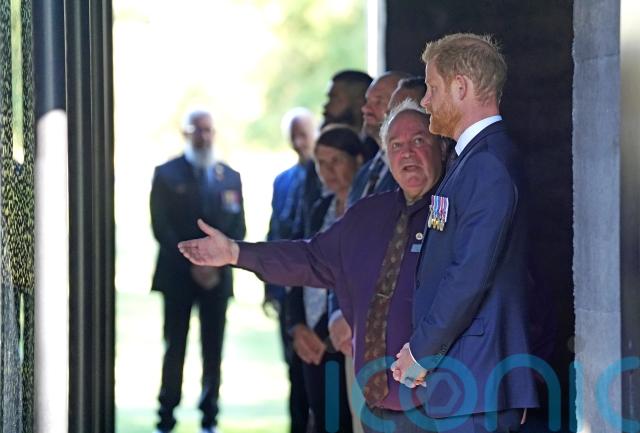
After being welcomed by Indigenous veterans on Wednesday afternoon, Harry listened to a Welcome to Country address by the memorial’s Indigenous liaison officer Michael Bell, a Ngunnawal/Gomeroi man.
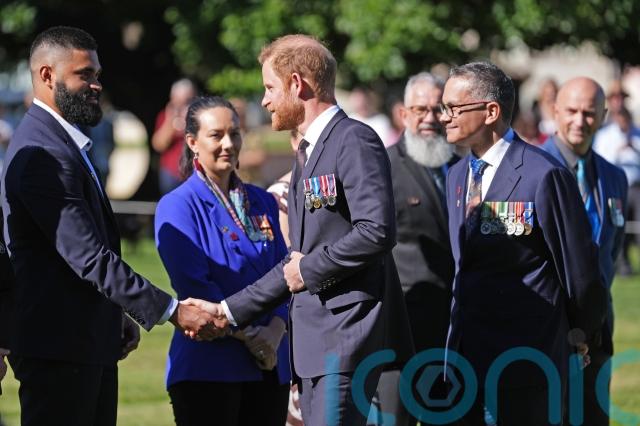
Wearing a suit and his military medals, the duke was shown a gallery dedicated to Captain Reg Saunders, who in 1945 became the first Indigenous Australian to be commissioned as an officer into the Australian Army.
Harry, who was not accompanied by the Duchess of Sussex, travelled from Melbourne to Canberra in the front row of a commercial Qantas flight, to the surprise of cabin crew who looked delighted to have the duke on board.
Stunned members of the public waved and said “Hi Harry” as he left Canberra Airport on a gloriously sunny day in the capital.
Following a reinterpretation of the legal constraints on the Australian War Memorial’s scope, the Australian Frontier Wars between Indigenous Australians and mostly British settlers are to be included for the first time as part of a gallery planned to open in 2028.
The first conflicts of the Frontier Wars took place several months after the landing of the First Fleet in January 1788, and the last conflicts occurred in the early 20th century, following the federation of the Australian colonies in 1901.
The memorial had previously argued that frontier fighting in Australia was outside its charter, as it did not involve Australian military forces.
This position received criticism from historians, who argued that such fighting should be commemorated at the memorial because it involved large numbers of Indigenous Australians and paramilitary or government-backed colonial forces.
In September 2022, the memorial’s outgoing chairman, Brendan Nelson, announced it would work towards “a much broader, much deeper depiction and presentation of the violence committed against Indigenous people”.
The Australian War Memorial is the nation’s principal memorial to those who have served and died in war and on operational service, combining a shrine, museum, and archive.
Opened in 1941, it stands as both a place of remembrance and a centre for preserving Australia’s military history.
The Memorial features galleries dedicated to the world wars, with more than 1.4 million Australians serving in the armed forces across the First and Second World Wars.
More than 60,000 Australians died in the First World War, including thousands in the Gallipoli campaign to seize control of the Dardanelles from the Ottoman Empire.
Around one million Australians served in the Second World War, representing a massive mobilisation from a relatively small population.
All personnel of the Australian Defence Force swear an oath or make an affirmation of allegiance to the King in his role as the Australian monarch, pledging to serve Australia and, in the oath, to “resist His enemies”.

Subscribe or register today to discover more from DonegalLive.ie
Buy the e-paper of the Donegal Democrat, Donegal People's Press, Donegal Post and Inish Times here for instant access to Donegal's premier news titles.
Keep up with the latest news from Donegal with our daily newsletter featuring the most important stories of the day delivered to your inbox every evening at 5pm.

This publication supports the work of the Press Council of Ireland and Office of the Press Ombudsman, and our staff operate within the Code of Practice of the Press Council. You can obtain a copy of the Code, or contact the Council, at www.presscouncil.ie, Lo-call 1800 208 080 or email: info@presscouncil.ie.