Search


15 Apr 2026
Search
15 Apr 2026

Please allow ads as they help fund our trusted local news content.
Kindly add us to your ad blocker whitelist.
If you want further access to Ireland's best local journalism, consider contributing and/or subscribing to our free daily Newsletter .
Support our mission and join our community now.
To continue reading this article, you can subscribe for as little as €0.50 per week which will also give you access to all of our premium content and archived articles!
Alternatively, you can pay €0.50 per article, capped at €1 per day.
Thank you for supporting Ireland's best local journalism!


The war against Iran was a “mistake” and has not made the world a safer place, Rachel Reeves said as she stepped up her criticism of the US-Israeli military action.
The Chancellor, speaking at an event in Washington, said diplomatic talks to prevent Iran from getting a nuclear weapon should have been allowed to continue.
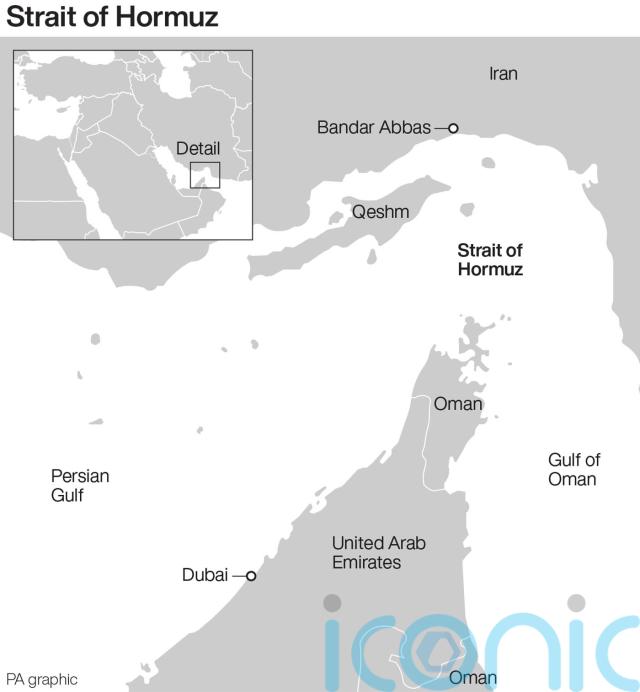
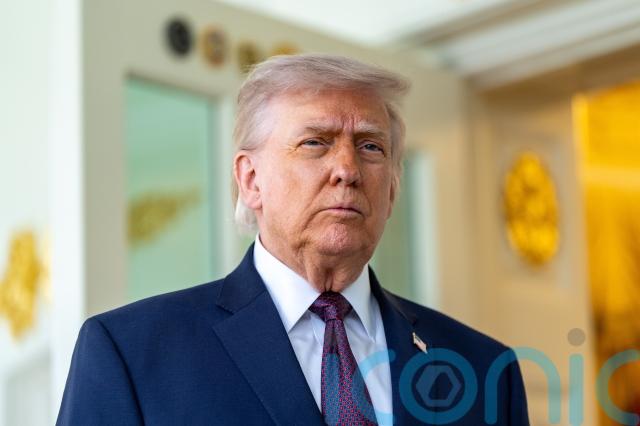
She criticised US President Donald Trump’s decision to go to war, which has resulted in Iran retaliating with strikes against Gulf states and the closure of the vital oil and gas shipping route through the Strait of Hormuz.
Speaking at a CNBC event in the US capital, Ms Reeves said: “The question is not whether you like or dislike the Iranian regime – I strongly dislike the Iranian regime – but how to achieve the change that you want to achieve.”
She said Iran does not currently have a nuclear weapon and the best way to prevent the Tehran regime from getting one is through diplomacy rather than conflict.
The Chancellor added: “There was a diplomatic channel open, conversations, formal discussions were happening.
“I think it was a mistake to end those and to enter into conflict, because I’m not convinced that we are safer today than we were a few weeks ago.”
She said there is confusion over the aims of Mr Trump’s military campaign.
“If the aim is to now to get diplomatic negotiations, well, they were already happening before the conflict started,” Ms Reeves said.
“We’ve never been clear about what the goal of this conflict is, which is why the impacts in our economy, but also here in the US economy and around the world, and particularly for our allies in the Gulf, like Saudi and Qatar and the UAE, are so immense.”
Prime Minister Sir Keir Starmer and French President Emmanuel Macron will lead talks on an international effort to reopen and secure the Strait of Hormuz once the fighting stops.
Ms Reeves said: “We are willing to play our part, but the Strait of Hormuz was open, there was no tolling, a few weeks ago.
“Yes, we want to get back there, but I’m not convinced that this conflict has made the world a safer place.”
The Chancellor argued the best economic policy now for the UK and globally is de-escalation of the Middle East crisis and the reopening of the strait.
She said: “Because our growth will be higher and inflation will be lower if this conflict comes to an end, and that can only happen through de-escalation. So that’s why it is so important to families and businesses in the UK.”
Ms Reeves added: “A lot of long-term damage has also been done to oil and gas facilities in the Middle East, so even if this conflict does come to an end tomorrow, there are longer term impacts of it, and until capacity and refining capability is back up at full strength.
“Damage has been done far beyond the duration of this conflict, but the sooner it can de-escalate, and we get back to the diplomatic negotiations, which were happening before the conflict began, the better for the global economy, including here in the US.”
Pressed over transatlantic tensions caused by the Iran war, Ms Reeves pointed out “friends are allowed to disagree on things”.
She said: “The US-UK relationship is long-lasting and enduring, and our King is going to be here in Washington in just a couple of weeks’ time.
“I think that is just one example after President Trump’s state visit, second unprecedented state visit to the UK last September, I think shows the deep ties on so many levels between our two great countries.
“Friends are allowed to disagree on things. That is natural, whether it is two friends that have known each other for many years, or two countries that have had this special relationship for many decades.
“Actually, when you are friends, you can speak your truth and deliver that clear message, and that’s what we are doing in the UK.”
While in Washington, Ms Reeves is set to meet US treasury secretary Scott Bessent, who has said “a small bit of economic pain” caused by the Iran war was worth it to prevent Tehran getting a nuclear weapon.
But Ms Reeves and 10 allies said the impact of the war on inflation and economic growth will linger even if an end to the conflict is found.
In a joint statement with international counterparts, the Chancellor cautioned against knee-jerk responses to the cost-of-living crisis triggered by the war.
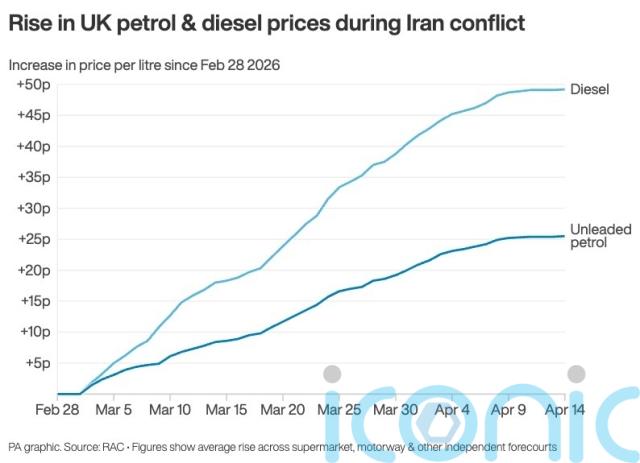
Household energy bills are forecast to increase later this year because of the conflict pushing up global oil and gas prices, while motorists are already feeling the impact of higher costs at the pump.
Ms Reeves has signalled that any energy bill help later this year will be targeted at the poorest households, rather than a universal bailout of the type offered by Liz Truss when she was prime minister in the wake of the Russian invasion of Ukraine.
For motorists, fuel duty remains frozen, but Ms Reeves is under pressure to scrap a series of increases set to begin in September.
“We are committed to managing the economic response to and recovery from this crisis in a co-ordinated, responsible and responsive way,” Ms Reeves and finance ministers from Ireland, Australia, Japan, Sweden, the Netherlands, Finland, Spain, Norway, Poland and New Zealand said.
The statement said the US-Israeli strikes and Iran’s subsequent retaliation had caused “unacceptable loss of life and significant disruption to the global economy and financial markets” and welcomed the ceasefire.
The statement said: “We call for a swift and lasting negotiated resolution to the conflict, and a return to free and safe transit through the Strait of Hormuz, that mitigates impacts on growth, energy prices and living standards, in particular for the poorest and most vulnerable.”
But they said any further escalation of the conflict would pose “serious additional risks to global energy security, supply chains, and economic and financial stability”.
“Even with a durable resolution of the conflict, impacts on growth, inflation and markets will persist,” they said.

Subscribe or register today to discover more from DonegalLive.ie
Buy the e-paper of the Donegal Democrat, Donegal People's Press, Donegal Post and Inish Times here for instant access to Donegal's premier news titles.
Keep up with the latest news from Donegal with our daily newsletter featuring the most important stories of the day delivered to your inbox every evening at 5pm.

This publication supports the work of the Press Council of Ireland and Office of the Press Ombudsman, and our staff operate within the Code of Practice of the Press Council. You can obtain a copy of the Code, or contact the Council, at www.presscouncil.ie, Lo-call 1800 208 080 or email: info@presscouncil.ie.