Search


16 Apr 2026
Search
16 Apr 2026

Please allow ads as they help fund our trusted local news content.
Kindly add us to your ad blocker whitelist.
If you want further access to Ireland's best local journalism, consider contributing and/or subscribing to our free daily Newsletter .
Support our mission and join our community now.
To continue reading this article, you can subscribe for as little as €0.50 per week which will also give you access to all of our premium content and archived articles!
Alternatively, you can pay €0.50 per article, capped at €1 per day.
Thank you for supporting Ireland's best local journalism!


The Covid-19 vaccine programme in the UK was an “extraordinary feat” but the payment scheme for people injured by the jabs must be urgently reformed, the public inquiry has found.
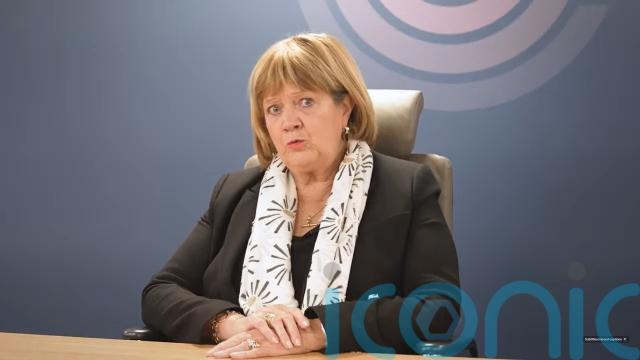
In her report into the Covid pandemic, inquiry chairwoman Baroness Heather Hallett praised the fact the UK was a world leader in biomedical sciences, which set it in good stead for developing and rolling out vaccines at scale.
However, she said the Government must now act urgently to reform the scheme for payments to the “small minority” of people damaged by the vaccines, almost doubling maximum payouts to at least £200,000, from an upper limit of £120,000 at present.
She said the threshold for people to be 60% disabled to receive payment should be scrapped, saying it leaves “those people with a significant injury that affects how they live, but does not meet the 60% threshold, with nothing”.
The report added: “This part of the scheme should be reformed as a matter of urgency, and consideration should be given to a graduated threshold scheme.”
Lady Hallett also called for the Government to deal with the worldwide problem of vaccine hesitancy and urged greater consideration of why some groups of people are unwilling or unable to access jabs.
The UK Covid-19 Public Inquiry report out on Thursday into vaccines and therapeutics is the fourth report into the handling of the pandemic.
In her foreword to 274-page study, Lady Hallett said even though some people were harmed by vaccines, there were effective systems in place to assess the safety and efficacy of the jabs during the pandemic.
“These included rigorous trials and regulatory approval processes and the taking of prompt action when any problem was identified,” she said.
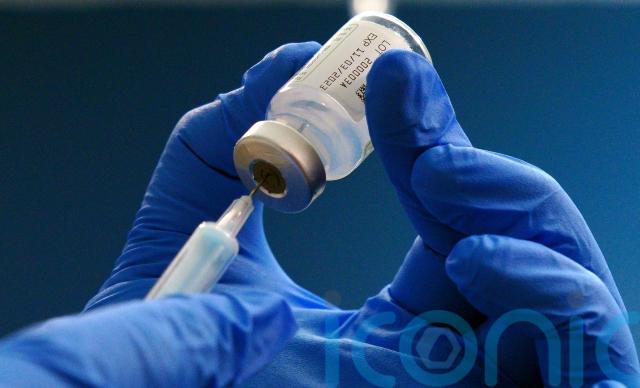
By March 2023, 475,000 lives had been saved by jabs in England and Scotland, and millions of lives were saved worldwide.
“On any objective analysis, the risks of the Covid-19 vaccines were carefully managed and were far outweighed by the benefits,” she added.
She continued: “The vaccination programme was an extraordinary feat.
“Effective vaccines were developed, produced and delivered to the majority of the population in record time.”
Nevertheless, Lady Hallett said the inquiry “acknowledges the suffering of those for whom vaccines led to serious injury or death”, adding such cases were rare.
She said: “I heard moving evidence of representatives from the vaccine injured and bereaved core participant groups, who have often felt silenced, ignored or treated as vaccine deniers….
The Chair of the UK Covid Inquiry, Baroness Hallett has made a statement on her findings and recommendations.
View the statement in full by visiting our YouTube channel 📺 – link in our bio 👇 pic.twitter.com/ahbMDn36nW
— UK Covid-19 Inquiry (@covidinquiryuk) April 16, 2026
“A sufficiently supportive Government scheme must be in place to help such people and their loved ones.
“I have found that the current scheme for those who have been injured as a result of having a vaccine – the vaccine damage payment scheme – is not sufficiently supportive and requires reform.”
The inquiry noted the one-off tax-free payment of £120,000 available through the Vaccine Damage Payment Scheme was last revised in 2007.
Lady Hallett said it is clear “the current maximum payment of £120,000 is too low”, adding: “It should be raised at least to come into line with inflation.
“An inflationary adjustment, as at December 2025, would lead to a payment in excess of £200,000.”
She said the Government must then subsequently apply annual increases in line with inflation and “introduce multiple levels of payment, commensurate with the degree of injury suffered”.
1/ The Chair of the UK Covid-19 Inquiry, Baroness Heather Hallett, has today published her fourth report. pic.twitter.com/z5nD2wqpz1
— UK Covid-19 Inquiry (@covidinquiryuk) April 16, 2026
Of those who had been notified of a decision about whether their Covid-19 vaccine damage application had been accepted by the end of November 2024, the rate of those found eligible for payment was under 2%.
On vaccine hesitancy, the inquiry found the lower uptake in poorer communities and among some ethnic minority groups was predictable and could have been better planned for.
Lady Hallett said: “Action is needed in all four nations to build trust within communities with lower vaccine uptake and to make vaccines more accessible to them, before the next pandemic hits.”
She said lessons could also be learned on prioritising different groups – such as pregnant women and unpaid carers – for vaccines, saying communication during the pandemic “caused confusion in some groups”.
And she said compulsory jabs for care home workers, a policy which was later scrapped, did not have wide support and “is likely to have contributed to alienation and increased vaccine hesitancy in some groups”.
Turning to the search for vaccines to tackle Covid, Lady Hallett noted the fact the UK government took an “at-risk” approach to funding them, which then paid off.
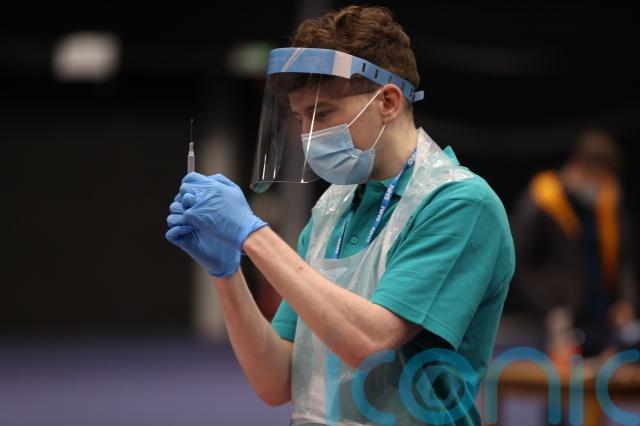
“It was willing to invest substantial sums of money in a wide range of potential vaccines and drugs, knowing that not all of them would be successful. All those involved deserve great credit,” she said.
However, she remarked that when the UK entered the pandemic, “one weakness” was a “lack” of manufacturing capacity for vaccines and treatments.
She pointed out that in 2018, a £65 million grant was made to the Vaccine and Innovation Centre, which had been created with the aim of enhancing UK vaccine production and manufacture.
But the probe was told that because of a “very considerable amount of dithering”, the centre was not operational when the pandemic hit.
Overall, Lady Hallett made five recommendations, including reforming the Vaccine Damage Payment Scheme; giving regulatory bodies access to healthcare records for safety monitoring for new vaccines and therapeutics; establishing a “pharmaceutical expert advisory panel” to ensure the UK is well placed to develop, procure and manufacture vaccines and new treatments, and producing targeted vaccine strategies and better monitoring of vaccine uptake and delivery.
By the end of December, the inquiry had spent just under £204 million, including on set-up, chairwoman and lawyer costs, and holding public hearings in all four nations of the UK.
The Government said it has spent £111 million in responding to the inquiry, covering legal advice and staffing costs.
Reacting to the inquiry, Kate Scott, representing the Vaccine Injured and Bereaved UK (VIBUK) group, said: “It is an uncomfortable truth, but vaccine injury and death are part of the pandemic story.
“Today’s recommendations somewhat recognises that reality.
“We welcome this as an important step towards fairness for those who suffered devastating consequences.”
A Government spokesperson welcomed the findings on the vaccine rollout, and said the “achievements reflect the strength of our world-leading life sciences sector, the universal public health system in each of the four nations which allowed whole-population delivery of vaccines, and the extraordinary dedication of health and care staff”.
They added: “The Government thanks Baroness Hallett and her team for their thorough work on these serious issues.
“We will consider its findings and recommendations in detail and respond in due course and remain committed to learning vital lessons from the Covid-19 Inquiry and to strengthen our preparedness for the future.”

Subscribe or register today to discover more from DonegalLive.ie
Buy the e-paper of the Donegal Democrat, Donegal People's Press, Donegal Post and Inish Times here for instant access to Donegal's premier news titles.
Keep up with the latest news from Donegal with our daily newsletter featuring the most important stories of the day delivered to your inbox every evening at 5pm.

This publication supports the work of the Press Council of Ireland and Office of the Press Ombudsman, and our staff operate within the Code of Practice of the Press Council. You can obtain a copy of the Code, or contact the Council, at www.presscouncil.ie, Lo-call 1800 208 080 or email: info@presscouncil.ie.