Search


17 Apr 2026
Search
17 Apr 2026

Please allow ads as they help fund our trusted local news content.
Kindly add us to your ad blocker whitelist.
If you want further access to Ireland's best local journalism, consider contributing and/or subscribing to our free daily Newsletter .
Support our mission and join our community now.
To continue reading this article, you can subscribe for as little as €0.50 per week which will also give you access to all of our premium content and archived articles!
Alternatively, you can pay €0.50 per article, capped at €1 per day.
Thank you for supporting Ireland's best local journalism!


Assisted dying will be further delayed in the Isle of Man after the UK Government requested changes to the legislation amid concerns the law could be subject to legal challenge over a lack of safeguards for vulnerable people.
The Isle of Man Tynwald became the first parliament in the British Isles to pass assisted dying legislation, approving their Bill in March 2025.
As a Crown Dependency, for primary legislation on the Isle of Man to get royal assent and therefore formally become law, the Lord Chancellor – currently David Lammy – is required to make a recommendation that it should do so.

But the Ministry of Justice (MoJ) has declined to grant royal assent at this stage on the basis that key safeguards including around coercion have not been written directly into the Bill.
The Isle of Man government said: “It is therefore the UK Government’s view that these matters must be addressed directly on the face of the Bill to comply with the European Convention on Human Rights.”
On Friday, the politician who brought the Bill said he was “disappointed that the Lord Chancellor has decided not to recommend the Bill for royal assent at this time”.
Alex Allinson, a Member of the House of Keys (MHK) and a GP, told the Press Association he “regrets that the Ministry of Justice has waited a year to get this back to us, it would have been an awful lot easier to have done it last year”.
He said the specific safeguards in question would have been dealt with through codes of practice for doctors and nurses implemented after the Bill became law, and before an assisted dying service was up and running.
But he said that, following the UK Government’s feedback, those will now be added to the Bill “so it’s very, very clear what the roles and responsibilities are”.
It likely three new clauses will be put forward to be added to the Bill, he said.
These are likely to cover safeguarding vulnerable adults, ensuring it would be a statutory responsibility for staff involved in assisted dying to refer such applicants to the Isle of Man’s existing independent safeguarding board if they had concerns.
Changes might also include heightened scrutiny in cases involving people with disabilities such as communication problems, and in cases where there is evidence of family conflict or disagreement concerning the decision to apply for an assisted death.
He told PA: “These are technical amendments to make sure that all the safeguards that Tynwald have already agreed are at the forefront of the Bill, to get it to full royal assent, rather than being brought in later during the implementation phase.
“So a lot of these aspects were going to be part of the Bill anyway but this is all about making absolutely certain that the Bill is as safe as possible and complies with the best standards of international human rights law.”
Mr Allinson said he aims to bring amendments to Tynwald “in the very near future” to address the requested changes, in the hope the Bill can be sent back to the MoJ before July.
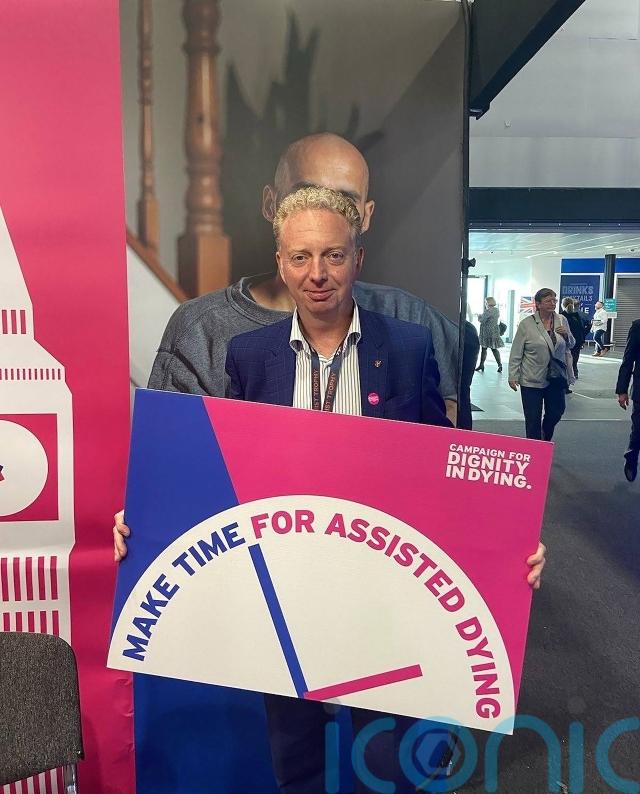
It is thought the implementation period for an assisted dying service on the Isle of Man could be up to two years after royal assent.
The latest development comes exactly a week ahead of the expected fall of proposed assisted dying legislation at Westminster.
The Terminally Ill Adults (End of Life) Bill – which proposed allowing adults in England and Wales, with fewer than six months to live, to apply for an assisted death subject to the approval of two doctors and an expert panel – is scheduled for its last sitting of this Parliament next Friday.
It is expected to fall at the end of that day’s debate in the House of Lords, having run out of time to pass in this session of Parliament amid a record number of amendments having been tabled by peers.
It is the furthest any such legislation on assisted dying has progressed through Parliament at Westminster, and supporters of a law change have accused unelected peers of blocking a Bill which had been voted through by MPs in the Commons.
The accusation has been rejected by those in the Lords who insist they have simply been doing their job of scrutinising legislation which they argue is not safe in its current form.
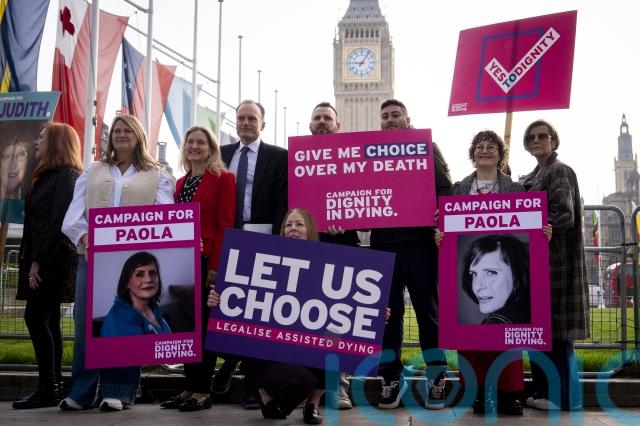
Elsewhere in the British Isles, the States Assembly in Jersey, which is also a Crown Dependency and so will need to await royal assent – passed its draft Assisted Dying Law in February this year.
A freedom of information request by the Press Association late last year showed that between March when the Isle of Man Bill was passed and early December, the MoJ had written to the island’s Government about the legislation 12 times.
The MoJ has been contacted for comment.

Subscribe or register today to discover more from DonegalLive.ie
Buy the e-paper of the Donegal Democrat, Donegal People's Press, Donegal Post and Inish Times here for instant access to Donegal's premier news titles.
Keep up with the latest news from Donegal with our daily newsletter featuring the most important stories of the day delivered to your inbox every evening at 5pm.

This publication supports the work of the Press Council of Ireland and Office of the Press Ombudsman, and our staff operate within the Code of Practice of the Press Council. You can obtain a copy of the Code, or contact the Council, at www.presscouncil.ie, Lo-call 1800 208 080 or email: info@presscouncil.ie.