Search


19 Apr 2026
Search
19 Apr 2026

Please allow ads as they help fund our trusted local news content.
Kindly add us to your ad blocker whitelist.
If you want further access to Ireland's best local journalism, consider contributing and/or subscribing to our free daily Newsletter .
Support our mission and join our community now.
To continue reading this article, you can subscribe for as little as €0.50 per week which will also give you access to all of our premium content and archived articles!
Alternatively, you can pay €0.50 per article, capped at €1 per day.
Thank you for supporting Ireland's best local journalism!


Campaigners have warned lawmakers against “rushing into” a ban on social media for under-16s after it emerged the Government has carried out no internal modelling of its key impacts.
The Department for Science, Innovation and Technology (DSIT) revealed it has “not done any modelling or analysis” on the impact such measures would have in areas such as mental health, access to news and how young people might bypass any restrictions.
In response to a Freedom of Information (FOI) request by the Press Association, the department said internal modelling had not been carried out because “clear, agreed evidence does not currently exist”.
Pressure has been building for the Government to consider a ban on social media for under-16s amid mounting concern over its impact on their health and safety.
Urging the Government not to rush into a social media ban for under-16s, Andy Burrows, chief executive of Molly Rose Foundation, said: “Parents are rightly demanding action from Government to protect children online but they want solutions to be effective and safe.
“It is crucial the Government follows all the available evidence about an under-16 social media ban before rushing into it and the consultation provides an opportunity to do this.”
MPs recently rejected another bid by the Lords to bar youngsters immediately from accessing the platforms.
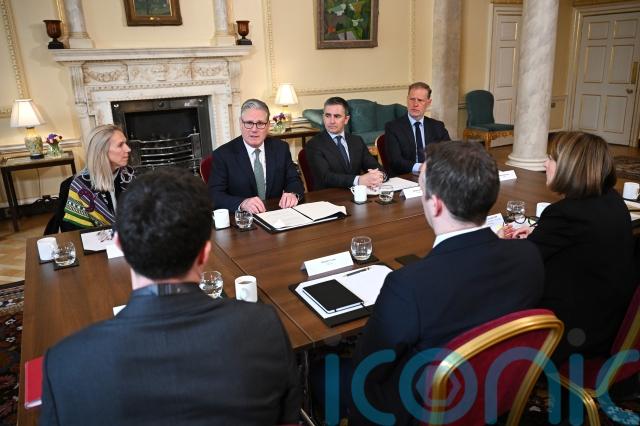
Sir Keir Starmer hauled tech chiefs into Downing Street on Thursday to say the risks faced by children on social media “can’t go on like this”, but could not guarantee action by the summer to crack down on harms.
He added: “In a world in which children are protected, even if that means access is restricted, that is preferable to a world where harm is the price of participation.”
The Government is piloting a range of measures aimed at limiting young people’s social media use, including app bans, time limits and overnight curfews, as part of efforts to improve online safety.
Around 300 teenagers are taking part in a six-week trial testing different restrictions, with ministers also considering options including an Australia-style ban on under-16s.
The trials are intended to help build the evidence base for potential policy changes.
In its response, the department pointed to existing research led by University of Cambridge psychologist Professor Amy Orben – but her report highlights gaps in the evidence base.
The report, which was published in January, highlights a “lack of high-quality causal evidence linking children’s mental health and wellbeing and their use of digital technologies”.
The report reads: “High quality experimental studies that test whether reducing adolescent social media use improves mental health would improve our understanding of whether there is a negative causal relationship.”
DSIT’s response to the FOI request also confirmed the department holds internal research and policy material on the issue, but said it was being withheld under Freedom of Information laws which cover the formulation of government policy.
For too long, tech companies have been allowed to operate in ways that put young people at risk.
As Ian Russell, Molly’s dad and Chair of Molly Rose Foundation, says, this must change. pic.twitter.com/LRtDkoRtau
— Molly Rose Foundation (@mollyroseorg) April 9, 2026
The department said disclosure at this stage could lead to “misunderstanding or misinterpretation of preliminary evidence” and risk inhibiting “full and frank analysis” by officials.
Mr Burrows said “stronger regulation” was needed to tackle “addictive and harmful” parts of the online world.
He said: “There is limited evidence that bans work and of the balance between the benefits and unintended consequences that may result.
“Our polling of Australian teens shows it offers a false sense of safety that will leave parents with new challenges and won’t provide the protection they are crying out for.
“Instead, we need stronger regulation that tackles addictive and harmful design at source and provides real protection for children across social media, gaming and AI.”
A DSIT spokesperson said: “We commissioned Dr Amy Orben to examine the evidence on the effects of social media on children, and published her findings earlier this year, because building the strongest possible evidence base is central to how we approach this issue.
“This is precisely why we are running a national consultation, a national conversation, and pilots of specific interventions.
“We are seeking to understand both the views of the public – particularly parents and children – and the impact of interventions before any decisions are taken.
“We will also be advised by an expert academic panel to ensure that our response is guided by the best evidence available.”

Subscribe or register today to discover more from DonegalLive.ie
Buy the e-paper of the Donegal Democrat, Donegal People's Press, Donegal Post and Inish Times here for instant access to Donegal's premier news titles.
Keep up with the latest news from Donegal with our daily newsletter featuring the most important stories of the day delivered to your inbox every evening at 5pm.

This publication supports the work of the Press Council of Ireland and Office of the Press Ombudsman, and our staff operate within the Code of Practice of the Press Council. You can obtain a copy of the Code, or contact the Council, at www.presscouncil.ie, Lo-call 1800 208 080 or email: info@presscouncil.ie.