Search


22 Apr 2026
Search
22 Apr 2026

Please allow ads as they help fund our trusted local news content.
Kindly add us to your ad blocker whitelist.
If you want further access to Ireland's best local journalism, consider contributing and/or subscribing to our free daily Newsletter .
Support our mission and join our community now.
To continue reading this article, you can subscribe for as little as €0.50 per week which will also give you access to all of our premium content and archived articles!
Alternatively, you can pay €0.50 per article, capped at €1 per day.
Thank you for supporting Ireland's best local journalism!


Hay fever sufferers now endure symptoms for up to two weeks longer than they would have done in the 1990s, according to a new review.
Climate change has “prolonged the pollen season”, increasing the amount of time people with hay fever are exposed to allergens, according to the Lancet Countdown in Europe 2026 report.
Hay fever occurs when a person is allergic to pollen from trees, grass and weeds.
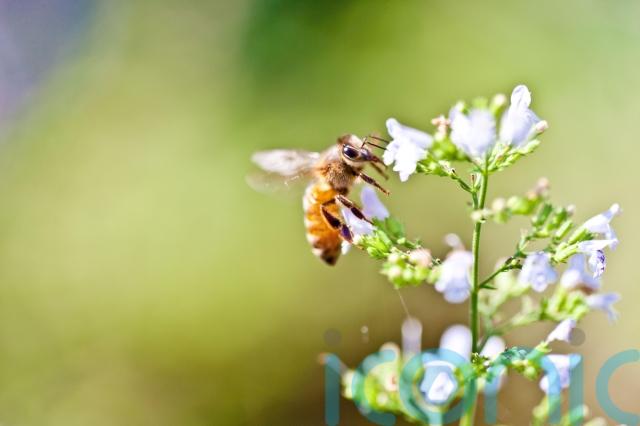
Symptoms are usually worse when the weather is warm, humid and windy – when the pollen count is at its highest – which is usually between late March and September.
The new report, published in The Lancet Public Health, says climate change is shifting the flowering season of plants that release allergenic pollen.
They examined changes in the timing and intensity of birch, alder and olive pollen season.
Researchers found an earlier season start of one to two weeks was detected for all allergenic trees between 2015 and 2024, compared with 1991 to 2000.
“Climate change has prolonged the pollen season by one to two weeks, increasing the duration of exposure for people with allergic rhinitis,” the authors said.
Commenting, Anne Biggs, deputy head of clinical services at Allergy UK, said: “Hay fever impacts millions of people in the UK each year.
“While for some their symptoms can be mild, for many their hay fever symptoms impacts their quality of life.
“Research and understanding into the timing and length of the different pollen seasons is vital to support clinicians to ensure treatment and management of allergic conditions can be optimised.
“Details on longer pollen seasons is essential in the understanding and management of allergic conditions associated with pollens and air quality.
“It is an opportunity to raise awareness on not only the impact of hay fever, but the treatment options available to ensure people with pollen allergies can live symptom free.”

Dr Samantha Walker, director of research and innovation at Asthma and Lung UK, said: “A longer pollen season will bring more misery for people with hay fever.
“We know from a recent survey that nearly half of people with asthma and more than a quarter of those surveyed with COPD experience symptoms triggered by pollen.
“If people are allergic to pollen, it can inflame their airways and cause terrifying breathing conditions, which can lead to life-threatening asthma attacks and COPD flare-ups.”
A separate allergy strategy, spearheaded by charities, patients and doctors, says the UK has some of the highest allergy rates in the world – with 39% of children and 30% of adults affected.
It warns that care and treatment for allergies are “dramatically under-resourced” within the NHS.
Elsewhere, the report on climate change and health in Europe, which was written by 65 researchers from 46 academic and UN institutions, warns of heat-related health risks being on the rise, pointing out that heat health warnings across Europe have increased by 318% compared with the 1990s.
Heat health warnings are issued when extended periods of hot weather can have an impact on people’s health.
The authors point out that nearly all European regions monitored saw increased numbers of deaths attributable to heat during the period between 2015 and 2024 compared with 1991 to 2000.
In 2024 alone, they estimated there were about 62,000 deaths in Europe attributed to heat.
The report also highlights that climate change is leading to more mosquito-borne viruses being found in Europe.
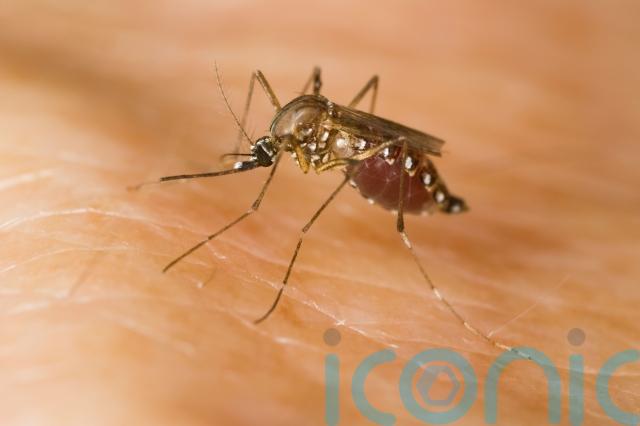
The overall average risk for dengue outbreaks increased by 297% across Europe during 2015 to 2024 compared with 1981 to 2010, the authors said.
“Across Europe, the health impacts of climate change are intensifying faster than our response is keeping up,” warned Professor Joacim Rocklov, from the University of Heidelberg, Germany, and co-director of the Lancet Countdown Europe.
“Rising heat, worsening household air pollution, exposure to infectious diseases and growing threats to food security are placing millions of people at risk today – not in a distant future.
“The choices we make now will decide whether these health impacts worsen quickly or whether we begin moving toward a safer, fairer and more resilient Europe.”
The authors also warn that fossil fuel dependence is worsening health risks.
“As the conflict in Iran brings renewed uncertainty and suffering for people across the region, we are again reminded that as long as Europe relies on fossil fuels our economies, our public budgets and ultimately our health will remain vulnerable,” said Dr Hannah Klauber, from the Lancet Countdown Europe’s working group on economics and finance.
“Accelerating the transition to clean, secure energy is not only an environmental necessity, but a vital opportunity to safeguard for people’s wellbeing.”

Subscribe or register today to discover more from DonegalLive.ie
Buy the e-paper of the Donegal Democrat, Donegal People's Press, Donegal Post and Inish Times here for instant access to Donegal's premier news titles.
Keep up with the latest news from Donegal with our daily newsletter featuring the most important stories of the day delivered to your inbox every evening at 5pm.

This publication supports the work of the Press Council of Ireland and Office of the Press Ombudsman, and our staff operate within the Code of Practice of the Press Council. You can obtain a copy of the Code, or contact the Council, at www.presscouncil.ie, Lo-call 1800 208 080 or email: info@presscouncil.ie.