Search


23 Apr 2026
Search
23 Apr 2026

Please allow ads as they help fund our trusted local news content.
Kindly add us to your ad blocker whitelist.
If you want further access to Ireland's best local journalism, consider contributing and/or subscribing to our free daily Newsletter .
Support our mission and join our community now.
To continue reading this article, you can subscribe for as little as €0.50 per week which will also give you access to all of our premium content and archived articles!
Alternatively, you can pay €0.50 per article, capped at €1 per day.
Thank you for supporting Ireland's best local journalism!


Fewer than three out of 10 MPs think bodies such as citizens panels could be used to solve entrenched problems in society – with more than a third of MPs surveyed saying they would not take part in such a process.
The number of MPs who would not take part in what is termed “deliberative democracy” – the use of bodies such as citizens’ assemblies, citizens’ juries, and citizens’ panels in the policy making process – was found to be a “substantially higher proportion than in any devolved legislature”.
The first of its kind research saw elected parliamentarians in England, Scotland, Northern Ireland and Wales questioned about the use of such bodies.
The study, carried out by Carnegie UK, found politicians at Westminster had the “least experience with deliberative democracy and were the most sceptical” about it.
Of the 100 MPs who were questioned for the study, almost a third (31%) had never heard of this – and more than a third (36%) said they would not consider taking part in it.

Polling by Savanta, carried out for Carnegie UK, found only 35% of MPs questioned said they thought such practices could increase trust in the democratic process.
Further only 28% of MPs polled believed this way of working could help solve entrenched problems, with almost half (45%) fearing bodies such as citizens assemblies could duplicate the work done by parliamentarians.
In contrast more than half (56%) of MLAs in Northern Ireland who took part in the research believed involving bodies such as citizens panels could help increase trust, with 44% of Members of the Senedd in Wales who were questioned and 44% of MSPs in Scotland also of this view.
Of the MLAs questioned 53% believed bodies such as citizens’ panels could help resolve entrenched issues in society.
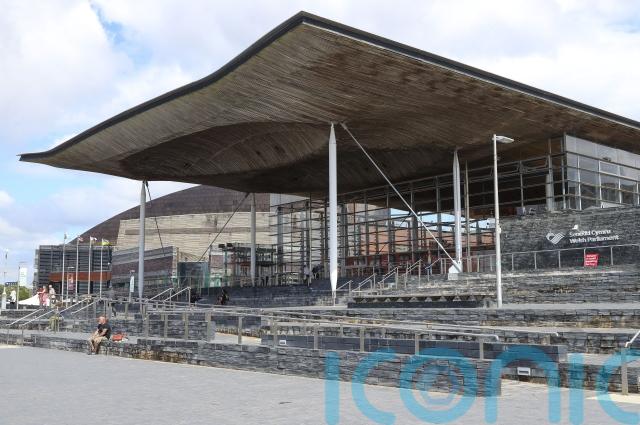
Meanwhile over three quarters (77%) of Senedd members questioned said they were open to working with such bodies – compared to 73% of MSPs questioned, 72% of MLAs and 64% of MPs.
As well as speaking to 100 MPs, the Carnegie research questioned 44 MSPs, 33 MLAs and 32 Members of the Senedd – with the survey work carried out between September and December last year.
Overall the research said that MSPs at Holyrood “demonstrated the highest levels of awareness and prior engagement with deliberative democracy”, with the report stating that a “large majority” were already familiar with such processes.
It added: “There was an openness to deliberative democracy, with around three‑quarters of MSPs saying they would consider taking part in a deliberative process.”
In Wales the report said that the majority of Senedd Members had heard of deliberative democracy before the survey, adding that “openness was relatively strong, with roughly three‑quarters saying they would consider taking part”.
However, the report also found that “less than half of MSs felt that deliberative democratic processes could improve trust between the public and democratic institutions”.
In Northern Ireland it was found that “overall, MLAs were the least familiar with deliberative democratic initiatives, yet they expressed comparatively strong optimism about their potential”.
Sarah Davidson, chief executive of Carnegie UK, said the report came after its annual wellbeing index report found that “trust in UK politics and democracy is in trouble”.
She stated: “One means to reverse this trend could be the rollout of more deliberative approaches like citizens’ panels.
“But this groundbreaking poll of politicians reveals a range of attitudes towards these initiatives.
“A big share of our lawmakers worry that such processes could duplicate their work. And lots of elected members don’t understand how these approaches would interact with existing political and governmental systems.”
Ms Davidson continued: “We’re seeing governments and parliaments across the UK experiment with involving the public in their deliberations.
“Decision-makers should use these moments not just to address the big issues of the day, but also to learn how such approaches can best work alongside existing political institutions and processes.”

Subscribe or register today to discover more from DonegalLive.ie
Buy the e-paper of the Donegal Democrat, Donegal People's Press, Donegal Post and Inish Times here for instant access to Donegal's premier news titles.
Keep up with the latest news from Donegal with our daily newsletter featuring the most important stories of the day delivered to your inbox every evening at 5pm.

This publication supports the work of the Press Council of Ireland and Office of the Press Ombudsman, and our staff operate within the Code of Practice of the Press Council. You can obtain a copy of the Code, or contact the Council, at www.presscouncil.ie, Lo-call 1800 208 080 or email: info@presscouncil.ie.