Search


08 Mar 2026
Search
08 Mar 2026

Please allow ads as they help fund our trusted local news content.
Kindly add us to your ad blocker whitelist.
If you want further access to Ireland's best local journalism, consider contributing and/or subscribing to our free daily Newsletter .
Support our mission and join our community now.
To continue reading this article, you can subscribe for as little as €0.50 per week which will also give you access to all of our premium content and archived articles!
Alternatively, you can pay €0.50 per article, capped at €1 per day.
Thank you for supporting Ireland's best local journalism!


Consumers are now paying a record £571 more on average for their groceries than last year as discounter Aldi became Britain’s fourth largest supermarket for the first time, figures show.
Grocery price inflation hit 12.4% during the past month, up from last month’s previous record of 11.6%, research firm Kantar reported.
The latest figure means that the average annual grocery bill will increase from £4,610 to £5,181 if consumers do not change the products they buy and how they shop to cut costs.
Categories like milk, butter and dog food are rising particularly quickly, at 31%, 25% and 29% respectively.
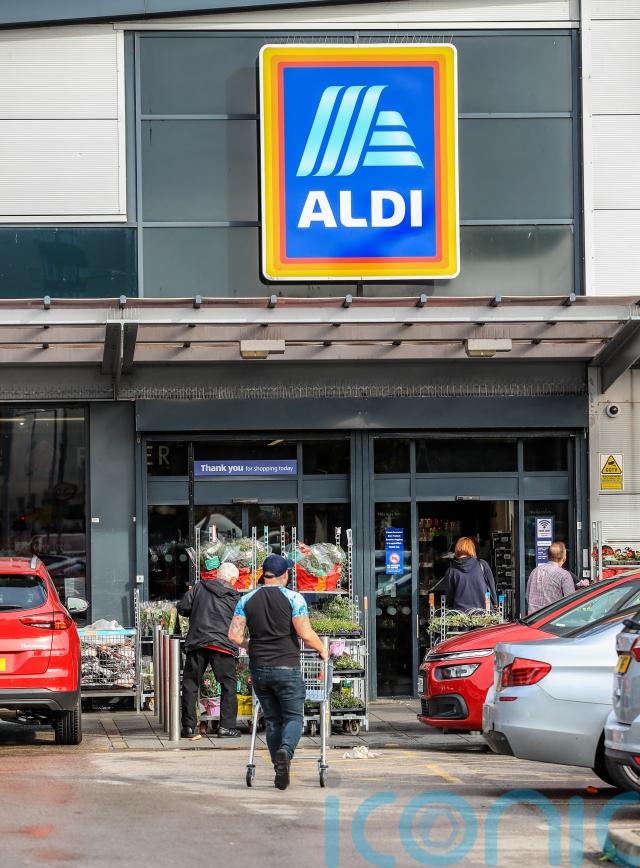
However shoppers are taking steps to manage their budgets by broadening the range of stores they visit, with Aldi’s market share rising by 1.2 percentage points to make it Britain’s fourth largest supermarket for the first time.
The German discounter’s sales rose by 18.7% over the 12 weeks to September 4, reaching 9.3% market share, while fellow discounter Lidl increased its sales by 20.9% and its market share to 7.1%.
Additionally, sales of the very cheapest own-label value products are up by 33% on a year ago, with almost one in four baskets containing one of these lines.
Overall spending on all retailer own-label lines was £393 million higher during the latest four weeks, pushing their share of the market to 51.1%.
Take-home grocery sales increased by 3.8% over the quarter – the third month of growth in a row after more than a year of decline as a consequence of comparisons with the pandemic.
Fraser McKevitt, head of retail and consumer insight at Kantar, said: “It seems there’s no end in sight to grocery inflation as the rate at which food and drink prices are increasing continues to accelerate.
“In what is a fiercely competitive sector, supermarkets are reacting to make sure they’re seen to acknowledge the challenges consumers are facing and offer best value, in particular by expanding their own-label ranges.”
He added: “Back at the start of the 2010s, Tesco, Sainsbury’s, Asda and Morrisons together accounted for over three-quarters of the sector but that traditional big four is no more.
“The discounters have seen dramatic sales increases in recent months, bringing more and more customers through their doors. Aldi has done well to expand its shopper base, supported by consistent store openings, and with 14.2 million consumers visiting the grocer in the past three months.
“Meanwhile, for the fourth month in a row Lidl was the fastest-growing grocer and recorded its strongest sales performance since October 2014.”
Even with rising prices, parents had to prepare for the end of the summer holidays as the majority of schools went back in early September.
Sales of sliced bread were up by 12% in comparison with the previous three weeks, while cheese snacks grew by 18% and children’s yogurts by 57%.

Subscribe or register today to discover more from DonegalLive.ie
Buy the e-paper of the Donegal Democrat, Donegal People's Press, Donegal Post and Inish Times here for instant access to Donegal's premier news titles.
Keep up with the latest news from Donegal with our daily newsletter featuring the most important stories of the day delivered to your inbox every evening at 5pm.

This publication supports the work of the Press Council of Ireland and Office of the Press Ombudsman, and our staff operate within the Code of Practice of the Press Council. You can obtain a copy of the Code, or contact the Council, at www.presscouncil.ie, Lo-call 1800 208 080 or email: info@presscouncil.ie.