
United Ireland Dáil debates are ‘aggressive and triumphalist’, Taoiseach says
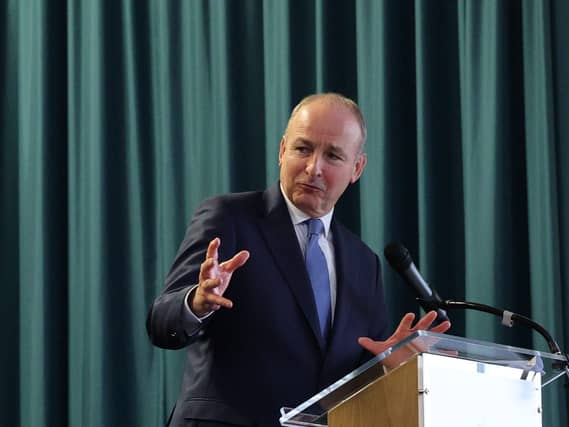

The Irish Premier said that some other parties have a simplistic view of Irish unity.
Some Irish political parties have an “aggressive, adversarial, triumphalist” approach to dialogue around Irish unity, the country’s premier Micheál Martin said.
The Taoiseach proposed this week that a chairperson be appointed to oversee research into potential future scenarios including Irish unification within five years of a referendum.
Mr Martin shared a briefing document with his Fianna Fáil parliamentary party on Tuesday, which included a proposal for the establishment of the Futures Study Initiative (FSI), which would gather informed cross-community voices to explore three potential future core scenarios for the island, including a North/South reunification.
The Taoiseach’s briefing came after the deputy premier and leader of Fine Gael Simon Harris announced earlier this year that his party will launch a “blueprint” for Irish unity in November.
Speaking at an Attestation Ceremony for Police Service of Northern Ireland (PSNI) student officers in Belfast, the Taoiseach dismissed that he was politicking by releasing his proposal ahead of the Fine Gael Ard Fheis on Saturday.
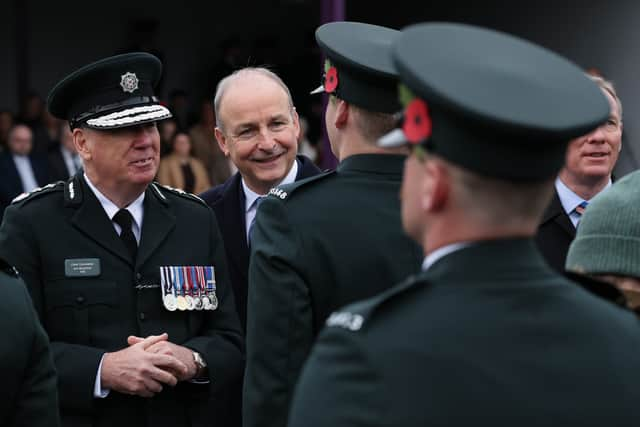
He said he was driven to come up with an impartial knowledge-based approach to Irish reunification by some of the language used in the Dáil.
He added: “I was conscious I was meeting the new British Prime Minister Andy Burnham.
“I was also conscious that the debate, as manifested in the Dáil in the summer, was a factor, in terms of how ridiculous some of the comments made about this were, and how the whole debate around the border poll was going in the wrong direction, in a very aggressive, adversarial, triumphalist sort of approach to unity.
“I think there has to be an alternative approach to that, and I think the initiative should be seen very much in that context.”
Mr Martin’s FSI will seek expert opinion and input from political parties and activist groups on constitutional and legal change, issues relating to the convergence on economy, health and education as well as matters pertaining to security, symbols and culture.
The briefing documents, shared with backbenchers, said that “an informed and genuinely inclusive debate about the constitutional future of the island is essential”.
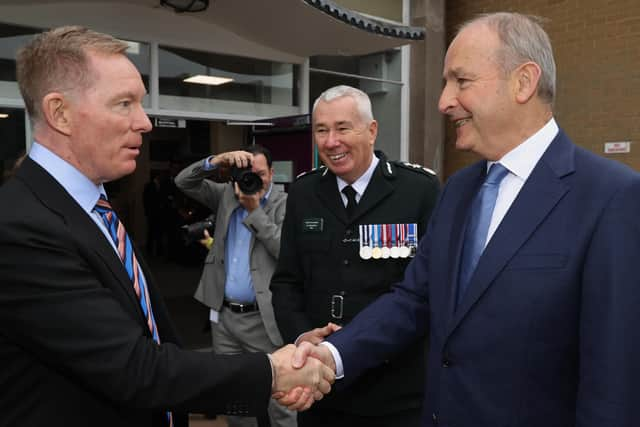
The Fianna Fáil leader said that other parties have taken too simplistic a view on a united Ireland.
“There’s been too much of an easy narrative about all of this, too much simplistic sort of ideas around let’s have the poll in a couple of years’ time and everything will be grand,” he said.
“Everything will not be grand if we take that approach.
“My view is the public want almost a non-partisan evidenced approach to these fundamental issues because they’re complex and they’re difficult and they’re deep, and we know that from the last 25 years and indeed a decade or so before the Good Friday Agreement.”
The Irish premier added that more knowledge is needed before any changes are made to Northern Ireland’s constitution.
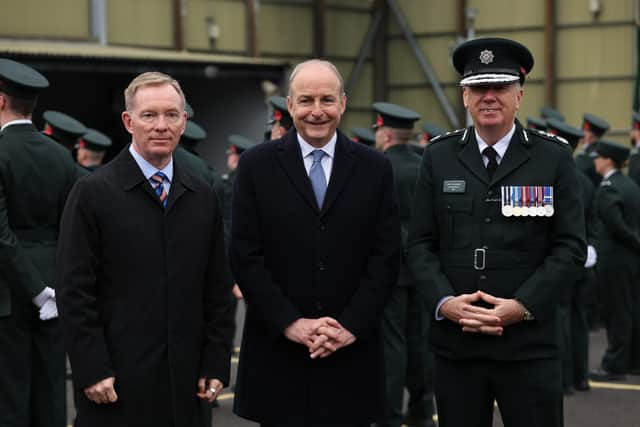
“It seems to me that we can make politics work better in the north,” he said.
“In respect of the constitutional future of the island, my sense is, and it’s somewhat different to the approach that others have taken to date, is to in the first instance, establish and create a framework whereby we can, through an expert analysis create an independent, evidence-based approach to what various constitutional frameworks would look like.
“Be it a unitary state, be it a united Ireland with a devolved Assembly, or be it a continuation of the current situation under the Good Friday Agreement in areas like constitutional law and law itself, and jurisprudence, in areas like economy, health, education.
“At the time of Good Friday, you recall we changed Articles Two and Three, which many people felt was never going to be possible. But what did we replace it with? A desire for unity, a support for unity, but in peace and harmony.
“So there’s an obligation to move forward in peace and harmony, and above all, to allow other voices who may not agree with mine or agree with those of us who would ultimately like unity, but to allow those voices to come to the table and to bring their perspectives to the table as well.”
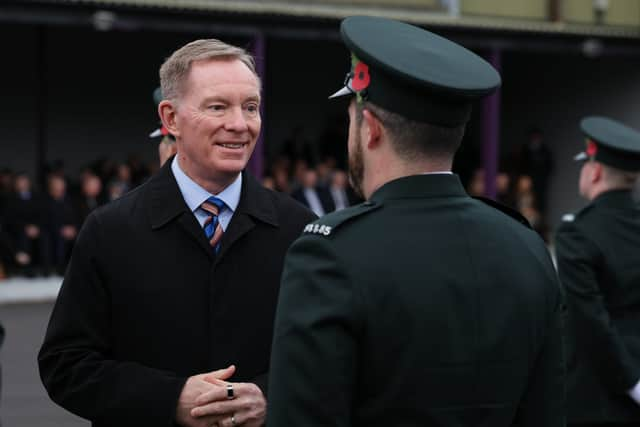
Also at the Attestation Ceremony, Secretary of State for Northern Ireland Sir Chris Bryant declined to be drawn on the question of constitutional change, instead focusing on issues around reforming the Stormont institutions and resolving the current impasse over a lack of devolved budget.
“Ever since I arrived in this post, I’ve said, look, some of the things in Northern Ireland and the way we do politics and the way Stormont works are fundamentally abnormal, and we’ve kind of got used to abnormality,” he said.
“So I’m very keen to look at ways in which we can reform Stormont, make it work for people.
“Ever since I started in this job, I’ve been talking about some elements of reform because you can’t have this constant process of is it going to collapse next week or the week after if one party or another party doesn’t get what it wants.”
He added: “The British and Irish governments are co-guarantors of the Good Friday Agreement. We’ll be coming up to the 30th anniversary in 18 months time, and we take slightly different attitudes, of course, about many of these issues, but we want to work as much as we possibly can together.”