Search


22 Apr 2026
Search
22 Apr 2026

Please allow ads as they help fund our trusted local news content.
Kindly add us to your ad blocker whitelist.
If you want further access to Ireland's best local journalism, consider contributing and/or subscribing to our free daily Newsletter .
Support our mission and join our community now.
To continue reading this article, you can subscribe for as little as €0.50 per week which will also give you access to all of our premium content and archived articles!
Alternatively, you can pay €0.50 per article, capped at €1 per day.
Thank you for supporting Ireland's best local journalism!


One of the Amazon river’s largest tributaries has reached its lowest level since official measurements began 121 years ago.
The level of the Rio Negro at the Brazilian city of Manaus confirms part of the world’s largest rainforest is suffering its worst drought, little more than two years after its most significant flooding.
Monday’s water level in the city’s port went as low as 13.5 metres, compared to the record level of 30.02 metres in June 2021.
The Rio Negro drains about 10% of the Amazon basin and is the world’s sixth largest by water volume.
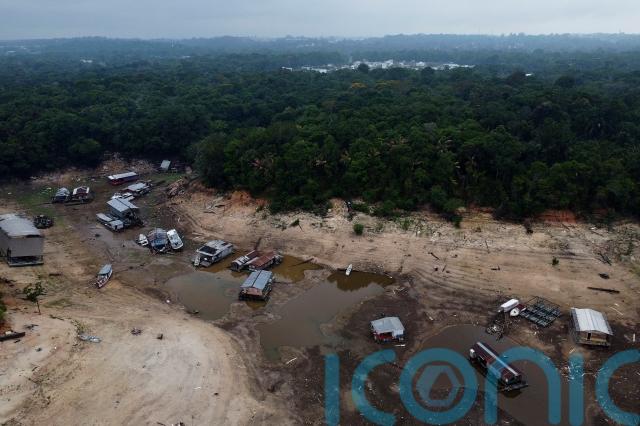
The Madeira, another main tributary of the Amazon, has also recorded historically low levels which have halted the Santo Antonio hydroelectric dam, Brazil´s fourth largest.
Low river levels throughout the Amazon have left hundreds of riverside communities isolated and struggling to get access to drinkable water, as well as disrupting commercial navigation which supplies Manaus.
With a population of two million, Manaus is the largest city and capital of Amazonas, the state hit hardest by the drought with 55 of 62 municipalities entering states of emergency due to the severe drought in September.
Manaus and other nearby cities are also suffering from high temperatures and heavy smoke from nearby man-caused fires for deforestation and pasture clearance while the drought is the likely cause of dozens of river dolphin deaths in Tefe Lake, near the Amazon River.
This is a startling contrast to July 2021, when the Rio Negro waters took over part of the Manaus downtown area, ruining crops of hundreds of riverine communities, for about three months.
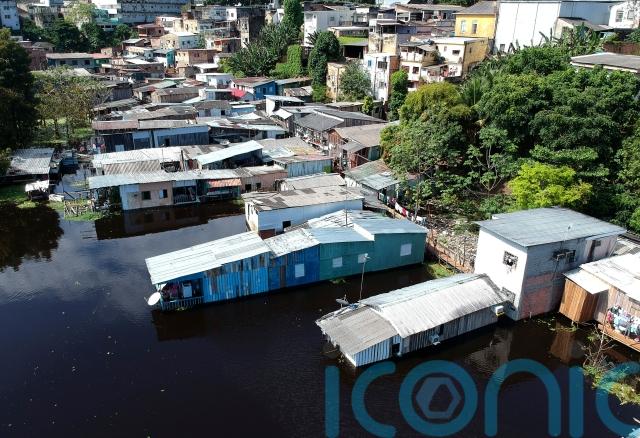
Philip Fearnside, an American researcher at the Brazilian National Institute of Amazonian Research, said he expects the situation to deteriorate as surface water in the eastern equatorial Pacific Ocean is warmer than during the “Godzilla” El Nino of 2015-2016 and expanding.
In the Amazon, these Pacific warmings primarily lead to droughts in the northern part of the region.
A warm water patch in the tropical North Atlantic Ocean is causing drought in the southern part of the Amazon, similar to what happened in 2005 and 2010, according to researchers.
“The forecast is for the start of the rains to be delayed compared to normal, and for a drier-than-normal rainy season,” Mr Fearnside said.
“This could result not only in extreme low water this year, but also low levels in 2024.
“Until the rainy season begins in the basin, the situation that is already underway should worsen.”

Subscribe or register today to discover more from DonegalLive.ie
Buy the e-paper of the Donegal Democrat, Donegal People's Press, Donegal Post and Inish Times here for instant access to Donegal's premier news titles.
Keep up with the latest news from Donegal with our daily newsletter featuring the most important stories of the day delivered to your inbox every evening at 5pm.

This publication supports the work of the Press Council of Ireland and Office of the Press Ombudsman, and our staff operate within the Code of Practice of the Press Council. You can obtain a copy of the Code, or contact the Council, at www.presscouncil.ie, Lo-call 1800 208 080 or email: info@presscouncil.ie.