Search


05 Dec 2025
Search
05 Dec 2025

Please allow ads as they help fund our trusted local news content.
Kindly add us to your ad blocker whitelist.
If you want further access to Ireland's best local journalism, consider contributing and/or subscribing to our free daily Newsletter .
Support our mission and join our community now.
To continue reading this article, you can subscribe for as little as €0.50 per week which will also give you access to all of our premium content and archived articles!
Alternatively, you can pay €0.50 per article, capped at €1 per day.
Thank you for supporting Ireland's best local journalism!


Lebanon’s prime minister said his country was “far from” diplomatic normalisation or economic relations with Israel, despite a move towards direct negotiations between the two countries aimed at defusing tensions.
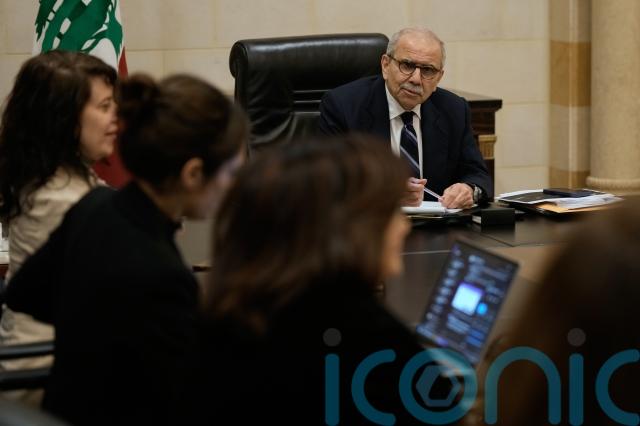
Prime Minister Nawaf Salam’s comments to a small group of journalists in Beirut came in contradiction to a statement by Israeli Prime Minister Benjamin Netanyahu that Israel would send an envoy to talks with Lebanese diplomatic and economic officials, which he described as an “initial attempt to create a basis for relations and economic co-operation” between the two countries.
Lebanon and Israel both announced the appointment of civilian members to a previously military-only committee monitoring enforcement of the US-brokered ceasefire that halted the latest war between Israel and the Lebanese militant group Hezbollah a year ago. The civilian members took part in Wednesday’s meeting of the mechanism.
The two countries do not have diplomatic relations and have been officially in a state of war since 1948.
The move to hold civilian talks appeared to be a step toward the direct bilateral talks between Israel and Lebanon that Washington has pushed for.
However, Mr Salam said Lebanon is still committed to the 2002 Arab peace plan the normalisation of diplomatic relations with Israel is conditional on the creation of a Palestinian state – a prospect to which Mr Netanyahu’s administration has been adamantly opposed.
“Economic relations would be part of such normalisation, so then obviously anyone following the news would know that we are not there at all,” Mr Salam said.
His comments also come amid fears of a new escalation by Israel against Hezbollah in Lebanon. Since the November 2024 ceasefire, Israel has continued to launch near-daily attacks in Lebanon that it says aim to stop the group from rebuilding its capabilities after it suffering heavy blows in the recent war.
Lebanon has been deeply divided over calls for Hezbollah to disarm. In August, the Lebanese government announced a plan to consolidate all weapons in the hands of the state by the end of the year, but it later backed off of the deadline.
Hezbollah officials have said the group will not consider disarmament until Israel withdraws from all Lebanese territory and halts its attacks.
Mr Salam said Lebanon is on track to implement the first phase of the disarmament plan – under which the Lebanese army should have a monopoly on arms in the area south of the Litani river, near the border with Israel – by the end of the year. The exception is several border points that Israeli forces are still occupying, he said.
The remaining phases of the five-phase plan, which would cover the rest of the country, currently “don’t have a timeframe”, he said.
The lack of a firm timeline is unlikely to satisfy Israel, which has been threatening to escalate its military actions in Lebanon if Hezbollah is not fully disarmed.
Mr Salam said Lebanon had appointed a civilian representative to the ceasefire committee at the request of the US and Israel.
“We are ready to negotiate with civilian participation,” he said. “I hope that this will help defuse the tension.”
Mr Salam also said Lebanon is ready to put in place a “verification mechanism” to investigate alleged violations of the ceasefire.
The November 2024 agreement required Lebanon to stop armed groups from attacking Israel and Israel to halt “offensive” military actions in Lebanon. It said Israel and Lebanon can act in “self-defence”, without elaborating.
Under the ceasefire agreement, both sides can report violations to the monitoring committee, but the deal is vague on enforcement.
In practice, Israel has largely taken enforcement into its own hands and has maintained that its ongoing strikes are in self-defence. Hezbollah has claimed one attack since the ceasefire.
Mr Salam said that in many cases, Israel strikes without reporting violations through the monitoring committee.
“Clearly, we cannot we be responsible for information that wasn’t shared with us,” he said. He added that Lebanon is willing to have US and French troops on the ground to investigate and verify reported violations.
Mr Salam said Israel should fully implement its part of the ceasefire by withdrawing from Lebanese territory and should release Lebanese citizens captured during and after the war and currently detained in Israel.
While he insisted that Hezbollah is required disarm under the ceasefire and in accordance with the plan adopted by the government, the Lebanese state’s options appear to be limited if the group refuses to do so.
“We have lived civil war – civil wars – in Lebanon. I don’t think anyone is tempted to repeat that,” he said.
Meanwhile, the country is facing the end of Unifil’s peacekeeping mandate in southern Lebanon, which expires in just over a year, leaving greater uncertainty over the situation in the border area.
Mr Salam said he would be discussing “what will come post-Unifil” with a delegation of representatives of the UN Security Council that is set to visit Lebanon later this week.

Subscribe or register today to discover more from DonegalLive.ie
Buy the e-paper of the Donegal Democrat, Donegal People's Press, Donegal Post and Inish Times here for instant access to Donegal's premier news titles.
Keep up with the latest news from Donegal with our daily newsletter featuring the most important stories of the day delivered to your inbox every evening at 5pm.

This publication supports the work of the Press Council of Ireland and Office of the Press Ombudsman, and our staff operate within the Code of Practice of the Press Council. You can obtain a copy of the Code, or contact the Council, at www.presscouncil.ie, Lo-call 1800 208 080 or email: info@presscouncil.ie.