Search


12 Dec 2025
Search
12 Dec 2025

Please allow ads as they help fund our trusted local news content.
Kindly add us to your ad blocker whitelist.
If you want further access to Ireland's best local journalism, consider contributing and/or subscribing to our free daily Newsletter .
Support our mission and join our community now.
To continue reading this article, you can subscribe for as little as €0.50 per week which will also give you access to all of our premium content and archived articles!
Alternatively, you can pay €0.50 per article, capped at €1 per day.
Thank you for supporting Ireland's best local journalism!


The European Union on Friday indefinitely froze Russia’s assets in Europe to ensure that Hungary and Slovakia, both with Moscow-friendly governments, cannot prevent the billions of euros from being used to support Ukraine.
Using a special procedure meant for economic emergencies, the EU blocked the assets until Russia gives up its war on Ukraine and compensates its neighbour for the heavy damage that it has inflicted for almost four years.
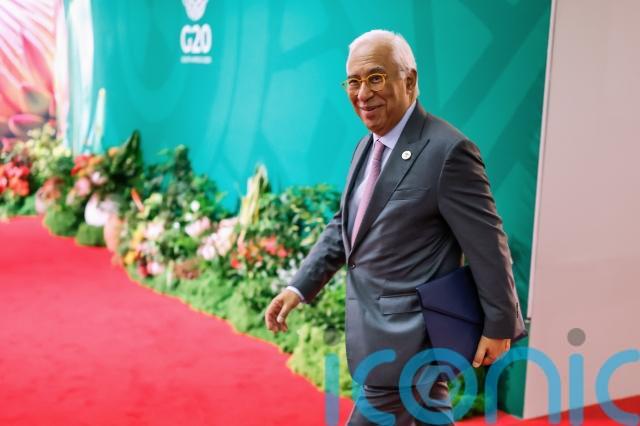
EU Council President Antonio Costa said European leaders had committed in October “to keep Russian assets immobilised until Russia ends its war of aggression against Ukraine and compensates for the damage caused”.
He said: “Today we delivered on that commitment.”
It is a key step that will allow EU leaders at a summit next week to work out how to use the tens of billions of euros in Russian Central Bank assets to underwrite a huge loan to help Ukraine meet its financial and military needs over the next two years.
“Next step: securing Ukraine’s financial needs for 2026/27,” added Mr Costa, who will chair the summit on December 18.
The move also prevents the assets, estimated to total around 210 billion euros (£184 billion), from being used in any negotiations to end the war without European approval.
In the October #EUCO, EU leaders committed to keep Russian assets immobilised until Russia ends its war of aggression against Ukraine and compensates for the damage caused. Today we delivered on that commitment.
Next step: securing Ukraine’s financial needs for 2026–27.
— António Costa (@eucopresident) December 12, 2025
A 28-point plan drafted by US and Russian envoys stipulated that the EU would release the frozen assets for use by Ukraine, Russia and the United States.
That plan, which surfaced last month, was rejected by Ukraine and its backers in Europe.
French Foreign Minister Jean-Noel Barrot wrote on X that the EU decision means that “no one will decide in place of the Europeans the use of these funds.”
Hungarian Prime Minister Viktor Orban – Russian President Vladimir Putin’s closest ally in Europe – accused the European Commission, which prepared the decision, “of systematically raping European law”.
The vast majority of the funds — around 193 billion euros (£169 billion) at the end of September — are held in Euroclear, a Belgian financial clearing house.
The money was frozen under sanctions that the EU imposed on Russia over the war it launched on February 24 2022, but these sanctions must be renewed every six months, and all 27 member countries must approve them for that to happen.
Hungary and Slovakia oppose providing more support to Ukraine.
Friday’s decision, which is based on EU treaty rules allowing the bloc to protect its economic interests in certain emergency situations, prevents them from blocking the sanctions rollover and make it easier to use the assets.
Mr Orban said on social media that it means that “the rule of law in the European Union comes to an end, and Europe’s leaders are placing themselves above the rules”.
“The European Commission is systematically raping European law. It is doing this in order to continue the war in Ukraine, a war that clearly isn’t winnable,” he wrote.
He said that Hungary “will do everything in its power to restore a lawful order”.
In a letter to Mr Costa, Slovak Prime Minister Robert Fico said that he would refuse to back any move that “would include covering Ukraine’s military expenses for the coming years”.
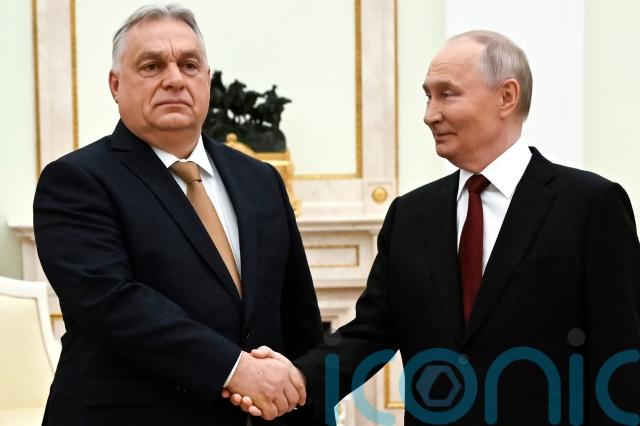
He warned “that the use of frozen Russian assets could directly jeopardise US peace efforts, which directly count on the use of these resources for the reconstruction of Ukraine”.
But the commission argues that the war has imposed heavy costs by hiking energy prices and stunting economic growth in the EU, which has already provided nearly 200 billion euros (£175 billion) in support to Ukraine.
Belgium, where Euroclear is based, is opposed to the “reparations loan” plan.
It says that the plan “entails consequential economic, financial and legal risks,” and has called on other EU countries to share the risk.
Russia’s Central Bank, meanwhile, said on Friday that it has filed a lawsuit in Moscow against Euroclear for damages it says were caused when Moscow was barred from managing the assets.
Euroclear declined to comment.
In a separate statement, the Central Bank also described wider EU plans to use Russian assets to aid Ukraine as “illegal, contrary to international law,” arguing that they violated “the principles of sovereign immunity of assets.”
But EU Economy Commissioner Valdis Dombrovskis brushed off the suit, saying that the decision is “legally robust” and that he expects Russia “to continue to launch speculative legal proceedings to prevent the EU from upholding international law”.
Chris Weafer, chief executive of Macro-Advisory Ltd Consultancy, said that the timing of the court action is “clearly linked” to the EU’s intention to use the frozen assets.
“The Russian Central Bank is making clear that it will respond with legal actions against all countries involved in the decision to take the Russian money,” he said.
Friday’s EU decision came hours after Germany summoned the Russian ambassador in Berlin following allegations of sabotage, disinformation campaigns, cyberattacks and interference in its elections.

Subscribe or register today to discover more from DonegalLive.ie
Buy the e-paper of the Donegal Democrat, Donegal People's Press, Donegal Post and Inish Times here for instant access to Donegal's premier news titles.
Keep up with the latest news from Donegal with our daily newsletter featuring the most important stories of the day delivered to your inbox every evening at 5pm.

This publication supports the work of the Press Council of Ireland and Office of the Press Ombudsman, and our staff operate within the Code of Practice of the Press Council. You can obtain a copy of the Code, or contact the Council, at www.presscouncil.ie, Lo-call 1800 208 080 or email: info@presscouncil.ie.