'His light was so bright' - Irish man's body brought to grandad's pub after sudden death
Search


28 Mar 2026

Please allow ads as they help fund our trusted local news content.
Kindly add us to your ad blocker whitelist.
If you want further access to Ireland's best local journalism, consider contributing and/or subscribing to our free daily Newsletter .
Support our mission and join our community now.
To continue reading this article, you can subscribe for as little as €0.50 per week which will also give you access to all of our premium content and archived articles!
Alternatively, you can pay €0.50 per article, capped at €1 per day.
Thank you for supporting Ireland's best local journalism!


Israel has said it will reopen Gaza’s border crossing with Egypt in both directions over the weekend, allowing Palestinians to enter and leave the territory after nearly two years of closure.
Cogat, the Israeli military body in charge of co-ordinating aid to Gaza, said in a statement on Friday that “limited movement of people only” would be allowed.
The announcement followed statements from Israeli Prime Minister Benjamin Netanyahu and Ali Shaath, newly appointed to head the Palestinian administrative committee governing Gaza’s daily affairs, that it would likely open soon.
📢UPDATE:
In accordance with the ceasefire agreement and the directive of the political echelon, the Rafah Crossing will open this coming Sunday (February 1st) in both directions, for limited movement of people only.
Exit from and entry into the Gaza Strip via the Rafah… pic.twitter.com/jp8g3dP3Al
— COGAT (@cogatonline) January 30, 2026
The reopening of the Rafah crossing on Sunday will mark an important step forward for US President Donald Trump’s Gaza ceasefire plan. The crossing, Gaza’s main gateway to the outside world, has been largely closed since May 2024.
While Cogat said the passage will open in both directions on Sunday, Mr Shaath said the first day will be a trial for operations and that travel both ways will start on Monday.
Cogat said both Israel and Egypt will vet individuals for exit and entry through the crossing, which will be supervised by European Union border patrol agents.
In addition to screenings at the crossing, Palestinians leaving and returning will be screened by Israel in the adjacent corridor, which remains under Israeli military control.
The crossing has been under a near complete closure since Israel seized it in May 2024, saying the step was part of a strategy to halt cross-border arms smuggling by Hamas.
It was briefly opened for the evacuation of medical patients during a short-lived ceasefire in early 2025.
Israel had resisted reopening the crossing, but the recovery of the remains of the last hostage in Gaza on Monday cleared the way to move forward.
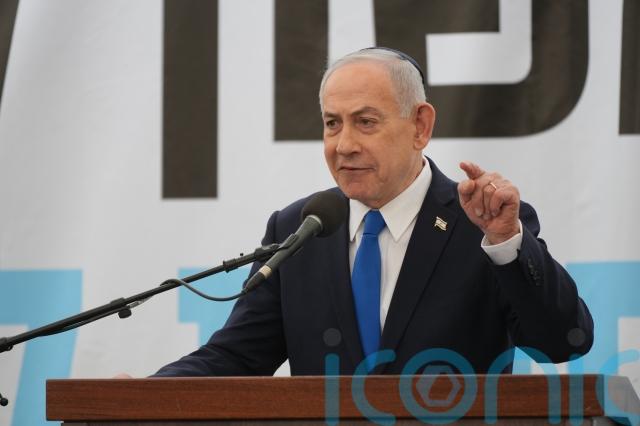
A day later, Mr Netanyahu said the crossing would soon open in a limited and controlled fashion.
An Israeli official who spoke on condition of anonymity in accordance with policy told The Associated Press that dozens of Palestinians would initially be allowed through each way, starting with medical evacuees and Palestinians who fled during the war.
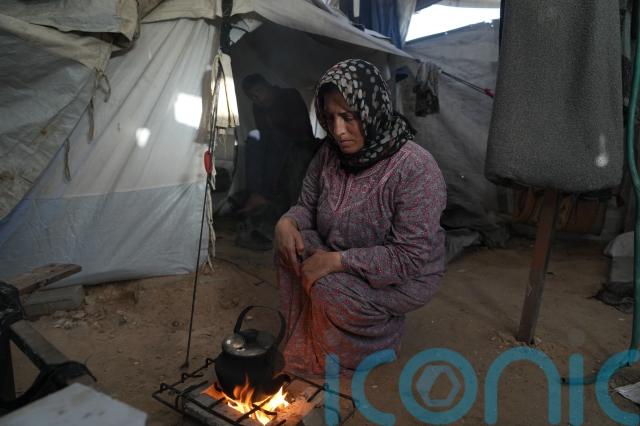
They said 50 medical evacuees would be permitted to exit, and 50 returnees permitted to enter. It remains unclear if the medical evacuees will be accompanied by escorts as they have been other times throughout the war.
Thousands of Palestinians inside Gaza are trying to leave the war-battered territory, while many others who fled the territory during the heaviest fighting say they want to return home. Egypt alone is hosting tens of thousands of Palestinians from Gaza.
Roughly 20,000 sick and wounded Palestinians need treatment outside Gaza, according to the territory’s health ministry.
In the past, those prioritised for evacuation have been mostly children, cancer patients and people suffering from physical trauma. Most received treatment in Egypt.
At least 30,000 Palestinians have registered with the Palestinian Embassy in Cairo for return to Gaza, according to an embassy official, speaking on condition of anonymity because details of the reopening remain under discussion.
The reopening is one of the first steps in the second phase of last year’s US-brokered ceasefire agreement, which includes challenging issues ranging from demilitarising Gaza to putting in place an alternative government to oversee rebuilding the mostly destroyed enclave.
Gaza’s health system was mostly destroyed in the war, rendering advanced surgical procedures out of reach. According to the health ministry, more than 18,000 Palestinian patients are wounded and require treatment abroad.
Before the war, Rafah faced heavy restrictions, yet was still the main crossing for people moving in and out of Gaza, while also handling trade between Egypt and the territory.
In 2022, the United Nations recorded more than 133,000 entries and 144,000 exits through Rafah, though many involved the same people crossing multiple times. Egyptian authorities allowed imports on 150 days of the year, and more than 32,000 trucks of goods entered.
Although Gaza has four other border crossings, the rest are shared with Israel, and only Rafah links the territory with another country.
Mr Netanyahu said this week that Israel’s focus is on disarming Hamas and destroying its remaining tunnels. Without these steps, he said that there would be no reconstruction in Gaza, a stance that could make Israel’s control over Rafah a key point of leverage.
Israel’s military said four people were killed in airstrikes on Friday in central Gaza, saying they were armed and approaching troops near the ceasefire line dividing Israeli-held areas and most of Gaza’s Palestinian population.
The most recent deaths are on top of the 492 Palestinians killed since the ceasefire began in October, according to the Gaza Health Ministry.
The ministry does not distinguish between civilians and combatants in its figures. It maintains detailed casualty records that are seen as generally reliable by UN agencies and independent experts.

Subscribe or register today to discover more from DonegalLive.ie
Buy the e-paper of the Donegal Democrat, Donegal People's Press, Donegal Post and Inish Times here for instant access to Donegal's premier news titles.
Keep up with the latest news from Donegal with our daily newsletter featuring the most important stories of the day delivered to your inbox every evening at 5pm.

This publication supports the work of the Press Council of Ireland and Office of the Press Ombudsman, and our staff operate within the Code of Practice of the Press Council. You can obtain a copy of the Code, or contact the Council, at www.presscouncil.ie, Lo-call 1800 208 080 or email: info@presscouncil.ie.