Search


03 Apr 2026
Search
03 Apr 2026

Please allow ads as they help fund our trusted local news content.
Kindly add us to your ad blocker whitelist.
If you want further access to Ireland's best local journalism, consider contributing and/or subscribing to our free daily Newsletter .
Support our mission and join our community now.
To continue reading this article, you can subscribe for as little as €0.50 per week which will also give you access to all of our premium content and archived articles!
Alternatively, you can pay €0.50 per article, capped at €1 per day.
Thank you for supporting Ireland's best local journalism!


The Dutch military has got a new high-profile volunteer as it seeks to boost recruitment to counter growing fears about peace and security in Europe.
Queen Maxima, the 54-year-old Argentinean-born wife of King Willem-Alexander, started training this week to become a reserve member of her adopted homeland’s army as the Dutch military seeks to boost enlistment amid geopolitical turmoil and Russia’s war in Ukraine on Europe’s eastern edge.
“Because the security of the Netherlands can no longer be taken for granted, Maxima has decided to become a reservist,” the Ministry of Defence said in a statement after she began training on Wednesday.
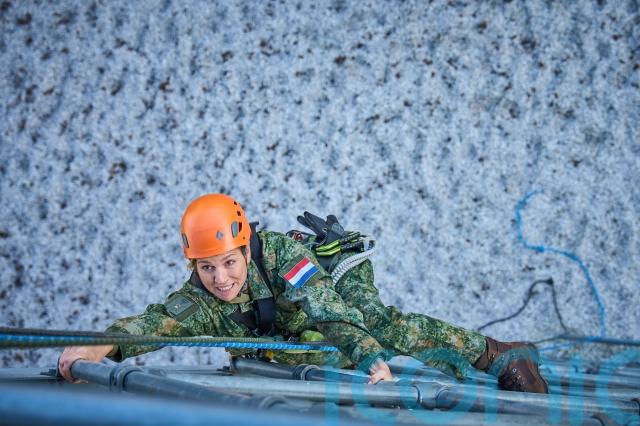
The Royal House issued a statement saying that the queen, “like many others, wants to make a contribution to that security”.
Maxima is following her own daughter into the military as Crown Princess Amalia, the heir to the Dutch throne, completed her basic military training last month as a volunteer reservist in the army.
Royals across Europe have a tradition of enlisting. Five years ago, Princess Elisabeth, the heir to the Belgian throne, signed up to do a year in military school in Brussels to help her prepare for her royal duties. Her father, King Philippe, also attended the Royal Military School in central Brussels.
The incoming Dutch coalition government that is expected to be sworn in later this month has unveiled plans to boost the nation’s military to 122,000 staff.
Ministry of Defence spokesperson Klaas Meijer said it is currently at 80,000, including military personnel, civilians and reservists like Maxima.
He said enlisting was Maxima’s choice, “but we are of course very proud that she is doing this and hope that other people will think, ‘hey, this is something I could do’”.
The defence ministry says her training will comprise “all the practical and theoretical military components necessary to become a reservist”.
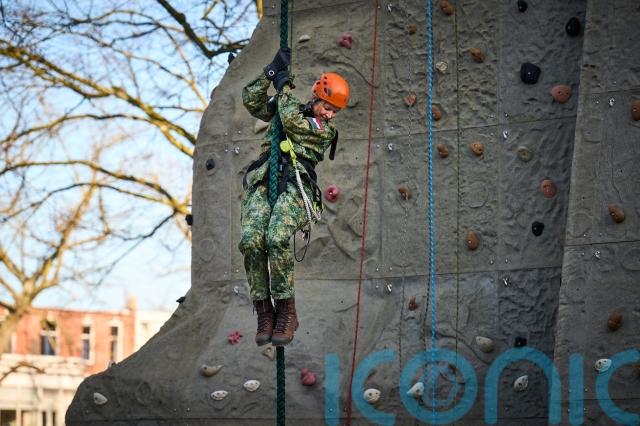
“These include physical resilience, self-defence, marksmanship, map reading and military law.”
Once the queen has completed her training, she will be given the rank of lieutenant-colonel and will “deploy wherever needed,” the Royal House statement said.
Reservists are generally deployed for tasks in the Netherlands, but have occasionally also been sent overseas on a voluntary basis, said ministry spokesperson Meijer.
The Netherlands is not alone in seeking to beef up its defences against a backdrop of Russia’s war against Ukraine and US reservations about the Nato alliance.
The incoming government plans to introduce what it calls a “freedom contribution” for citizens and businesses to help foot the growing military bill.
Officials in European powerhouse Germany have approved a government plan to attract more military recruits as the country tries to boost the ranks of its armed forces in the face of rising concern about the threat posed by Russia.
France unveiled a new programme in November that is meant to bolster the country’s armed forces by training thousands of volunteers aged 18 and 19.
The programme will start with 3,000 volunteers to be selected next summer and will gradually increase to 10,000 per year by 2030.
France has ambitions to reach up to 50,000 volunteers per year by 2035.
Our Majesty Queen Máxima is joining the Royal Netherlands Army as a reservist.
In times of rising threats, she shows personal commitment to the security of the Netherlands.
What an outstanding role model. I am proud how she sets an example of how we all can contribute. 🇳🇱 pic.twitter.com/jB1AR38IQU
— Ruben Brekelmans (@DefensieMin) February 4, 2026
At a Paris naval conference this week, the Dutch navy chief, Vice Admiral Harold Liebregs, and counterparts from the UK and US spoke of success in boosting recruitment and retention of much-needed personnel, in part because of growing concerns about threats to Europe’s security.
“Something happened in Europe. We have been struggling with shortages of personnel for a couple of years but now for the first time in years we see that (the) retention rate is pretty OK,” Mr Liebregs said.
“Recruitment and influx is also picking up … People are really willing to join the navy.”
He attributed the turnaround in part to the introduction of a programme that enables volunteers to join the armed forces for one year, giving them a first taste of service and initial training.
Last year, Denmark sought to increase the number of young people in the military by extending compulsory enlistment to women for the first time. Men and women can both still volunteer, and the remaining places will be filled by a gender-neutral draft lottery.
Belgium has also just reactivated two military brigades as part of a wider drive to boost defences.
Moves to recruit new military personnel are sure to put strain on existing defence budgets across Europe — although they also will push governments toward a Nato spending hike they approved at a summit last year.
“It’s good, it’s a difficult path, especially because it requires financing and other resources,” retired General Jean-Paul Palomeros, a former head of the French Air Force, told The Associated Press after France announced its plans.
“But nevertheless I think it was needed somewhere to make sure that the young generations understand that freedom and peace are not taken for granted and it doesn’t come as a free lunch.”

Subscribe or register today to discover more from DonegalLive.ie
Buy the e-paper of the Donegal Democrat, Donegal People's Press, Donegal Post and Inish Times here for instant access to Donegal's premier news titles.
Keep up with the latest news from Donegal with our daily newsletter featuring the most important stories of the day delivered to your inbox every evening at 5pm.

This publication supports the work of the Press Council of Ireland and Office of the Press Ombudsman, and our staff operate within the Code of Practice of the Press Council. You can obtain a copy of the Code, or contact the Council, at www.presscouncil.ie, Lo-call 1800 208 080 or email: info@presscouncil.ie.