
RIP: Tragic news for family as body of missing man is found after Garda search
Search


22 Feb 2026

Please allow ads as they help fund our trusted local news content.
Kindly add us to your ad blocker whitelist.
If you want further access to Ireland's best local journalism, consider contributing and/or subscribing to our free daily Newsletter .
Support our mission and join our community now.
To continue reading this article, you can subscribe for as little as €0.50 per week which will also give you access to all of our premium content and archived articles!
Alternatively, you can pay €0.50 per article, capped at €1 per day.
Thank you for supporting Ireland's best local journalism!


The Mexican army says it has killed the leader of the Jalisco New Generation Cartel in a military operation.
On Sunday, troops targeted Nemesio Ruben Oseguera Cervantes, known as “El Mencho”, in the western state of Jalisco.
Oseguera Cervantes was wounded in an operation to capture him in Tapalpa, about two hours drive south-west of Guadalajara and died while being flown to Mexico City, the Defence Department said in a statement.
The state is the base of the cartel, known for trafficking huge quantities of fentanyl and other drugs to the US.
During the operation, troops came under fire and killed four people at the location.
Three more people, including Oseguera Cervantes, were wounded and later died, the statement said.
Two others were arrested and armoured vehicles, rocket launchers and other arms were seized.
Three members of the armed forces were wounded and receiving medical treatment.
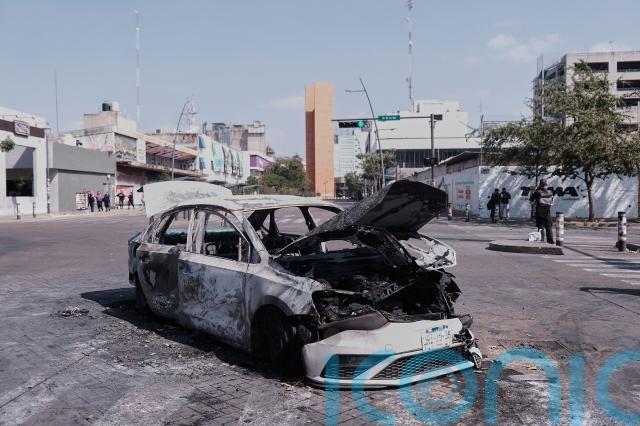
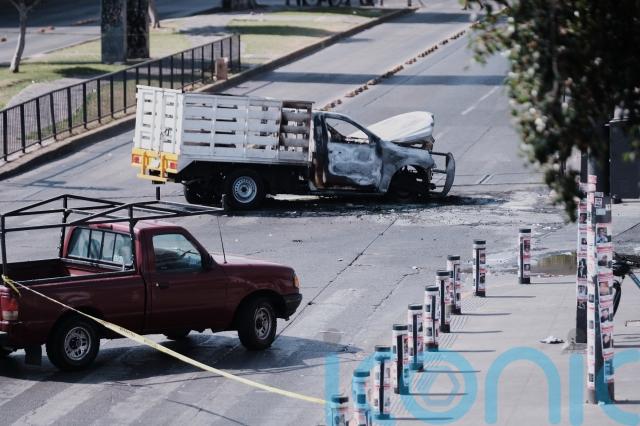
The killing of the powerful drug lord set off several hours of roadblocks with burning vehicles in Jalisco and other states.
Such tactics are commonly used by the cartels to block military operations.
Videos circulating social media showed plumes of smoke billowing over the tourist city of Puerto Vallarta in Jalisco, and people sprinting through the airport of the state’s capital in panic.
On Sunday afternoon, Air Canada announced it was suspending flights to Puerto Vallarta “due to an ongoing security situation” and advised customers not to go to their airport.
The US State Department had offered a reward of up to 15 million dollars (£1.1 million) for information leading to the arrest of El Mencho.
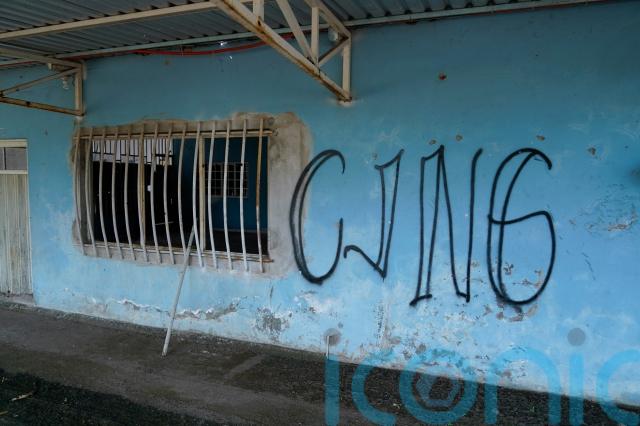
The Jalisco New Generation Cartel, known as CJNG, is one of the most powerful and fastest growing criminal organisations in Mexico and was born in 2009.
In February, the Trump administration designated the cartel as a foreign terrorist organisation.
Mexican President Claudia Sheinbaum, like her predecessor, has criticised the “kingpin” strategy of previous administrations that took out cartel leaders only to trigger explosions of violence as cartels fractured.
While she has remained popular in Mexico, security is a persistent concern and since US President Donald Trump took office a year ago, she has been under tremendous pressure to show results against drug trafficking.
The Jalisco cartel has been one of the most aggressive cartels in its attacks on the military — including on helicopters — and is a pioneer in launching explosives from drones and installing mines.
In 2020, it carried out a spectacular assassination attempt with grenades and high-powered rifles in the heart of Mexico City against the then head of the capital’s police force and now federal security secretary.
The DEA considers the cartel to be as powerful as the Sinaloa cartel, one of Mexico’s most infamous criminal groups, with a presence in all 50 US states.
It is one of the main suppliers of cocaine to the US market and, like the Sinaloa cartel, earns billions from the production of fentanyl and methamphetamines.
Sinaloa, however, has been weakened by infighting after the loss of its leaders Ismael “El Mayo” Zambada and Joaquin “El Chapo” Guzman, who are both in US custody.
Oseguera Cervantes has been significantly involved in drug trafficking activities since the 1990s.
He was convicted of conspiracy to distribute heroin in the US District Court for the Northern District of California in 1994 and served nearly three years in prison.
Following his release from custody, Oseguera Cervantes returned to Mexico and reengaged in drug trafficking activity.
Since 2017, Oseguera Cervantes has been indicted several times in the United States District Court for the District of Columbia.
The most recent superseding indictment, filed on April 5 2022, charges Oseguera Cervantes with conspiracy and distribution of controlled substances (methamphetamine, cocaine, and fentanyl) for the purpose of illegal importation into the United States and use of firearms during and in connection with drug trafficking offenses.
Oseguera Cervantes is also charged under the Drug Kingpin Enforcement Act for directing a continuing criminal enterprise.
The US State Department warned US citizens in Jalisco, Tamaulipas, Michoacan, Guerrero and Nuevo Leon states to remain in safe places because of the ongoing security operations.

Subscribe or register today to discover more from DonegalLive.ie
Buy the e-paper of the Donegal Democrat, Donegal People's Press, Donegal Post and Inish Times here for instant access to Donegal's premier news titles.
Keep up with the latest news from Donegal with our daily newsletter featuring the most important stories of the day delivered to your inbox every evening at 5pm.

This publication supports the work of the Press Council of Ireland and Office of the Press Ombudsman, and our staff operate within the Code of Practice of the Press Council. You can obtain a copy of the Code, or contact the Council, at www.presscouncil.ie, Lo-call 1800 208 080 or email: info@presscouncil.ie.