The shocking act happened near the Shannon River on the Condell Road I PICTURE: Google Maps
Search


11 Mar 2026

Please allow ads as they help fund our trusted local news content.
Kindly add us to your ad blocker whitelist.
If you want further access to Ireland's best local journalism, consider contributing and/or subscribing to our free daily Newsletter .
Support our mission and join our community now.
To continue reading this article, you can subscribe for as little as €0.50 per week which will also give you access to all of our premium content and archived articles!
Alternatively, you can pay €0.50 per article, capped at €1 per day.
Thank you for supporting Ireland's best local journalism!


Iran attacked commercial ships across the Persian Gulf and targeted Dubai International Airport on Wednesday, escalating a campaign of squeezing the oil-rich region as global energy concerns mounted and American and Israeli airstrikes pounded the Islamic Republic.
Two Iranian drones hit near Dubai International Airport, home to the long-haul carrier Emirates and the world’s busiest for international travel. Four people were wounded, but flights continued, the Dubai Media Office said.
Authorities confirm that two drones fell in the vicinity of Dubai International Airport (DXB) a short while ago, resulting in minor injuries to two Ghanaian nationals and one Bangladeshi national, and moderate injuries to one Indian national. Air traffic is operating as normal.
— Dubai Media Office (@DXBMediaOffice) March 11, 2026
Iran’s joint military command announced it would start targeting banks and financial institutions in the Middle East.
That would put at risk particularly Dubai, in the United Arab Emirates, which is home to many international financial institutions, as well as Saudi Arabia and the island kingdom of Bahrain.
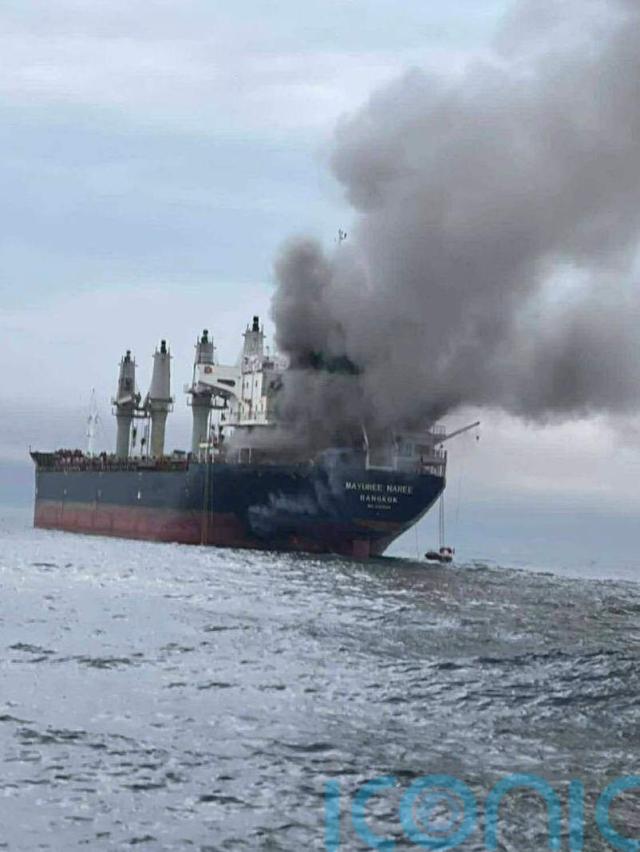
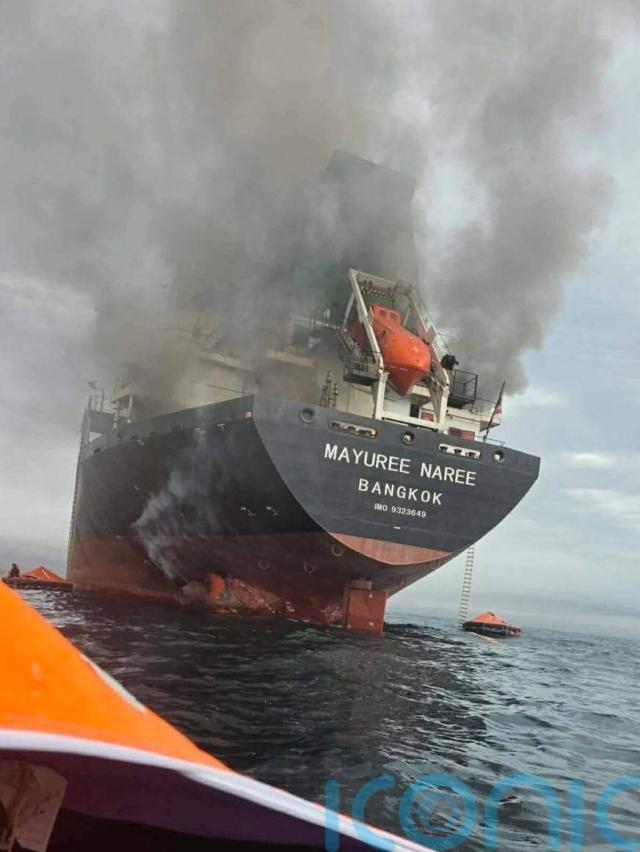
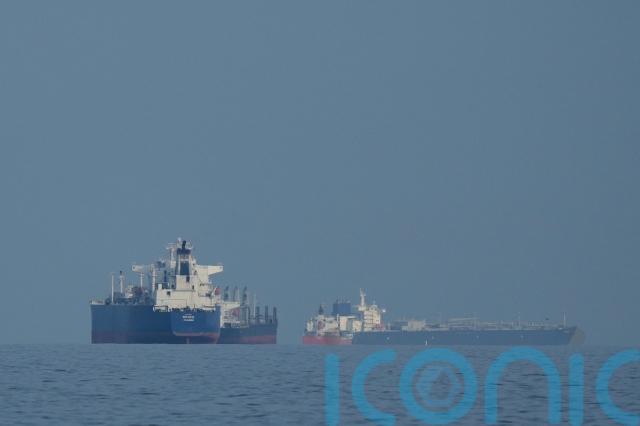
Earlier, a projectile hit a Thai cargo ship off the coast of Oman in the Strait of Hormuz, setting it ablaze.
Authorities are searching for three missing crew members from the Mayuree Naree after 20 were rescued by the Omani navy, according to Thailand’s Marine Department.
Meanwhile, an assessment from Israeli intelligence said it believed Iran’s new supreme leader, Mojtaba Khamenei, was wounded at start of the war.
An Israeli intelligence official and a reservist with knowledge of the situation gave no details on the nature of the injuries.
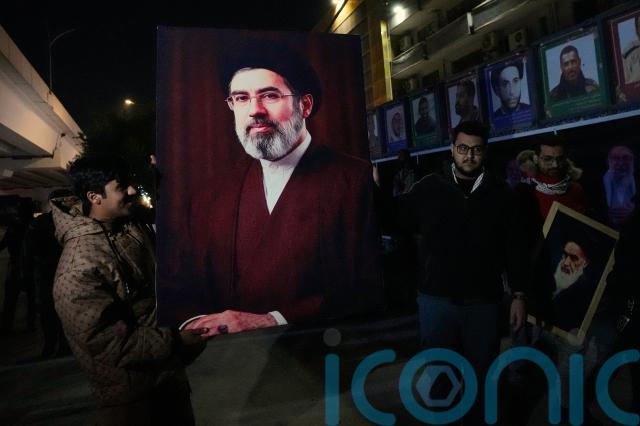
The 56-year-old Mr Khamenei — the son of the late Supreme Leader Ayatollah Ali Khamenei — has not been seen since succeeding his father on Monday.
His father and wife both were killed in an Israeli airstrike on the first day of the conflict.
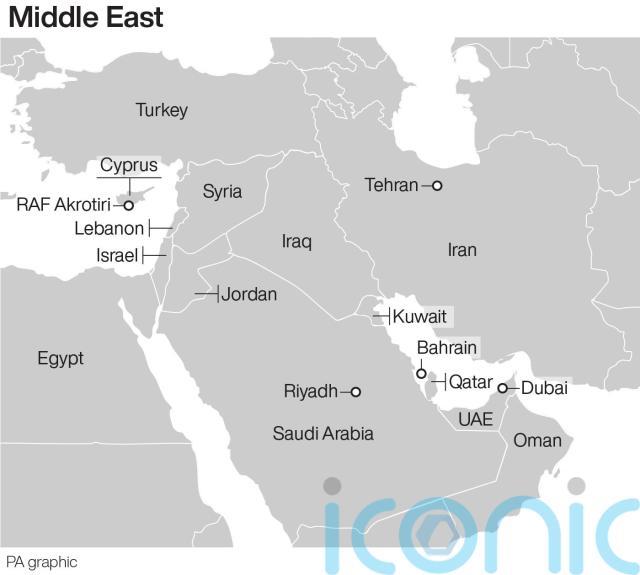
Separately, Kuwait said its defences downed eight Iranian drones and Saudi Arabia said it intercepted five heading toward the kingdom’s Shaybah oil field.
Iran has effectively stopped cargo traffic in the narrow strait through which about a fifth of all oil is shipped.

It has also targeted oil fields and refineries in Gulf Arab nations, aiming at generating enough global economic pain to pressure the United States and Israel to end their strikes.
The UN Security Council is to vote later on Wednesday on a resolution sponsored by the Gulf Cooperation Council demanding Iran stop attacking its Arab neighbours.
The military escalation in the Middle East is disrupting shipping through the Strait of Hormuz.
The impacts extend far beyond the region, affecting energy markets, maritime transport and global supply chains.@UNCTAD's rapid impact analysis: https://t.co/Q9r8Ha3ctG pic.twitter.com/nvnpvYplkl
— United Nations (@UN) March 10, 2026
Witnesses reported continuous airstrikes hitting Tehran after Israel said it had renewed its attacks.
Explosions were also heard in Beirut and in southern Lebanon after Israel said it was hitting targets connected to Iran-backed Hezbollah militants.
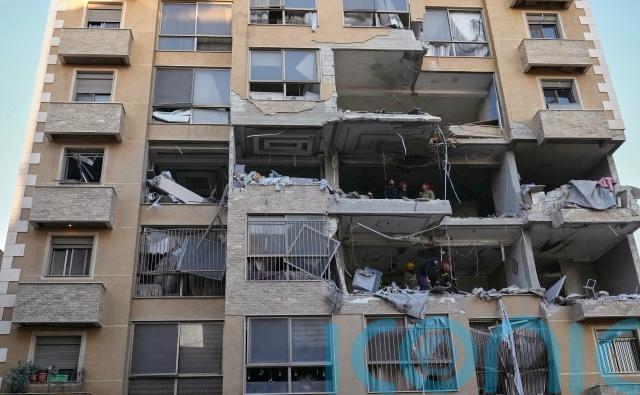
The attacks set a building ablaze in central Beirut’s densely populated Aicha Bakkar area, engulfing the top two floors. Lebanon’s Health Ministry said four people were wounded.
Other Israeli strikes on southern and eastern Lebanon killed 14 people, and a Red Cross worker also died of wounds sustained on Monday, when his team was hit by an Israeli strike while they were rescuing people from an earlier attack.
Lebanon’s Health Ministry said that 570 people have been killed in the country since that latest fighting began.
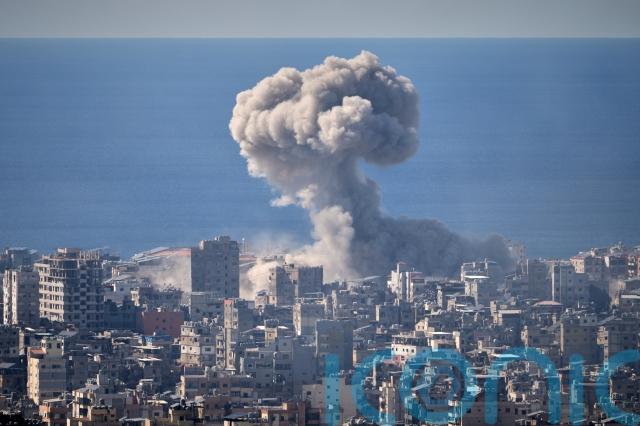
Hezbollah fired rockets at Israel after the United States and Israel began the wider war with their surprise bombardment of Iran.
Israel warned of Iranian attacks and sirens rang out in Tel Aviv and elsewhere, but there were no immediate reports of casualties.
UKMTO WARNING 018-26
Click here to view the full Warning⤵️https://t.co/R29PKZ34iH#MaritimeSecurity #MarSec pic.twitter.com/8UYiab3Ygj
— UKMTO Operations Centre (@UK_MTO) March 11, 2026
Saudi Arabia said it had destroyed six ballistic missiles launched toward Prince Sultan Air Base, a major US- and Saudi-operated facility, and intercepted two drones over the eastern city of Hafar al-Batin.
The United Kingdom Maritime Trade Operations centre, run by the British military, reported an attack on a container ship off the United Arab Emirates, saying the “extent of the damage is currently unknown but under investigation by the crew”.
Another ship was hit by a projectile in the Persian Gulf, it said. The crew was reported safe.
The ship attacks follow intense American airstrikes targeting Iranian navy assets and the port city of Bandar Abbas on Tuesday.
The Iranian threat against financial institutions did not identify any specifically.
It came after a Tehran location of Bank Sepah, the state-owned financial institution sanctioned by the U.S. over funding its armed forces, came under attack early Wednesday, killing staffers there, the state-run IRNA news agency reported.
At the United Nations, the Security Council was to vote on the Gulf Cooperation Council resolution, according to diplomats.
U.S. forces eliminated multiple Iranian naval vessels, March 10, including 16 minelayers near the Strait of Hormuz. pic.twitter.com/371unKYiJs
— U.S. Central Command (@CENTCOM) March 10, 2026
The draft resolution, obtained by The Associated Press, condemns Iran’s attacks on Bahrain, Kuwait, Oman, Qatar, Saudi Arabia, the UAE and Jordan.
The measure calls for an immediate end to all strikes and threats against neighbouring states, including through proxies.
It would be the first Security Council resolution considered since the start of the war on February 28.
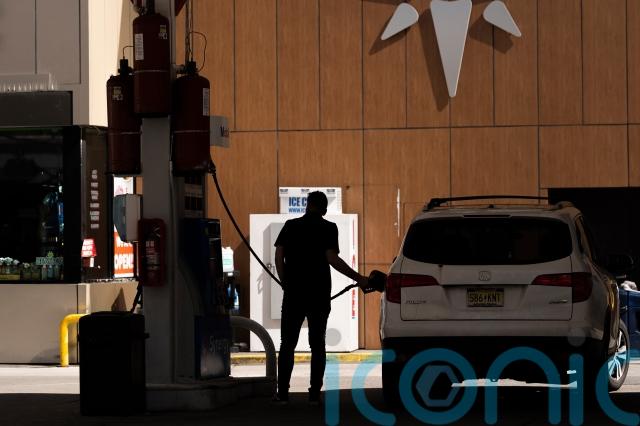
Oil prices remained well below Monday’s peaks but the price of Brent crude, the international standard, was still up some 20% Wednesday from when the war began, and consumers around the world are already feeling the pain at the pump.
Germany and Austria said they are releasing parts of their oil reserves following an International Energy Agency request for its members to release 400 million barrels to help temper energy price spikes.
The largest-ever previous collective release of emergency stocks by IEA member countries was 182.7 million barrels, in the wake of Russia’s full-scale invasion of Ukraine in 2022.
Japan also said it will release some of its reserves starting on Monday.
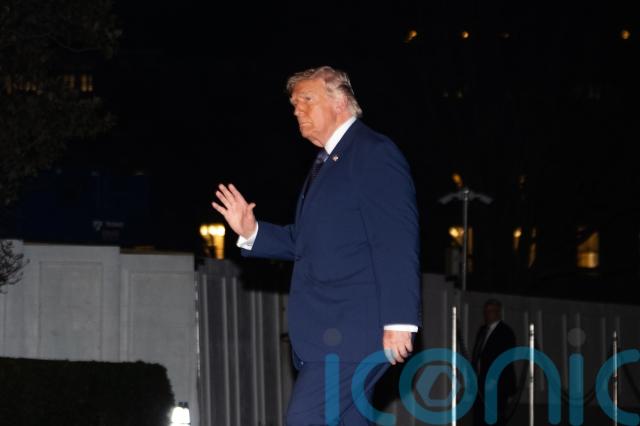
The US military said it had destroyed 16 Iranian minelayers near the Strait of Hormuz, though US President Donald Trump said in social media posts that there were no reports yet of Iran mining the passage.
If the strait is mined, it could take at least weeks to clean it up once the conflict is over.
"If Iran has put out any mines in the Hormuz Strait, and we have no reports of them doing so, we want them removed, IMMEDIATELY!" – President Donald J. Trump 🇺🇸 pic.twitter.com/WeX6rE4Uw1
— The White House (@WhiteHouse) March 10, 2026
Some tankers, believed linked to Iran, are continuing to get through the strait making so-called “dark” transits – meaning they aren’t turning on their automatic identification system (AIS) trackers, which show where vessels are.
Vessels carrying sanctioned Iranian crude often turn off their AIS trackers.
The security firm Neptune P2P Group said there had been seven ships pass through the strait since March 8.
Vessel redirects in Strait of Hormuz following reported attacks
The bulk carrier Hailan Journey loaded sulphur at Jubail between 4–9 March. The vessel was travelling at 9–11 knots on a direct course towards the Strait of Hormuz, with her raw AIS signal indicating “China owner &… pic.twitter.com/qKadDw9MDi
— MarineTraffic (@MarineTraffic) March 11, 2026
Of them, five were linked to Iranian-associated shipping, it said.
In ordinary times the strait typically sees 100 ships or more transit daily from the Persian Gulf into the Gulf of Oman.
Meanwhile, the commodity-tracking firm Kpler said Iran has restarted crude exports through its Jask oil terminal on the Gulf of Oman. A tanker loaded roughly 2 million barrels at Jask on March 7, it said.
In addition to the 570 killed in Lebanon, Iran has said that more than 1,300 people have been killed there and Israel has reported 12 people dead.
The US has lost seven soldiers while another eight have suffered severe injuries.

Subscribe or register today to discover more from DonegalLive.ie
Buy the e-paper of the Donegal Democrat, Donegal People's Press, Donegal Post and Inish Times here for instant access to Donegal's premier news titles.
Keep up with the latest news from Donegal with our daily newsletter featuring the most important stories of the day delivered to your inbox every evening at 5pm.

This publication supports the work of the Press Council of Ireland and Office of the Press Ombudsman, and our staff operate within the Code of Practice of the Press Council. You can obtain a copy of the Code, or contact the Council, at www.presscouncil.ie, Lo-call 1800 208 080 or email: info@presscouncil.ie.