File photo. Credit: Sportsfile
Search


14 Mar 2026

Please allow ads as they help fund our trusted local news content.
Kindly add us to your ad blocker whitelist.
If you want further access to Ireland's best local journalism, consider contributing and/or subscribing to our free daily Newsletter .
Support our mission and join our community now.
To continue reading this article, you can subscribe for as little as €0.50 per week which will also give you access to all of our premium content and archived articles!
Alternatively, you can pay €0.50 per article, capped at €1 per day.
Thank you for supporting Ireland's best local journalism!


Three acts of ideologically inspired violence in the past week in the United States have laid bare the heightened terrorism threat unfolding against the backdrop of the war with Iran.
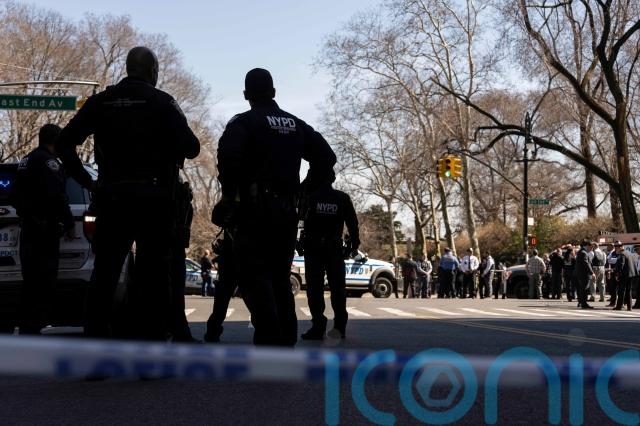
In New York City, two men who federal authorities say were inspired by Islamic State brought powerful homemade bombs to a far-right protest outside the mayoral mansion.
A naturalised citizen from Lebanon rammed his vehicle into a synagogue in Michigan, where he was shot at by security before he shot himself dead.
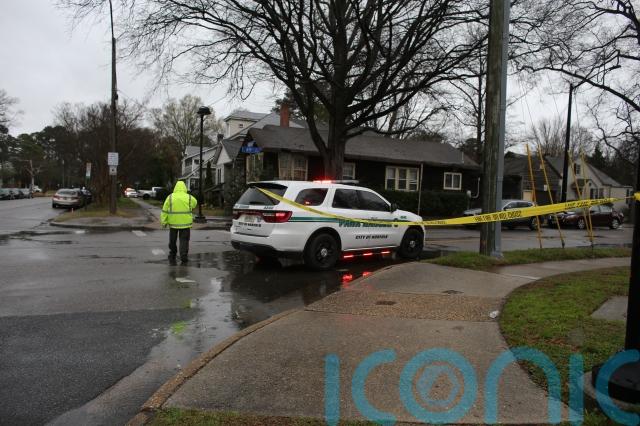
In Virginia, a man previously imprisoned on a terrorism conviction was heard yelling “Allahu akbar” before opening fire in a university classroom in an attack that officials said ended when the gunman was killed by students.
The violence has also put a focus on a counter-terrorism system strained by the widespread departures of experienced national security professionals at the FBI and Justice Department.
Those firings and resignations, coupled with the diversion of resources over the last year to meet other Trump administration priorities, have increased concerns about the capability to head off a potential surge in threats.
Frank Montoya, a retired senior FBI official, said: “So much experience has been decimated from the ranks.”
He said staff who “were best positioned to get to the bottom of it before something really bad happened” are in many cases no longer with the government, meaning less experienced personnel assigned to the threat are “starting from way behind”.
The FBI said it would not comment on personnel numbers and decisions, but issued a statement saying: “Agents and staff are dedicated professionals working around the clock to defend the homeland and crush violent crime.
“The FBI continuously assesses and realigns our resources to ensure the safety of the American people.”
Iran has vowed revenge for the killing by the US and Israel of former supreme leader Ayatollah Ali Khamenei, and though the fighting has so far been confined to the Middle East, the Islamic Republic has long professed its determination to carry out violence on American soil.
Iranian operatives, for instance, responded to the 2020 assassination of General Qassem Soleimani during the first Trump administration with a disrupted murder-for-hire plot targeting former national security adviser John Bolton.
A Pakistani business owner who says he was carrying out instructions from a contact in Iran’s paramilitary Revolutionary Guard was convicted in New York last week of trying to hire hitmen in 2024 for assassination plots targeting public figures, including President Donald Trump, who was then running for the White House.
Though much attention has focused on Iran’s use of proxies or hired hands to carry out plots, the country’s capability to organise a large-scale assault on the US remains unclear despite clear angst over the potential.
The FBI warned in a recent bulletin to law enforcement about Iran’s aspiration to conduct a drone attack targeting California, but after the warning was publicised, officials emphasised the intelligence was unverified and that no specific plot was known to exist.
Terrorism concerns typically rise during times of international conflict when military action overseas is accompanied by increased vigilance, including outreach from agents to their sources, more active sharing of tips between federal and local law enforcement and closer co-ordination among FBI joint terrorism task forces, said Claire Moravec, a former FBI national security official who served as deputy homeland security adviser in Illinois.
Officials have said there is no indication that either the men arrested in connection with the explosives in New York, or the man responsible for Thursday’s Old Dominion University shooting, were motivated explicitly by the Iran war.
The man who crashed into Temple Israel synagogue near Detroit on Thursday lost four family members in an Israeli air strike in his native Lebanon last week, an official in Lebanon said.
Regardless, wars like the one in Iran can function as “accelerants”, raising the volume and intensity of grievances for the disaffected, Ms Moravec said.
“Ultimately, the goal during these periods is not ‘surveillance’ but maintaining a broad awareness of how international events could translate into domestic security risks, so that threats can be identified and disrupted early,” she said.

Subscribe or register today to discover more from DonegalLive.ie
Buy the e-paper of the Donegal Democrat, Donegal People's Press, Donegal Post and Inish Times here for instant access to Donegal's premier news titles.
Keep up with the latest news from Donegal with our daily newsletter featuring the most important stories of the day delivered to your inbox every evening at 5pm.

This publication supports the work of the Press Council of Ireland and Office of the Press Ombudsman, and our staff operate within the Code of Practice of the Press Council. You can obtain a copy of the Code, or contact the Council, at www.presscouncil.ie, Lo-call 1800 208 080 or email: info@presscouncil.ie.