'No one is listening to me' - Irish nurse with HIV told by doctors she had cancer
Search


19 Mar 2026

Please allow ads as they help fund our trusted local news content.
Kindly add us to your ad blocker whitelist.
If you want further access to Ireland's best local journalism, consider contributing and/or subscribing to our free daily Newsletter .
Support our mission and join our community now.
To continue reading this article, you can subscribe for as little as €0.50 per week which will also give you access to all of our premium content and archived articles!
Alternatively, you can pay €0.50 per article, capped at €1 per day.
Thank you for supporting Ireland's best local journalism!


Lawyers for the eldest son of Norway’s crown princess have called for his acquittal on charges of rape, as six weeks of high-profile court proceedings that have cast a shadow over the royal family drew to a close.
Prosecutors this week sought a prison sentence of seven years and seven months for Marius Borg Hoiby, who denies the rape allegations.
A verdict is expected at a later date.
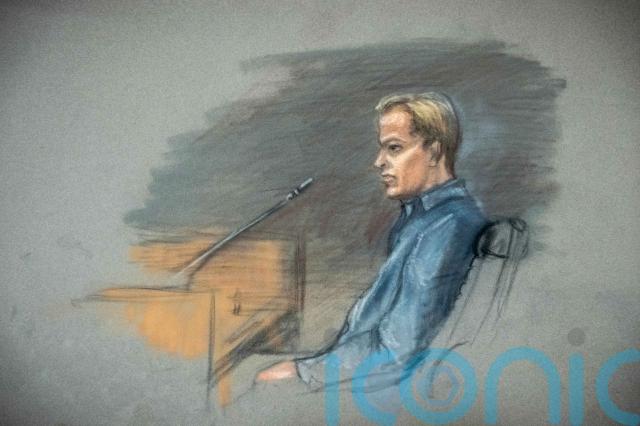
Hoiby, 29, is the son of Crown Princess Mette-Marit by a previous marriage and the stepson of Crown Prince Haakon, the heir to Norway’s throne.
He is charged with 40 offences in total, including four counts of rape between 2018 and 2024 involving women who prosecutors say were unable to give consent because they were asleep or otherwise incapacitated.
Defence lawyers for Hoiby, who has no royal titles or official duties, said that there was no evidence of rape in any of the cases.
Hoiby’s trial at Oslo District Court has drawn intense attention at home and abroad, putting the royal family in an unwanted spotlight and exposing a rarely seen side of the country’s elite social scene.
Ms Mette-Marit separately has faced scrutiny in recent weeks over her connections with the late sex offender Jeffrey Epstein.
That has raised questions over her judgment, though she is not accused of any wrongdoing.
Around 70 witnesses have testified at the trial and hundreds of text messages and pieces of digital evidence were presented. Prosecutors pointed to photos and videos recovered from Hoiby’s phone.
During his trial, Hoiby has denied engaging sexually with sleeping women and said the encounters were consensual. He has admitted to a number of lesser offences, including drug possession, transporting 3.5 kilograms of marijuana in 2020, traffic violations and breaches of a restraining order involving a former partner.
He has also partially admitted to acts related to violence and threats, but disputes key aspects of those allegations, including intent.
The defence argued that Hoiby has lived under extraordinary media pressure due to his royal connections, which they said has shaped both public perception and the context of the case.
In court, Hoiby said the scrutiny had “erased him as a person”, adding that he had been shunned by much of his social circle and struggled with depression.
“My whole life is common property,” he said. “I am no longer Marius, I’m a monster.”
Defence lawyer Petar Sekulic said that media coverage “bordered on the insane, but almost exceeded anything one could have feared beforehand”.
The investigation of Hoiby began in 2024. Police were first called to an apartment in Oslo’s Frogner neighbourhood following reports of a violent incident.
Hoiby was arrested and later released, but the case expanded as more women came forward with allegations.
At the heart of the trial are the four charges of rape, each of which are alleged to have occurred after consensual sex.
They centre on whether the women were capable of resisting and whether Hoiby understood their condition.
Prosecutor Sturla Henriksbo told the court on Wednesday that Hoiby should be judged “not for who he is, but for what he has done,” outlining what he described as patterns of behaviour across the charges.
He pointed to repeated violations of rules and boundaries, including interactions with police, breaches of restraining orders and what he characterised as a disregard for whether women consented to sexual activity or being filmed.
“The rules are designed so that one cannot evade guilt by getting high or drunk,” Mr Henriksbo said, arguing that the court should assess the case based on how a sober person would have understood the situation.
“Rape and abuse in close relationships are among the most serious acts one can expose others to, and that must be reflected in the punishment,” Mr Henriksbo told the court.
Summing up the defence case on Thursday, Mr Sekulic said that no evidence supported the rape charges and that none of the pictures or videos seen during the trial proved a crime. He questioned the credibility of the alleged victims.
Mr Sekulic acknowledged that aspects of Hoiby’s behaviour had been “unsympathetic,” but said that should not weigh on the court’s judgment.
“What can be described as bad behaviour, bad morals, which cannot be punished under the criminal law, should be disregarded,” he told the court.
“It is irrelevant.”

Subscribe or register today to discover more from DonegalLive.ie
Buy the e-paper of the Donegal Democrat, Donegal People's Press, Donegal Post and Inish Times here for instant access to Donegal's premier news titles.
Keep up with the latest news from Donegal with our daily newsletter featuring the most important stories of the day delivered to your inbox every evening at 5pm.

This publication supports the work of the Press Council of Ireland and Office of the Press Ombudsman, and our staff operate within the Code of Practice of the Press Council. You can obtain a copy of the Code, or contact the Council, at www.presscouncil.ie, Lo-call 1800 208 080 or email: info@presscouncil.ie.