A still from a video, which has been widely shared on the social media, of the shocking incident
Search


23 Mar 2026

Please allow ads as they help fund our trusted local news content.
Kindly add us to your ad blocker whitelist.
If you want further access to Ireland's best local journalism, consider contributing and/or subscribing to our free daily Newsletter .
Support our mission and join our community now.
To continue reading this article, you can subscribe for as little as €0.50 per week which will also give you access to all of our premium content and archived articles!
Alternatively, you can pay €0.50 per article, capped at €1 per day.
Thank you for supporting Ireland's best local journalism!


President Donald Trump says Iran wants “to make a deal”, and claims US envoys have been holding talks with a “respected” Iranian leader.
Mr Trump told reporters on Monday that his Middle East special envoy Steve Witkoff and his son-in-law Jared Kushner conducted talks on Sunday into the evening.
He said talks would continue today.
Mr Trump did not name any official or officials representing Tehran.
Mr Trump said the US has not talked to Supreme Leader Ayatollah Mojtaba Khamenei.
The US president added that if a deal is reached, the US will move to take Iran’s enriched uranium critical to its disputed nuclear programme.
However, on Monday Iran’s parliament speaker denied there have been any negotiations with the United States.
Mohammad Bagher Qalibaf wrote on X that “No negotiations have been held with the US, and fakenews is used to manipulate the financial and oil markets and escape the quagmire in which the US and Israel are trapped”.
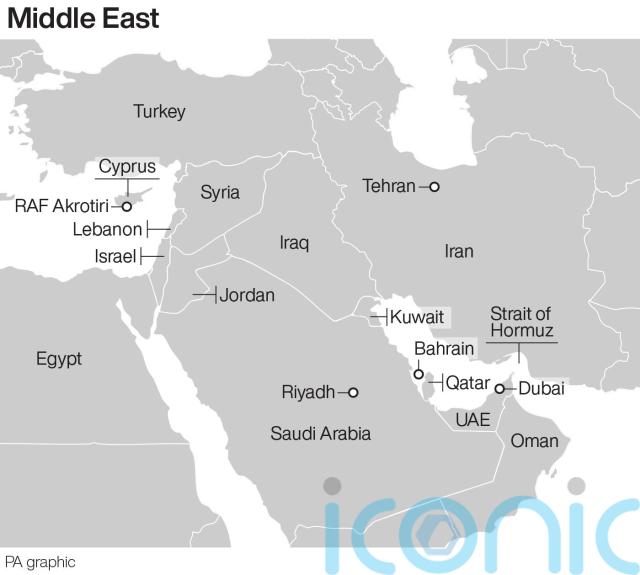
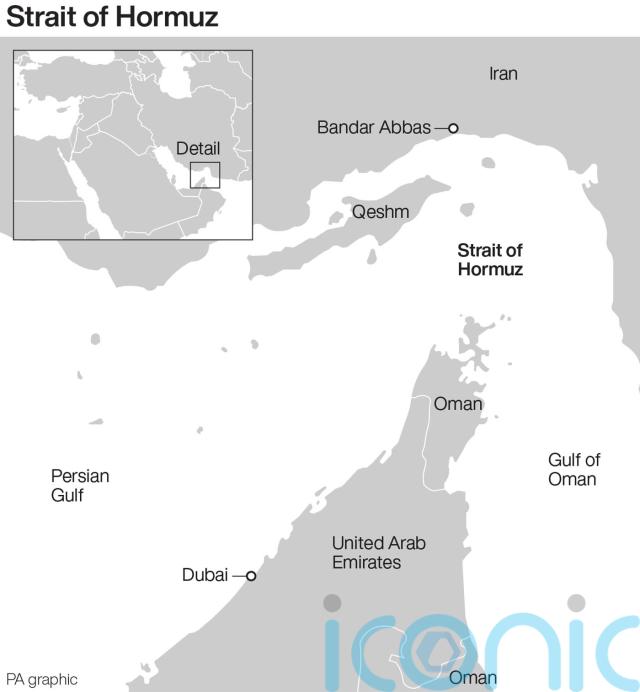
Earlier, Mr Trump extended his deadline for Iran to reopen the Strait of Hormuz, saying the US will hold off on power plant strikes for five days.
Mr Trump made the announcement on his Truth Social site, just hours ahead of a deadline later in the day.
Writing in all capital letters, he said the US and Iran have had “very good and productive conversations” that could yield “a complete and total resolution” in the war.
Talks will continue “throughout the week,” Mr Trump said.
Shortly after Mr Trump made the announcement, Iranian state television put up a graphic that read: “US president backs down following Iran’s firm warning.”
Mr Trump did not elaborate on the diplomatic negotiations that had taken place.
Iran did not immediately acknowledge any talks between the countries, but foreign minister Abbas Araghchi did say he spoke by phone with his Turkish counterpart, Hakan Fidan.
Turkey has been an intermediary before in negotiations between Tehran and Washington.
Mr Trump’s announcement came as the United Arab Emirates reported its air defence was attempting to intercept new incoming Iranian fire on Monday afternoon.
Mr Trump said that the suspension of his threat to attack power plants was “subject to the success of the ongoing meetings and discussions”.
The war, now in its fourth week, has already seen several dramatic turning points — the killing of Iran’s supreme leader, the bombing of a key Iranian gas field, and strikes targeting oil and gas facilities and other civilian infrastructure in Gulf Arab nations.
The conflict has killed more than 2,000 people, shaken the global economy, sent oil prices surging, and endangered some of the world’s busiest air corridors.
Mr Trump’s ultimatum and Iran’s promise of retaliation threatened to raise the stakes yet again, with potentially catastrophic repercussions for civilians across the region.
If carried out, the attacks could cut electricity to wide swaths of people in Iran and around the Gulf and knock out desalination plants that provide many desert nations with drinking water.
There are also increasing concerns about the consequences any of strikes on nuclear facilities.
The fever pitch of the rhetoric shows how the war has spiralled to a point unimaginable at the start of the conflict on February 28, when the United States and Israel began bombing Iran.
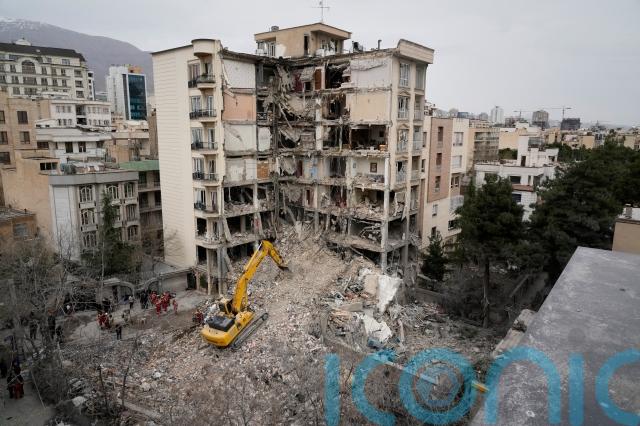
Meanwhile, Israel launched new attacks on Monday on the Iranian capital, saying it had “begun a wide-scale wave of strikes” on infrastructure targets in Tehran without immediately elaborating.
Explosions were heard in multiple locations in the afternoon. It was not immediately clear what had been hit.
With the US deploying more amphibious assault ships and additional Marines to the Middle East, Iran warned against any ground attack.
“Any attempt by the enemy to target Iran’s coasts or islands will, naturally and in accordance with established military practice, lead to the mining of all access routes … in the Persian Gulf and along the coasts,” Iran’s Defence Council warned said in a statement.
The widespread use of mines could imperil not only military vessels but scores of commercial ships waiting to pass through the Strait of Hormuz, and a clean-up would last long after the conflict ends.
Mr Trump has said he has no plans to send ground forces into Iran but also has said that he retains all options. Israel has suggested its ground forces could take part in the war.
Israel has also targeted the Iran-linked Hezbollah militant group in Lebanon during the war, while the group has fired hundreds of rockets into Israel.
In recent days, Israel has hit many apartment buildings in Beirut and bombed bridges over the Litani river in the Lebanon’s south.
Lebanese president Joseph Aoun called the targeting of bridges “a prelude to a ground invasion”, while Egypt denounced the strikes as the “collective punishment” of civilians for the actions of Hezbollah.
Authorities say Israeli strikes have killed more than 1,000 people in Lebanon and displaced more than one million.
Iran’s death toll has surpassed 1,500, its Health Ministry has said. In Israel, 15 people have been killed by Iranian strikes. At least 13 US military members have been killed, along with more than a dozen civilians in the occupied West Bank and Gulf Arab states.

Subscribe or register today to discover more from DonegalLive.ie
Buy the e-paper of the Donegal Democrat, Donegal People's Press, Donegal Post and Inish Times here for instant access to Donegal's premier news titles.
Keep up with the latest news from Donegal with our daily newsletter featuring the most important stories of the day delivered to your inbox every evening at 5pm.

This publication supports the work of the Press Council of Ireland and Office of the Press Ombudsman, and our staff operate within the Code of Practice of the Press Council. You can obtain a copy of the Code, or contact the Council, at www.presscouncil.ie, Lo-call 1800 208 080 or email: info@presscouncil.ie.