
Gardai say the fatal incident happened near Kilworth, County Cork on Monday afternoon | FILE PHOTO
Search


25 Mar 2026

Please allow ads as they help fund our trusted local news content.
Kindly add us to your ad blocker whitelist.
If you want further access to Ireland's best local journalism, consider contributing and/or subscribing to our free daily Newsletter .
Support our mission and join our community now.
To continue reading this article, you can subscribe for as little as €0.50 per week which will also give you access to all of our premium content and archived articles!
Alternatively, you can pay €0.50 per article, capped at €1 per day.
Thank you for supporting Ireland's best local journalism!


The Trump administration has offered a 15-point ceasefire plan to Iran, according to a person briefed on the contours of the proposal, even as the US military is preparing to call up at least 1,000 more troops to supplement some 50,000 troops already in the region.
The plan was submitted to Iran by intermediaries from Pakistan, who have offered to host renewed negotiations between Washington and Tehran, according to the person, who told the Associated Press but was not authorised to speak publicly about it.
The New York Times reported earlier on Tuesday that the 15-point plan had been delivered to Iranian officials.
The Pentagon is also in the process of deploying a pair of Marine Expeditionary Units that will add about 5,000 Marines and thousands of sailors to the region.
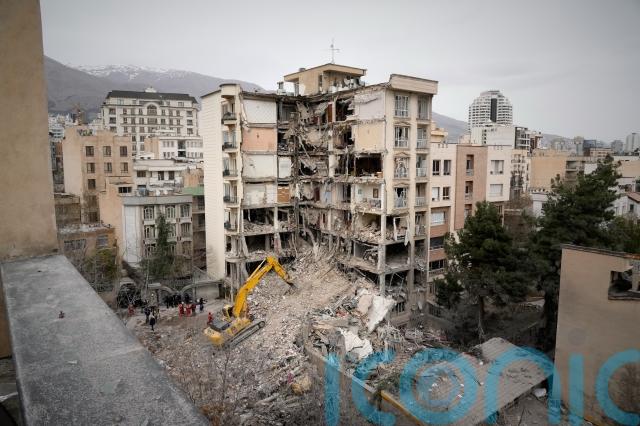
Israeli officials, who have been advocating for President Donald Trump to continue the war against Iran, were taken by surprise by the US administration’s submission of a ceasefire plan, the person said.
But with the US taking steps to send additional soldiers and Marines to the Middle East, the move is being framed as Mr Trump manoeuvring to give himself “max flexibility” on what he will do next, the person added.
The White House did not respond to requests for comment.
Earlier in the day, Mr Trump said the US was in talks with Iran to end the war as diplomatic efforts picked up and Iran issued a newly defiant statement.
An Iranian military spokesperson mocked US attempts at a ceasefire deal on Wednesday, insisting the Americans were only negotiating with themselves.
Lieutenant Colonel Ebrahim Zolfaghari, a spokesperson for the Iranian military’s Khatam Al-Anbiya Central Headquarters, made the statement in a video aired on state television.
“The strategic power you used to talk about has turned into a strategic failure,” he said. “The one claiming to be a global superpower would have already gotten out of this mess if it could. Don’t dress up your defeat as an agreement. Your era of empty promises has come to an end.
“Have your internal conflicts reached the point where you are negotiating with yourselves?”
Airstrikes battered the Islamic Republic while Iranian missiles and drones targeted Israel and sites across the region.
Iran has denied any negotiations are taking place and Mr Trump delayed his self-imposed deadline for Iran to reopen the Strait of Hormuz.
Tehran’s chokehold on that crucial waterway has snarled international shipping, sent fuel prices skyrocketing and threatened the world economy.
Any talks between the US and Iran would face monumental challenges. Many of Washington’s shifting objectives, particularly over Iran’s ballistic missile and nuclear programmes, remain difficult to achieve.
It is not clear who in Iran’s government would have the authority to negotiate or be willing to, as Israel has vowed to continue taking out leaders.
Iran remains highly suspicious of the United States, which twice under the Trump administration has attacked during high-level diplomatic talks, including the February 28 strikes which started the current war.
At least 1,000 troops from the 82nd Airborne Division will be sent to the Middle East in the coming days, three people with knowledge of the plans told The Associated Press.
The 82nd Airborne is considered the US Army’s emergency response force and can typically be deployed on short notice.
It is the latest addition of American troops after US officials last week said thousands of Marines aboard several Navy ships would be heading to the region.
While the Marine units are trained in missions that include supporting US embassies, evacuating civilians and disaster relief, the soldiers of the 82nd Airborne are trained to parachute into hostile or contested territory to secure key territory and airfields.
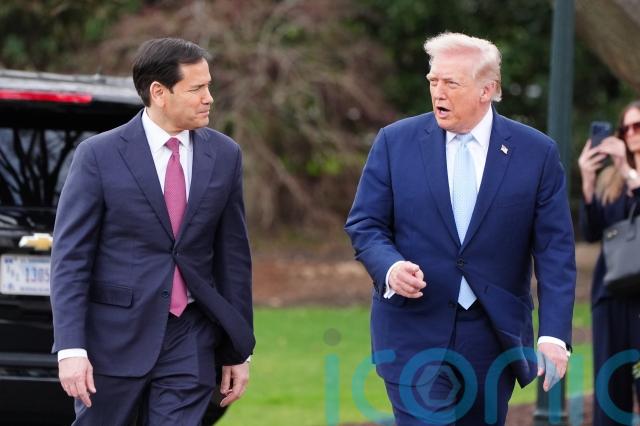
The Marine deployment to the region raises speculation the US may try to seize Kharg Island, which is vital to Iran’s oil network. The US bombed the Persian Gulf island more than a week ago, hitting its defences but saying it had left oil infrastructure intact.
Iran has threatened to mine the Gulf if the US appears to be on the verge of landing troops.
Elsewhere, Pakistan’s Prime Minister Shehbaz Sharif wrote on X that his country is ready to “facilitate meaningful and conclusive talks” to end the conflict.
The US had agreed in principle to join talks in Pakistan, according to three Pakistani officials, one Egyptian official and a Gulf diplomat, while mediators were still working to convince Iran.
One diplomat from the region said the talks could happen by early next week and that special envoy Steve Witkoff and Mr Trump’s son-in-law Jared Kushner are expected to represent the US.
Speaking on Tuesday at the White House, the president said the US is “in negotiations right now” and that the participants included Mr Witkoff, Mr Kushner, secretary of state Marco Rubio and vice president JD Vance.
“We have a number of people doing it,” Mr Trump said. “And the other side, I can tell you, they’d like to make a deal.”
Iranian foreign minister Abbas Araghchi’s office said he has been discussing the war this week with several counterparts.
But Mohammad Bagher Qalibaf, the speaker of Iran’s parliament, denied Mr Trump’s claim of direct talks, and an Iranian military spokesman declared that the fighting would go on.
On Tuesday, Iranian state television quoted Major General Ali Abdollahi Aliabadi as saying: “Iran’s powerful armed forces are proud, victorious and steadfast in defending Iran’s integrity, and this path will continue until complete victory.”

Subscribe or register today to discover more from DonegalLive.ie
Buy the e-paper of the Donegal Democrat, Donegal People's Press, Donegal Post and Inish Times here for instant access to Donegal's premier news titles.
Keep up with the latest news from Donegal with our daily newsletter featuring the most important stories of the day delivered to your inbox every evening at 5pm.

This publication supports the work of the Press Council of Ireland and Office of the Press Ombudsman, and our staff operate within the Code of Practice of the Press Council. You can obtain a copy of the Code, or contact the Council, at www.presscouncil.ie, Lo-call 1800 208 080 or email: info@presscouncil.ie.