
Gardai say the fatal incident happened near Kilworth, County Cork on Monday afternoon | FILE PHOTO
Search


25 Mar 2026

Please allow ads as they help fund our trusted local news content.
Kindly add us to your ad blocker whitelist.
If you want further access to Ireland's best local journalism, consider contributing and/or subscribing to our free daily Newsletter .
Support our mission and join our community now.
To continue reading this article, you can subscribe for as little as €0.50 per week which will also give you access to all of our premium content and archived articles!
Alternatively, you can pay €0.50 per article, capped at €1 per day.
Thank you for supporting Ireland's best local journalism!


Iran has received a US plan to pause the war in the Middle East, officials said on Wednesday, a proposal sent even as Washington deploys paratroopers and more Marines to the region.
Tehran did not confirm it received the plan and publicly dismissed the diplomatic effort, while launching more attacks on Israel and Gulf Arab countries, including an assault that sparked a huge fire at Kuwait International Airport.
Iran also continued to come under attack.
Two officials from Pakistan, which delivered the plan to Iran, described the 15-point proposal broadly, saying it addressed sanctions relief, a rollback of Iran’s nuclear programme, limits on missiles, and reopening the Strait of Hormuz, a crucial waterway through which a fifth of the world’s oil is shipped.
An Egyptian official involved in the mediation efforts added that the proposal includes restrictions on Iran’s support for armed groups.
Some of those points were nonstarters in negotiations before the war: Iran has said it will not discuss its ballistic missile programme or its support of regional militias, which it views as key to its security.
And its ability to control passage through the Strait of Hormuz represents one of its biggest strategic advantages.
Iran’s attacks on regional energy infrastructure and its restrictions on the strait have sent oil prices skyrocketing and rocked world markets over fears of a global energy crisis, in turn putting pressure on the US to find a way to end the chokehold and calm markets.
At least 1,000 troops from the 82nd Airborne Division will be sent to the Middle East in the coming days, three people with knowledge of the plans told The Associated Press.
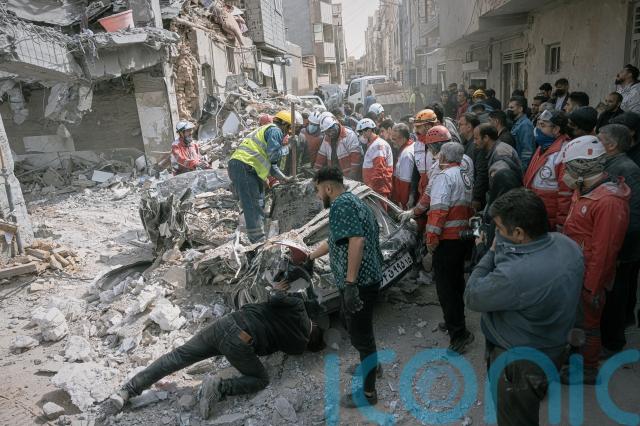
The paratroopers are trained to jump into hostile or contested areas to secure key territory and airfields.
The Pentagon is also in the process of sending about 5,000 more Marines, trained in amphibious assaults, and thousands of sailors to the region.
The 15-point plan now in Iranian hands is “a comprehensive deal” to reach a ceasefire, according to the Egyptian official.
Mediators are pushing for possible in-person talks between the Iranians and the Americans, perhaps as soon as Friday in Pakistan, the Egyptian and Pakistani officials said.
Speaking Tuesday at the White House, President Donald Trump said the US is “in negotiations right now” and that the participants included special envoy Steve Witkoff, his son-in-law Jared Kushner, secretary of state Marco Rubio and vice president JD Vance.
He has not said who from Iran they are in contact with.
U.S. forces have destroyed more than 9,000 military targets inside Iran, significantly removing the Iranian regime's combat capability. pic.twitter.com/7w1ZCS0JGn
— U.S. Central Command (@CENTCOM) March 24, 2026
“We have a number of people doing it,” Mr Trump said. “And the other side, I can tell you, they’d like to make a deal.”
Iran’s Khatam Al-Anbiya Central Headquarters, which commands both the regular military and the paramilitary Revolutionary Guard, dismissed the idea of talks.
Iranian leaders have repeatedly denied they are happening, while acknowledging that the foreign minister is in contact with various countries but not the US or Israel.
“Our first and last word has been the same from day one, and it will stay that way – someone like us will never come to terms with someone like you,” Lt Col Ebrahim Zolfaghari, a spokesman for the headquarters, said in a video statement on state television.
“Not now, not ever.”
Israeli officials, who have been advocating for Mr Trump to continue the war against Iran, were surprised by the submission of a ceasefire plan, according to a person who was briefed on the contours of the proposal and also confirmed it had been submitted.
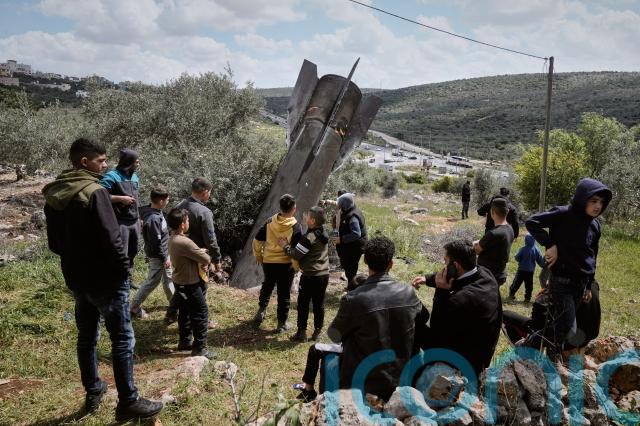
Any talks between the US and Iran would face monumental challenges.
It is not clear who in Iran’s government has the authority to negotiate or would be willing to, as Israel has vowed to continue killing the country’s leaders.
Iran remains highly suspicious of the United States, which twice under the Trump administration has attacked during high-level diplomatic talks, including with the February 28 strikes that started the current war.
“We have a very catastrophic experience with US diplomacy,” Iranian foreign ministry spokesperson Esmail Baghaei told India Today on Tuesday.
The Israeli military announced new wide-scale attacks on Iran early on Wednesday, targeting government infrastructure, and witnesses reported airstrikes in the northwestern city of Qazvin.
Missile alert sirens sounded multiple times in Israel as Iran launched its own attacks.
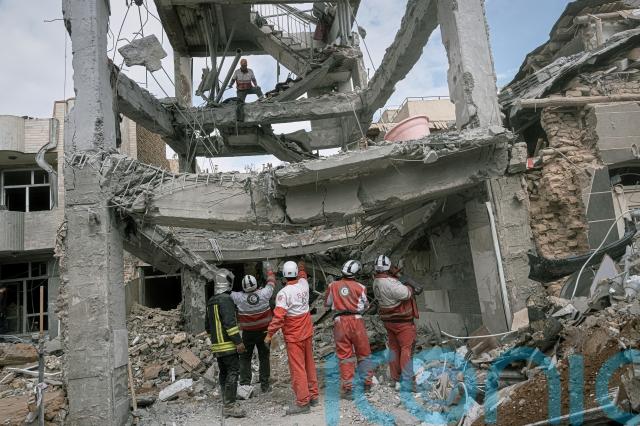
Iran also kept up the pressure on its Gulf Arab neighbours, and Saudi Arabia’s defence ministry said it had destroyed at least eight drones in the kingdom’s oil-rich Eastern Province, and missile alert sirens sounded in Bahrain.
Kuwait said it shot down multiple drones but one hit a fuel tank at Kuwait International Airport, sparking a fire, the General Civil Aviation Authority said.
Iran’s death toll has passed 1,500, its health ministry has said. In Israel, 16 people have died. At least 13 US military members have been killed, and more than a dozen civilians in the occupied West Bank and Gulf Arab states.
Authorities say more than 1,000 people have died in Lebanon, where Israel has targeted the Iran-linked Hezbollah militant group, which has also fired on Israel.
The news of potential negotiations drove down the price of oil, after it skyrocketed in recent weeks.
Brent crude oil, the international standard, has neared 120 dollars a barrel during the conflict but was trading below 100 dollars on Wednesday. It is still up about 35% from the start of the war.
Economists and leaders have warned of far-reaching effects if energy prices remain high – from rising prices of food and other basics to higher rates for mortgages and car loans.
A big driver of the rise in the oil price has been Iran’s stranglehold on the Strait of Hormuz, which leads from the Persian Gulf to the open sea.
Iran has allowed a small number of ships through the strait, but has said no ships from the US, Israel or countries seen as linked to them can pass.

Subscribe or register today to discover more from DonegalLive.ie
Buy the e-paper of the Donegal Democrat, Donegal People's Press, Donegal Post and Inish Times here for instant access to Donegal's premier news titles.
Keep up with the latest news from Donegal with our daily newsletter featuring the most important stories of the day delivered to your inbox every evening at 5pm.

This publication supports the work of the Press Council of Ireland and Office of the Press Ombudsman, and our staff operate within the Code of Practice of the Press Council. You can obtain a copy of the Code, or contact the Council, at www.presscouncil.ie, Lo-call 1800 208 080 or email: info@presscouncil.ie.