Search


08 Apr 2026
Search
08 Apr 2026

Please allow ads as they help fund our trusted local news content.
Kindly add us to your ad blocker whitelist.
If you want further access to Ireland's best local journalism, consider contributing and/or subscribing to our free daily Newsletter .
Support our mission and join our community now.
To continue reading this article, you can subscribe for as little as €0.50 per week which will also give you access to all of our premium content and archived articles!
Alternatively, you can pay €0.50 per article, capped at €1 per day.
Thank you for supporting Ireland's best local journalism!


Iran, the United States and Israel have reached a two-week ceasefire as US President Donald Trump pulled back from his threats to destroy Iranian civilisation.
But questions emerged over what appeared to be contradictory proposals to halt the region-wide war and reopen the vital Strait of Hormuz, with Iran insisting it would charge tolls to passing ships and continue to enrich uranium.
Mr Trump then suggested American warships would be “hangin’ around” the waterway, through which 20% of all oil and natural gas passes in peacetime. That could be a potential flashpoint as the days goes on.
Mr Trump initially said Iran had proposed a “workable” 10-point plan that could help end the war he launched with Israel on February 28. But he later called the plan fraudulent without elaborating. Mr Trump has said ending Iran’s nuclear programme was a key war goal.
Israel backed the US ceasefire with Iran, but Prime Minister Benjamin Netanyahu said on Wednesday it will not stop his country’s fight against Hezbollah in Lebanon, which continued through the morning. That contradicted comments from Pakistan, a key mediator, which said the ceasefire included the fighting in Lebanon.
Israel’s military said later that Wednesday that it “continues fighting and ground operations” against Hezbollah.
Pakistan said that talks over cementing a peace plan would begin in Islamabad as soon as Friday. Pakistan also said the ceasefire was to begin immediately, while Iran launched attacks on Gulf Arab states and Israel soon after.
Oil prices fell and stocks rose as Asian markets opened on Wednesday after the eleventh-hour agreement to reopen the strait.
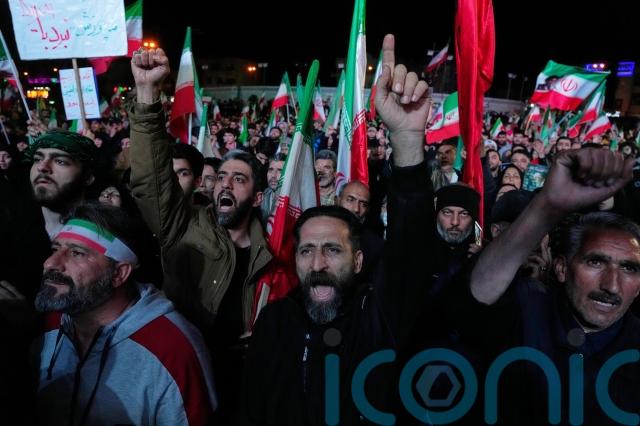
In the streets of Tehran, pro-government demonstrators screamed “death to America, death to Israel, death to compromisers” after the ceasefire announcement and burned American and Israeli flags. It shows the ongoing anger from hardliners, who had been preparing for what many assumed would be an apocalyptical battle with the United States.
Iranian foreign minister Abbas Araghchi said passage through the strait would be allowed under Iranian military management. It was not clear whether that meant Iran would completely loosen its chokehold on the waterway.
The plan allows for both Iran and Oman to charge fees on ships transiting through the strait, according to a regional official who added that Iran would use the money it raised for reconstruction.
But that would upend decades of reliance on the strait as an international waterway free for transit and will likely not be acceptable to the Gulf Arab states, which also need to rebuild after repeated Iranian attacks targeting their oilfields.

“Big money will be made. Iran can start the reconstruction process,” Mr Trump said on social media.
It is not clear what happens when the two weeks of the ceasefire ends.
There is little public sign that Iran and the United States had resolved disagreements over the fate of Iran’s nuclear programme, its ballistic missiles or its regional proxies – among the issues that the United States and Israel cited as justifications for launching the war.
In addition to control of the strait, Iran’s demands for ending the war include withdrawal of US combat forces from the region, the lifting of sanctions and the release of its frozen assets.
All those likely are non-starters for Mr Trump and potentially other Western nations. Iran’s chokehold on the strait roiled the world economy and raised the pressure on Mr Trump to reach a deal.
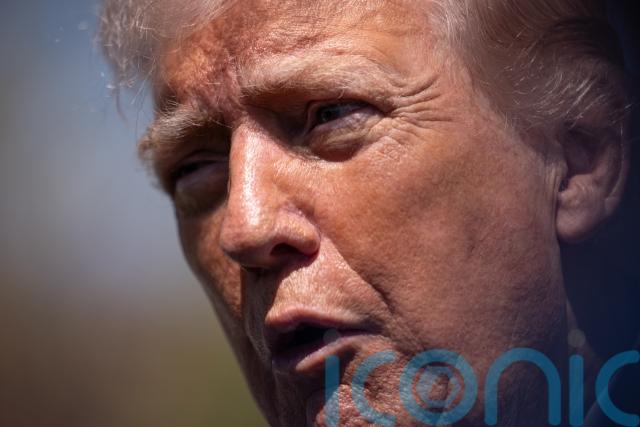
Since the war began, Mr Trump has repeatedly backed off deadlines just before they expire. In doing so again on Tuesday, Mr Trump said in a social media post he had come to the decision “based on conversations” with Pakistan Prime Minister Shehbaz Sharif and General Asim Munir, Pakistan’s powerful army chief.
A senior Israeli official said the United States had co-ordinated the ceasefire with Israel in advance and said Israel’s government credited “the massive crushing of the regime’s infrastructure” with securing the agreement.
The official said Washington had committed to pressing for the removal of nuclear material and dismantling of Iran’s ballistic missile programme.
Missile alerts were issued in the United Arab Emirates, Israel, Saudi Arabia, Bahrain and Kuwait after the ceasefire announcement. A gas processing facility in Abu Dhabi was ablaze after incoming Iranian fire, officials said.
More than 1,900 people had been killed in Iran as of late March, but the government has not updated the war’s toll for days.
In Lebanon, where Israel is fighting Iran-backed Hezbollah militants, more than 1,500 people have been killed and a million people have been displaced. Eleven Israeli soldiers have died.
In Gulf Arab states and the occupied West Bank, more than two dozen people have died, while 23 have been reported dead in Israel, and 13 US service members have been killed.

Subscribe or register today to discover more from DonegalLive.ie
Buy the e-paper of the Donegal Democrat, Donegal People's Press, Donegal Post and Inish Times here for instant access to Donegal's premier news titles.
Keep up with the latest news from Donegal with our daily newsletter featuring the most important stories of the day delivered to your inbox every evening at 5pm.

This publication supports the work of the Press Council of Ireland and Office of the Press Ombudsman, and our staff operate within the Code of Practice of the Press Council. You can obtain a copy of the Code, or contact the Council, at www.presscouncil.ie, Lo-call 1800 208 080 or email: info@presscouncil.ie.