
'We have a rule of law in this country' - Army deployed across Ireland amid fuel protests
Search


09 Apr 2026

Please allow ads as they help fund our trusted local news content.
Kindly add us to your ad blocker whitelist.
If you want further access to Ireland's best local journalism, consider contributing and/or subscribing to our free daily Newsletter .
Support our mission and join our community now.
To continue reading this article, you can subscribe for as little as €0.50 per week which will also give you access to all of our premium content and archived articles!
Alternatively, you can pay €0.50 per article, capped at €1 per day.
Thank you for supporting Ireland's best local journalism!


Israeli Prime Minister Benjamin Netanyahu said that he has authorised direct negotiations with Lebanon “as soon as possible,” as a tentative ceasefire in the Iran war staggered under the weight of Israel’s bombardment of Beirut.
Mr Netanyahu said he gave the order in response to requests from Lebanon and that talks would focus on disarming Hezbollah and establishing peaceful relations between the neighbouring countries.
He welcomed a call by Lebanon’s prime minister to demilitarise Beirut.
There was no immediate response from Lebanon.
The ceasefire was also hampered by Tehran’s continued chokehold on the Strait of Hormuz and uncertainty over whether planned peace talks can find common ground.
Iran and the US – which both declared victory in the wake of the ceasefire announcement – appeared to try to pressure each other.
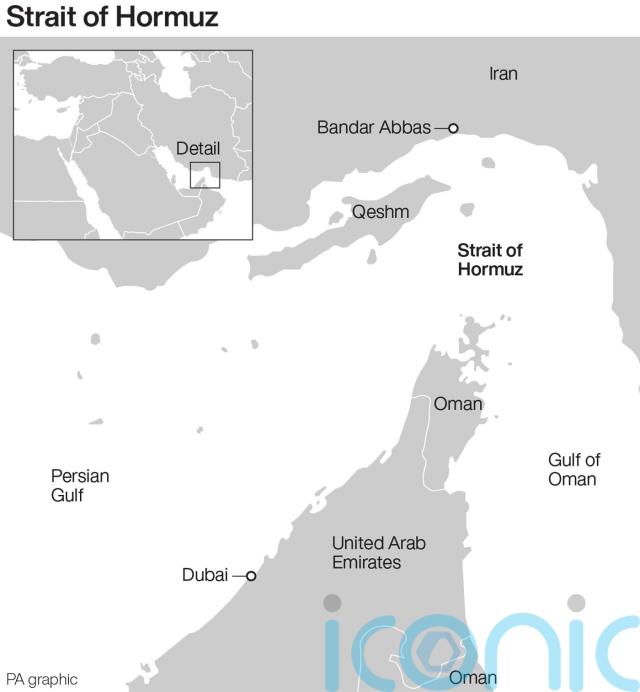
Semi-official news agencies in Iran suggested forces have mined the Strait of Hormuz, a crucial waterway for the world’s oil whose closure has proved Tehran’s greatest strategic advantage in the conflict.
President Donald Trump, meanwhile, warned that US forces would hit Iran even harder than before if it did not fulfil the agreement.
But what that agreement is remains in deep dispute.
There are still questions over what will happen to Iran’s stockpile of enriched uranium, how and when normal traffic will resume through the strait, and what happens to Iran’s ability to launch missile attacks in the future.
The chief of Iran’s nuclear agency said protecting Tehran’s right to enrich uranium is “necessary” for any ceasefire talks with the United States.
The US and Iran are due to meet in Pakistan for talks this weekend.
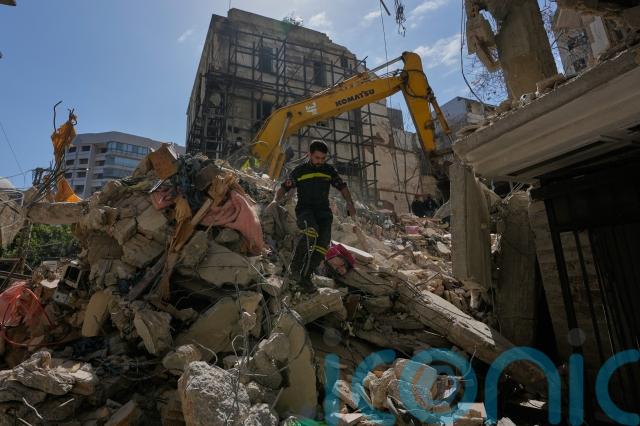
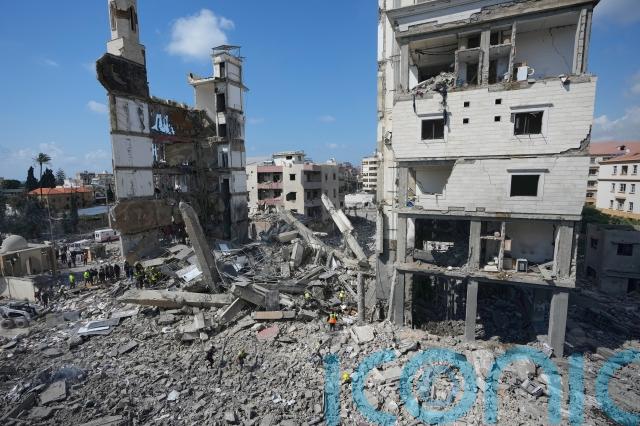
Lebanon’s health ministry said more than 300 people were killed and more than 1,000 wounded on Wednesday in Israeli strikes in central Beirut and other areas of Lebanon that Israel said targeted Hezbollah, which joined the war in support of Tehran.
First responders searched overnight for missing people still under the rubble after the strikes, which hit commercial and residential areas of Beirut.
Israel said on Thursday it killed Ali Yusuf Harshi, an aide to Hezbollah leader Naim Kassem.
Hezbollah did not immediately respond to a request for comment.
Iranian foreign minister Abbas Araghchi had insisted that an end to the war in Lebanon was part of the ceasefire deal, but Mr Netanyahu and Mr Trump said it was not.
— محمدباقر قالیباف | MB Ghalibaf (@mb_ghalibaf) April 9, 2026
Iran’s parliament speaker, Mohammad Bagher Qalibaf, warned that continued Israeli attacks on Hezbollah in Lebanon would bring “explicit costs and STRONG responses” in a message on X.
“Ceasefire violations carry explicit and STRONG responses,” he wrote.
“Extinguish the fire immediately.”
Mr Qalibaf has been discussed as a possible negotiator who could meet US Vice President JD Vance this weekend in Islamabad, the capital of Pakistan.
On Thursday, Mr Netanyahu said Israel will continue striking Hezbollah “with force, precision and determination”.
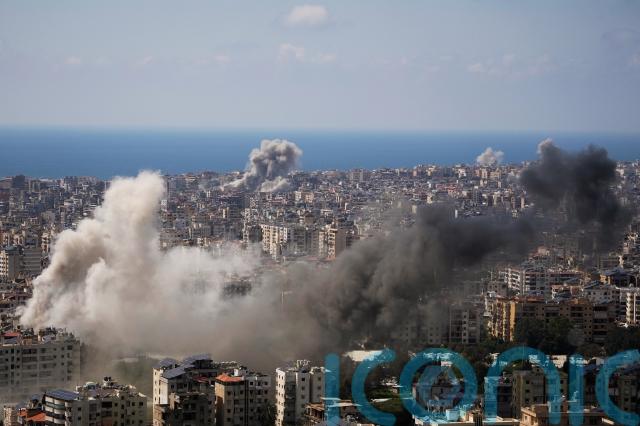
“Whoever acts against the citizens of Israel will be harmed,” Mr Netanyahu wrote on social media.Lebanon’s state-run National News Agency reported on Thursday that an Israeli strike overnight had killed at least seven people in southern Lebanon.
The Israeli military did not immediately acknowledge the strike.
Semi-official news agencies in Iran published a chart on Thursday suggesting the country’s paramilitary Revolutionary Guard put sea mines into the strait during the war – a message that may be intended to pressure the US.
The chart, released by the ISNA news agency and Tasnim, showed a large circle marked “danger zone” in Farsi over the route ships take through the strait, through which 20% of all traded oil and natural gas once passed.
Only a trickle of ships have passed through the strait since the war began, after a few were attacked and Iran threatened to hit any that it deemed connected to the US or Israel.
Ships appeared to continue to avoid the strait on Wednesday, despite the ceasefire.
Data from Kpler showed only four vessels with their trackers on passed through.
The chart suggested ships travel through waters closer to Iran’s mainland near Larak Island, a route that some ships were observed taking during the war.
It was dated from February 28 until April 9, and it was unclear if the guard had cleared any mines since then.
The strait’s de facto closure has caused oil prices to skyrocket – raising, in turn, the cost of petrol, food and other basics far beyond the Middle East.
Oil prices fell on news of the ceasefire on Wednesday, but began to climb as uncertainty over the deal grew.
The spot price of Brent crude, the international standard, was around 98 US dollars on Thursday – up about 35% since the war began.
Mr Trump warned that US warships and troops will remain around Iran “until such time as the REAL AGREEMENT reached is fully complied with”.
If it is not, “then the ‘Shootin’ Starts,’ bigger, and better”, the president wrote in a social media message.
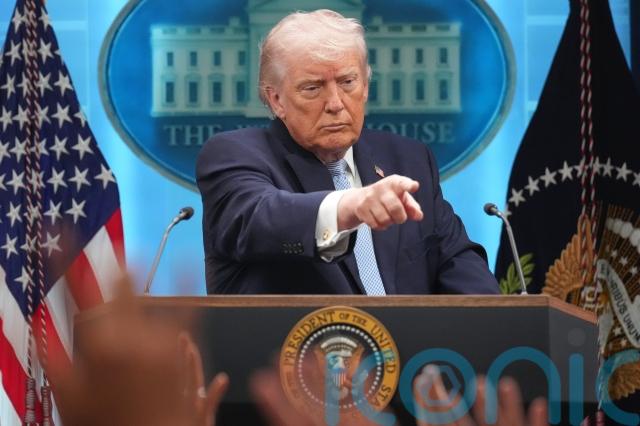
The White House said Mr Vance would lead the US delegation for talks in Islamabad aimed at ending the war, which are set to start on Saturday.
There appear to be many points of disagreement to address, including whether Iran will be allowed to formalise a system of charging ships to use the strait that it has instituted.
That would upend decades of precedent treating it as an international waterway that was free to transit.
The fate of Iran’s missile and nuclear programmes – the elimination of which was a major objective for the US and Israel in going to war – also remained unclear.
The US insists Iran must never be able to build nuclear weapons and wants to remove Tehran’s stockpile of highly enriched uranium, which could be used to build them, should it choose to pursue the bomb.
Iran insists its programme is peaceful.
Mr Trump said on Wednesday that the US would work with Iran to remove the buried uranium, though Iran did not confirm that.
In one version of the deal that Iran published, it said it would be allowed to continue enrichment.

Subscribe or register today to discover more from DonegalLive.ie
Buy the e-paper of the Donegal Democrat, Donegal People's Press, Donegal Post and Inish Times here for instant access to Donegal's premier news titles.
Keep up with the latest news from Donegal with our daily newsletter featuring the most important stories of the day delivered to your inbox every evening at 5pm.

This publication supports the work of the Press Council of Ireland and Office of the Press Ombudsman, and our staff operate within the Code of Practice of the Press Council. You can obtain a copy of the Code, or contact the Council, at www.presscouncil.ie, Lo-call 1800 208 080 or email: info@presscouncil.ie.