Search


12 Apr 2026
Search
12 Apr 2026

Please allow ads as they help fund our trusted local news content.
Kindly add us to your ad blocker whitelist.
If you want further access to Ireland's best local journalism, consider contributing and/or subscribing to our free daily Newsletter .
Support our mission and join our community now.
To continue reading this article, you can subscribe for as little as €0.50 per week which will also give you access to all of our premium content and archived articles!
Alternatively, you can pay €0.50 per article, capped at €1 per day.
Thank you for supporting Ireland's best local journalism!


The United States and Iran have ended face-to-face talks without an agreement, leaving a fragile two-week ceasefire in the war in the Middle East in doubt.
Washington said the negotiations broke down over Tehran’s refusal to commit to abandoning their nuclear weapon programme, while Iranian officials blamed the impasse without specifying the sticking points.
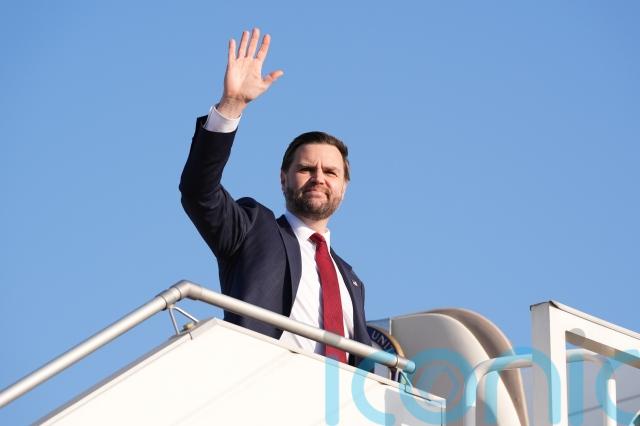
Vice-President JD Vance, who led the US delegation, said after the 21-hour talks: “We need to see an affirmative commitment that they will not seek a nuclear weapon, and they will not seek the tools that would enable them to quickly achieve a nuclear weapon.”
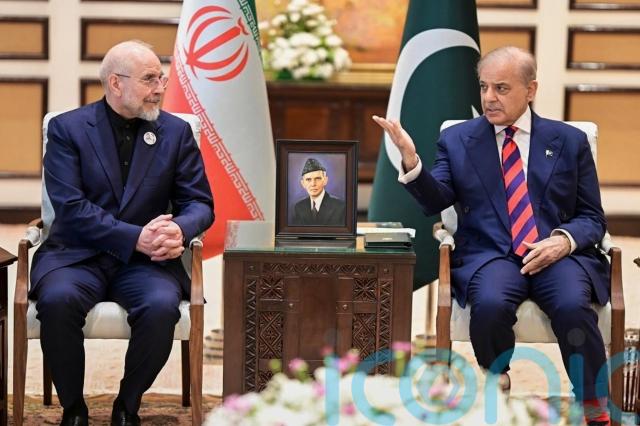
Iran’s parliament speaker Mohammad Bagher Qalibaf, who led Iran in the negotiations, said Tehran had made its position clear and it is time for the United States “to decide whether it can gain our trust or not”.
He did not mention the core disputes in a series of social media posts on Sunday, though Iranian officials earlier said the talks fell apart over two or three key issues, blaming what they called “US overreach”.
Neither side indicated what will happen after the 14-day ceasefire expires.
Pakistan foreign minister Ishaq Dar said his country will try to facilitate new dialogue between Iran and the US in the coming days, adding: “It is imperative that the parties continue to uphold their commitment to ceasefire.”
Since the US and Israel launched the war on February 28, it has killed at least 3,000 people in Iran, 2,020 in Lebanon, 23 in Israel and more than a dozen in Gulf Arab states, and caused lasting damage to infrastructure in half a dozen Middle Eastern countries.
Iran’s grip on the Strait of Hormuz has largely cut off the Persian Gulf and its oil and gas exports from the global economy, sending energy prices soaring.
The United States and Iran entered talks with sharply different proposals and contrasting assumptions about their leverage to end the war. Before negotiations began, the ceasefire was already threatened by deep disagreements and Israel’s continued attacks against the Iranian-backed Hezbollah in Lebanon.
Iran’s 10-point proposal ahead of the talks called for a guaranteed end to the war and sought control over the Strait of Hormuz. It included ending fighting against Iran’s “regional allies”, explicitly calling for a halt to Israeli strikes on Hezbollah.
The United States’ 15-point proposal included restricting Iran’s nuclear programme and reopening the strait.
Iran’s closure of the Strait of Hormuz has proved its biggest strategic advantage in the war. Around a fifth of the world’s traded oil had typically passed through on more than 100 ships a day. Only 12 have been recorded transiting since the ceasefire.
During the talks, the US military said two destroyers transited the critical waterway ahead of mine-clearing work, a first since the war began. Iran’s state media, however, reported the country’s joint military command denied that.
The impasse raises new questions about fighting in Lebanon. Israel pressed ahead with strikes after the ceasefire was announced, saying the agreement did not apply there. Iran and Pakistan claimed otherwise.
Lebanon’s state-run National News Agency reported six people were killed on Sunday morning in an Israeli strike in Maaroub, a village near the southern Lebanon’s coastal city Tyre.
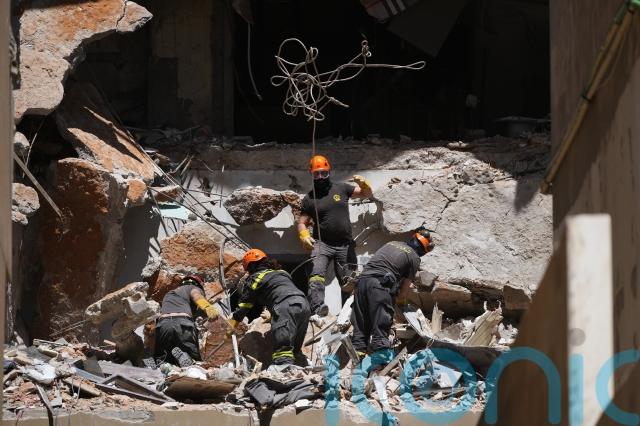
Though Israel’s strikes over Beirut have calmed in recent days, its strikes on southern Lebanon have intensified alongside a ground invasion it renewed after Hezbollah launched rockets towards Israel in the opening days of the Iran war.
Negotiations between Israel and Lebanon are expected to begin on Tuesday in Washington, Lebanese President Joseph Aoun’s office has said, after Israel’s surprise announcement authorising talks despite the lack of official relations between the countries. Protests erupted over the planned negotiations in Beirut on Saturday.
Israel wants Lebanon’s government to assume responsibility for disarming Hezbollah, much like was envisaged in a November 2024 ceasefire. But the militant group has survived efforts to curb its strength for decades.
Hezbollah joined the war in support of Iran in the opening days. Israel followed with air strikes and a ground invasion.
The day the Iran ceasefire deal was announced, Israel pounded Beirut with air strikes, killing more than 300 people in the deadliest day in Lebanon since the war began, according to the country’s health ministry.

Subscribe or register today to discover more from DonegalLive.ie
Buy the e-paper of the Donegal Democrat, Donegal People's Press, Donegal Post and Inish Times here for instant access to Donegal's premier news titles.
Keep up with the latest news from Donegal with our daily newsletter featuring the most important stories of the day delivered to your inbox every evening at 5pm.

This publication supports the work of the Press Council of Ireland and Office of the Press Ombudsman, and our staff operate within the Code of Practice of the Press Council. You can obtain a copy of the Code, or contact the Council, at www.presscouncil.ie, Lo-call 1800 208 080 or email: info@presscouncil.ie.