Search


14 Apr 2026
Search
14 Apr 2026

Please allow ads as they help fund our trusted local news content.
Kindly add us to your ad blocker whitelist.
If you want further access to Ireland's best local journalism, consider contributing and/or subscribing to our free daily Newsletter .
Support our mission and join our community now.
To continue reading this article, you can subscribe for as little as €0.50 per week which will also give you access to all of our premium content and archived articles!
Alternatively, you can pay €0.50 per article, capped at €1 per day.
Thank you for supporting Ireland's best local journalism!


Lebanon and Israel have opened their first direct diplomatic talks in decades in Washington following more than a month of war between Israel and the Hezbollah militant group.
US secretary of state Marco Rubio called the talks a “historic opportunity” but made clear no breakthrough agreement was immediately expected.
Mr Rubio said the Trump administration is “very happy” to be facilitating the discussions, while noting that “we understand we’re working against decades of history and complexities” that will not be quickly resolved.
Despite Hezbollah’s outright rejection, the talks are a major step for two countries with no diplomatic relations that have been officially at war since Israel’s inception in 1948.
The latest round of fighting was sparked by Hezbollah firing rockets into northern Israel on March 2, days after the United States and Israel attacked Iran, Hezbollah’s key ally and patron.
Mr Rubio and US ambassador to the United Nations Mike Waltz attended the opening of the session at the State Department that is being led by US ambassador to Lebanon Michel Issa, Israeli ambassador to the US Yechiel Leiter and Lebanese ambassador to the US Nada Hamadeh Moawad.
The Lebanese government hopes the talks will pave the way to an end to the war. While Iran has set ending the wars in Lebanon and the region as a condition for talks with the United States, Lebanon insists on representing itself.
Iran-backed Hezbollah and other critics maintain that Lebanon’s government lacks leverage and that it should instead back the position of Iran, Hezbollah’s key ally and patron. Wafiq Safa, a high-ranking member of the militant group’s political council, told the Associated Press that it will not abide by any agreements made in the talks.
Hezbollah enjoys wide influence in Beirut’s southern suburbs, as well as large swathes of the country’s southern and eastern provinces.
Hezbollah-allied politicians hold two cabinet minister positions, though the group’s ties have soured with Lebanon’s top political authorities, who have been critical of Hezbollah’s decision to enter the war last month and who have since criminalised the group’s military activities in the country.
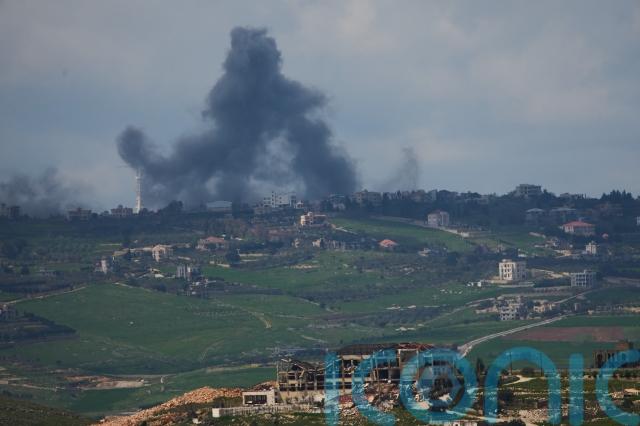
On the day of the talks, incoming fire triggered non-stop drone and rocket alert sirens in Israeli communities near the Lebanese border. Hezbollah so far on Tuesday has claimed 24 attacks on northern Israel and on Israeli troops in southern Lebanon.
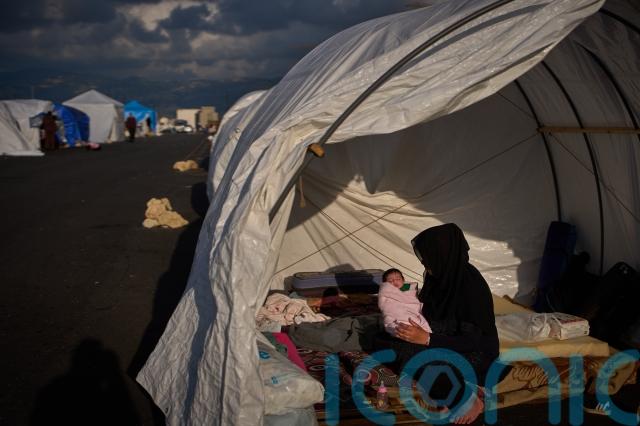
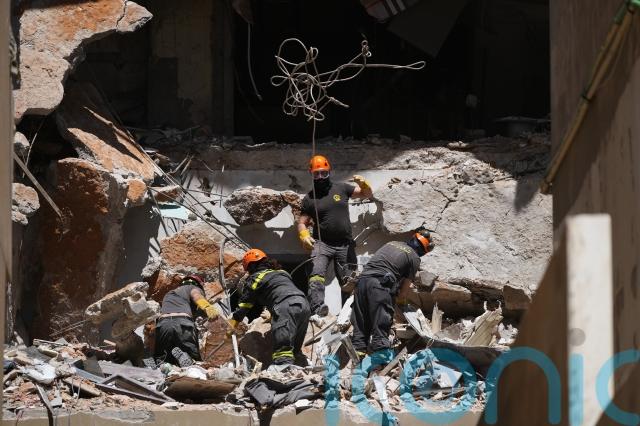
At least 2,124 people have been killed in Israeli strikes in Lebanon, the Health Ministry said, including hundreds of women and children. More than one million people are displaced.
The deadliest day of the war took place last week, when Israel launched 100 air strikes across Lebanon in 10 minutes, including in the heart of the capital, killing more than 350 people.
Israel’s defence minister says hundreds of thousands of people uprooted from southern Lebanon will not be allowed to return home until the area is demilitarised and Israel believes its northern communities are safe.
Hezbollah, though weakened in its last war with Israel that ended in November 2024, still fires drones, rockets and artillery daily into northern Israel and on ground troops inside Lebanon.
The Israeli and Lebanese governments are meeting to discuss ways to ensure long-term security on Israel’s northern border and support for Lebanon seeking to take control of its territory and political future from Hezbollah, a US State Department official said on Monday.
The talks are the first between Israel and Lebanon since 1993.
“Israel’s destruction of Lebanese territories is not the solution, nor will it yield any results,” Lebanese President Joseph Aoun said on Monday.
He came to power vowing to disarm non-state groups including Hezbollah.
He added: “Diplomatic solutions have consistently proven to be the most effective means of resolving armed conflicts globally.”
Israel has ruled out a ceasefire. Foreign minister Gideon Saar on Tuesday denied having disputes with Lebanon and said “the problem is Hezbollah”.
“Hezbollah has also its financial roots, there are a lot of dimensions holding this organisation, practically keeping Lebanon under Iranian occupation,” Mr Saar said.
Hezbollah wants a return to the 2024 agreement under which talks were conducted indirectly with the US, France and the United Nations peacekeeping mission in southern Lebanon as mediators.

Subscribe or register today to discover more from DonegalLive.ie
Buy the e-paper of the Donegal Democrat, Donegal People's Press, Donegal Post and Inish Times here for instant access to Donegal's premier news titles.
Keep up with the latest news from Donegal with our daily newsletter featuring the most important stories of the day delivered to your inbox every evening at 5pm.

This publication supports the work of the Press Council of Ireland and Office of the Press Ombudsman, and our staff operate within the Code of Practice of the Press Council. You can obtain a copy of the Code, or contact the Council, at www.presscouncil.ie, Lo-call 1800 208 080 or email: info@presscouncil.ie.