
The man was sentenced at the Central Criminal Court in Dublin
Search


21 Apr 2026

Please allow ads as they help fund our trusted local news content.
Kindly add us to your ad blocker whitelist.
If you want further access to Ireland's best local journalism, consider contributing and/or subscribing to our free daily Newsletter .
Support our mission and join our community now.
To continue reading this article, you can subscribe for as little as €0.50 per week which will also give you access to all of our premium content and archived articles!
Alternatively, you can pay €0.50 per article, capped at €1 per day.
Thank you for supporting Ireland's best local journalism!


Iranian state television has issued an on-screen alert saying that “no delegation from Iran has visited Islamabad… so far” as speculation about possible talks with the United States grows.
The alert likely reflects the internal debate ongoing within Iran’s theocracy as it weighs how to respond to the US Navy’s seizure of an Iranian container ship over the weekend.
Iranian state TV has been controlled by hard-liners within Iran’s theocracy.
So far, no official has acknowledged that a delegation will be heading to Islamabad, where officials have been on standby for days for the possible talks.
US vice president JD Vance is expected to lead an American team to the talks. Iran has offered no word on who could lead its delegation. Last time, parliamentary speaker Mohammad Bagher Qalibaf led the Iranian side.
There has been no public discussion in Iran about how to resume talks and there has been pushback from hard-liners in Iran in recent days over resuming talks, particularly after the ship attack.
There had been at least one online push for Supreme Leader Ayatollah Mojtaba Khamenei to issue a public proclamation about backing further negotiations or not — but the new Iranian leader has not issued any statement, nor has he been seen in any image since the war as Israeli and US officials say he was wounded in the conflict.
That has put Iran’s paramilitary Revolutionary Guard in the driver’s seat of governing the Islamic Republic. The guard’s forces have been key in the war and largely operated without oversight from Tehran in choosing targets.
Iran’s civilian leadership has broadly been quiet, particularly after Foreign Minister Abbas Araghchi wrote online this weekend that the Strait of Hormuz had been opened, only for that to be later denied by others in Tehran.
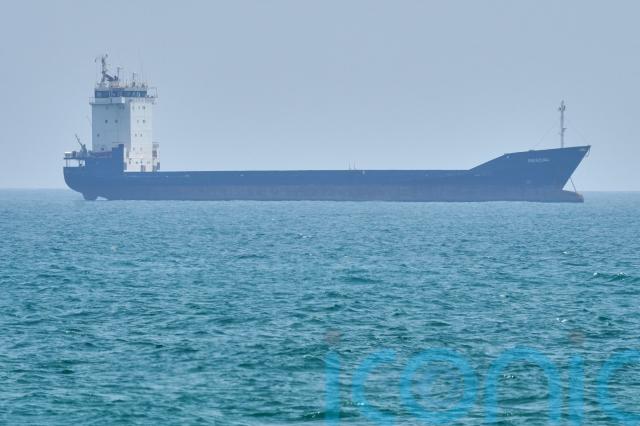
Iran has throttled traffic through the strait, which connects the Persian Gulf to the open seas, since shortly after the US and Israel attacked Iran on February 28 to start the war. The US has instituted a blockade of Iranian ports in response.
Iran’s iron grip on the strait has sent oil prices soaring and Brent crude, the international standard, was trading at close to 95 dollars per barrel on Tuesday, up more than 30% from February 28.
Before the war began, the Strait of Hormuz had been fully open to international shipping, and US president Donald Trump has demanded that vessels again be allowed to transit unimpeded through the waterway.
European Union transport ministers were meeting in Brussels on Tuesday to discuss how to protect consumers after the head of the International Energy Agency warned that Europe has “maybe six weeks” of jet fuel supplies remaining.
Over the weekend, Iran said that it had received new proposals from Washington but also suggested that a wide gap remains between the sides. Issues that derailed the last round of negotiations included Iran’s nuclear enrichment programme, its regional proxies and the strait.
Iran’s chief negotiator and parliamentary speaker, Mohammed Bagher Qalibaf, accused the United States on Tuesday of wanting Iran to surrender and said that on the contrary, Iran has been preparing “to reveal new cards on the battlefield”.
“We do not accept negotiations under the shadow of threats,” Mr Qalibaf wrote in an X post.
Despite the rhetorical skirmishing between the two sides, Pakistani officials have expressed confidence that Iran will also send a delegation on Tuesday so that the talks can resume.
Pakistani foreign minister Ishaq Dar on Tuesday spoke to his Egyptian counterpart, Badr Abdelatty, to discuss the latest regional developments, as part of diplomatic preparations before the planned talks.
Mr Dar also met the ambassador from China, which is a key trading partner with Iran, as the Foreign Ministry in Beijing said that the conflict was at a “critical stage of transition between war and peace”.
“At such a moment, it is all the more necessary for all parties to show the utmost sincerity, remain committed to a political solution, maintain the momentum of the ceasefire and negotiations,” ministry spokesman Guo Jiakun said.
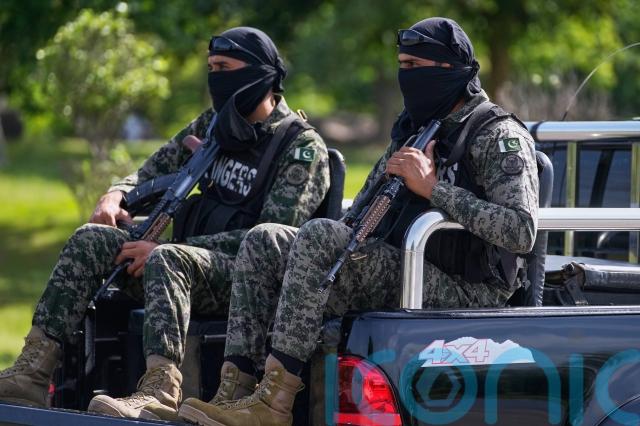
Security has been tightened across Pakistan’s capital, where authorities have deployed thousands of personnel and increased patrols along routes leading to the airport.
The arrangements appear stricter than those put in place during the first round of talks held in Islamabad on April 11 and 12, suggesting the possibility of high-level participation, if negotiations make progress, said Syed Mohammad Ali, an Islamabad-based security analyst.
“Pakistan appears to be preparing for the possibility of visits by top US and Iranian leaders if the talks advance to a stage where an agreement could be signed,” he told The Associated Press.

Subscribe or register today to discover more from DonegalLive.ie
Buy the e-paper of the Donegal Democrat, Donegal People's Press, Donegal Post and Inish Times here for instant access to Donegal's premier news titles.
Keep up with the latest news from Donegal with our daily newsletter featuring the most important stories of the day delivered to your inbox every evening at 5pm.

This publication supports the work of the Press Council of Ireland and Office of the Press Ombudsman, and our staff operate within the Code of Practice of the Press Council. You can obtain a copy of the Code, or contact the Council, at www.presscouncil.ie, Lo-call 1800 208 080 or email: info@presscouncil.ie.