
Archbishop challenged over call for young people to join PSNI
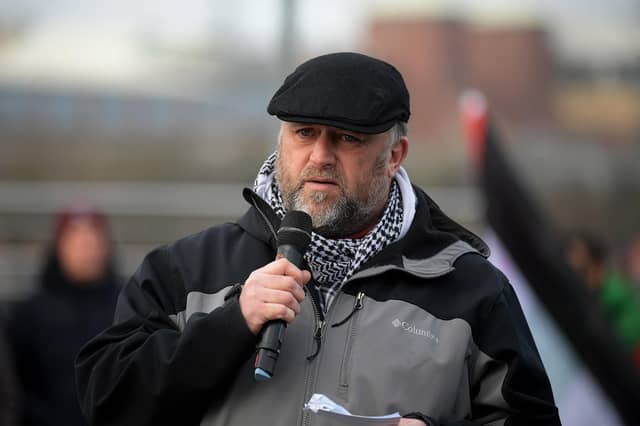

Councillor raises concerns over child informers, British intelligence involvement and the PSNI's constitutional legitimacy following Archbishop's call for greater PSNI recruitment
Independent Derry City and Strabane District councillor Gary Donnelly has challenged Archbishop of Armagh Eamon Martin over his recent encouragement for young people to consider joining the Police Service of Northern Ireland (PSNI).
In an open letter to the Archbishop, the Derry councillor raised what he described as profound moral and political concerns surrounding policing in the North of Ireland.
Cllr Donnelly said that while opposition to the PSNI among Irish Republicans was not rooted in hostility to policing itself, it reflected a fundamental disagreement with the constitutional arrangements underpinning the police service.
Cllr Donnelly said that, from a moral perspective, questions remained over the recruitment and use of child informers, covert surveillance, intelligence-led operations and the relationship between policing structures and British state intelligence agencies.
He argued that young people should be entitled to question whether involvement in such practices was compatible with the principles of human dignity, truth and accountability.
Particular concern was expressed over the use of children as covert intelligence sources, with the councillor questioning the morality of exposing children and vulnerable individuals to potentially dangerous situations for intelligence-gathering purposes.
He said: “The Church has consistently emphasised the special duty society owes to the protection of children and vulnerable persons. Many therefore find it difficult to reconcile that principle with such policies.”
The letter also questioned the influence of British intelligence agencies within policing structures, citing the Iraq War as an example of intelligence presented as fact subsequently being discredited.
Cllr Donnelly also referred to British intelligence involvement in relation to Palestine, arguing that such experiences raised wider questions about transparency, accountability and public trust.
The Creggan councillor argued that Irish Republican opposition to the PSNI was fundamentally linked to the constitutional arrangements in which the police service operates.
He said Republicans viewed the partition of Ireland as undemocratic and regarded the institutions of the northern state, including the PSNI, as products of what they consider a violation of Irish sovereignty.
“From this perspective, the PSNI is not simply a neutral civic institution. It is the police force of a jurisdiction whose legitimacy remains contested,” he wrote.
Cllr Donnelly also questioned the extent to which policing reforms had addressed historical grievances, pointing to the PSNI's institutional links with the former Royal Ulster Constabulary (RUC).
He said many families continued to seek answers over allegations of collusion, legacy investigations and the actions of state agencies during the conflict. He argued that until these issues were fully addressed, confidence in policing would remain incomplete.
Archbishop Martin's comments came during a Mass of Thanksgiving at St Patrick's Cathedral in Armagh on Monday, November 23, marking the 25th anniversary of the establishment of the PSNI.
The service was organised by the Catholic Police Guild of Northern Ireland and attended by several hundred Catholic police officers, civilian staff and their families, alongside political representatives and other church and community leaders.
In his address, the Archbishop urged society to help create an environment where police officers and their families could be open and proud about their careers.
He said: “No one should have to hide the fact that they are police officers or staff members; no young person should be afraid to say that she or he is applying for the PSNI. No family should have to keep it a secret that their son or daughter, sister or brother, has chosen a career in policing.”
He described policing as a “noble vocation”, involving a commitment to serving the common good, protecting life and upholding human dignity.
The Archbishop also acknowledged the difficulties facing the PSNI in achieving a police service representative of the entire community, referring to political deadlock, limited resources, the continuing impact of the conflict and the slow progress of reconciliation.
He called on churches, politicians and sporting organisations to encourage recruitment and ensure officers could carry out their duties without intimidation.
“We should all support those who choose the noble vocation of policing,” he said.
The comments come against a backdrop of continuing efforts to increase Catholic representation within the PSNI.
While Catholics accounted for approximately 8% of officers in the former RUC at its peak, they now make up just over 30% of the PSNI. However, that figure has remained relatively static in recent years, with the continuing threat from dissident republicans and historical opposition to policing within nationalist communities identified as significant factors affecting recruitment.
The PSNI was established in November 2001 following the recommendations of the Patten Commission, which was tasked with transforming policing in the North in the aftermath of the Good Friday Agreement.
Concluding his letter, Cllr Donnelly said he recognised that substantial sections of Irish society continued to hold conscientious objections to joining the PSNI, based on both political principles and moral concerns.
He suggested that before encouraging young people to pursue careers in policing, there should also be a wider discussion about conscience, accountability, truth, the protection of children, the role of intelligence agencies and the unresolved legacy of the conflict.
“The Church should encourage moral reflection on questions of justice and power,” he wrote.
“In a society still dealing with the consequences of division and conflict, that reflection remains as necessary as ever.”