
ATU and Ulster University experts unite for cross-border mobility project
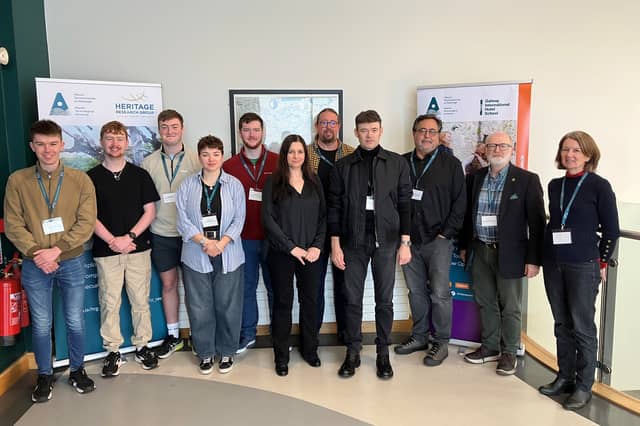

ATU and Ulster University launch a creative mobility initiative using folk songwriting and material exhibitions to foster reconciliation.
Atlantic Technological University’s Heritage Research Group recently welcomed visiting academic staff from Ulster University’s INCORE (International Conflict Research Institute) for a one-day research meeting and staff/student seminar on the societal challenges arising from the memory of past violence on the island of Ireland.
The seminar/research meeting was funded by Phase 2 of the Ulster University-Atlantic Technological University Cross-Border Mobility Initiative, which is aimed at encouraging stronger collaboration between the staff and students of the two universities. The theme of the event held in the ATU Galway City (Dublin Road) campus on October 21 2026, was ‘Arts, Heritage, and Intersectional Approaches to the Memory of Past Violence on the Island of Ireland’.
The project strives to contribute to a just and peaceful future on the island of Ireland. It will delve into the issue of peace multivocality and plurality, highlighting challenges to peacebuilding as well as alternative and inclusive ways of fostering dialogue, mutual understanding, peace, and reconciliation. It builds on shared interests between the two universities, fostering these synergies by organising mutually beneficial activities that will lay the basis for broader research funding bids.
The assembly at ATU Galway City began with staff presentations and the sharing of expertise about the potential role that heritage, arts and intersectional approaches can play in the forging of mutual understanding, peace, transition, and reconciliation in post-conflict contexts.
Talks were delivered by Dr Mark McCarthy, Senior Lecturer and Programme Chair in Heritage, ATU Galway City; Dr Aodhán Kelly, RISE Researcher, ATU St Angela’s, Sligo; Dr John Tunney, Lecturer in Heritage, ATU Galway City; Élise Féron, Professor of Peace and Conflict Studies and Director of INCORE, Ulster University; Dr Lisa Fitzpatrick, Senior Lecturer in Drama, Ulster University; and Professor Brandon Hamber, The John Hume and Thomas P. O’Neill Chair in Peace, INCORE, Ulster University.
The event also included a folk-style songwriting workshop led by Dr John Tunney, where the academic staff were joined by students from Year 3 of the BA (Hons) in Heritage at ATU Galway City. The aim is to write at least one song, inspired by the themes of multivocal cultural heritages and pluralist identities. As part of the event, a dinner was specially prepared and served by staff and students of ATU’s Department of Food, Heritage and Hospitality Management.
Dr Mark McCarthy said: ‘At the Heritage Research Group, we are enthusiastic about exploring pasts, comprehending presents, and securing futures. We were delighted to welcome Ulster University staff to the first colloquium in ATU Galway City and to find much common ground in our research activities and teaching practices. Our Heritage Research Group and Heritage Programme Board look forward to developing the partnership and collaborating on the next steps of this important cross-border initiative.’
Professor Élise Féron said: ‘At INCORE, we are particularly interested in the role that culture, heritage, and the arts can play in supporting peacebuilding and reconciliation. This collaboration with colleagues at ATU creates an exciting opportunity to examine how societies remember difficult and often contested pasts, while also identifying innovative and inclusive ways of strengthening dialogue and mutual understanding.
“The enthusiasm and expertise brought together through this initiative provide a strong foundation for future collaboration.’
A second seminar/research meeting will take place at Ulster University’s Derry campus on January 14 2027, demonstrating creative and material approaches to memory. This will engage with academic and public audiences by means of a curated folksong recital as an exemplar of performative memory approaches to remembering and diffusing conflict, a Conflict Textiles exhibition, and an Everyday Objects of the Conflict exhibition (Healing Through Remembering).
This event will also generate a digital archive of audio recordings and object narratives for future teaching, research and public engagement. Plans are also in the works to produce a co-authored position paper outlining key methodological insights on intersectional memory practices.