
BLOODY SUNDAY: No prosecutions will take place over allegations of false evidence
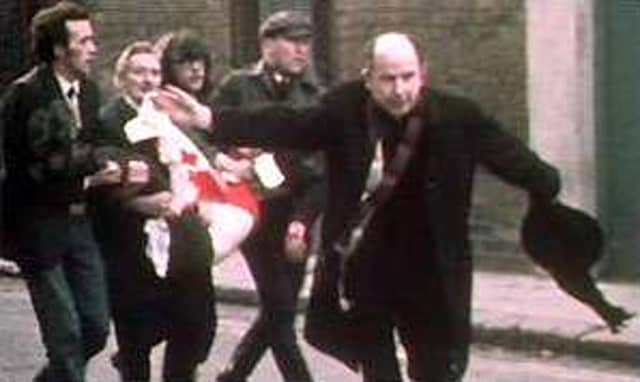

The Public Prosecution Service (PPS) has taken the decision not to prosecute 16 individuals in relation to allegations of false evidence relating to the Bloody Sunday Inquiry
The Public Prosecution Service (PPS) has taken decisions not to prosecute 16 individuals in relation to allegations of false evidence relating to the Bloody Sunday Inquiry.
The PSNI previously submitted an investigation file to the PPS in relation to allegations of murder and attempted murder on Bloody Sunday. Those reported included former soldiers and alleged members of the Official IRA and a decision to prosecute one soldier, known as Soldier F, issued in 2019.
At the time, the PPS explained that consideration would also then be given as to whether the Test for Prosecution was met in respect of allegations that those reported had given false evidence in connection with the Bloody Sunday Inquiry.
The prosecution team, which included senior independent counsel, has now carefully considered all the available evidence in the investigation file and the content of the Report of the Bloody Sunday Inquiry in respect of allegations of the giving of false evidence.
The prosecution team has determined that the available evidence is insufficient to provide a reasonable prospect of conviction of any suspect considered, which include 15 former soldiers and one former alleged member of the Official IRA.
PPS Senior Public Prosecutor John O’Neill said: “All decisions on whether or not to prosecute are taken by independently and impartially applying the Test for Prosecution. The standard of proof needed for a criminal prosecution is high. For a conviction, the prosecution must establish beyond a reasonable doubt, through available and admissible evidence, the commission of a criminal offence by the suspect.
“After careful consideration, it has been concluded that the available evidence in this case is insufficient to provide a reasonable prospect of obtaining a conviction of any suspect for offences in relation to the giving of false evidence.
“The decision making involved the consideration of a vast amount of material. Consideration of the allegations of false evidence presented particularly complex evidential and legal issues, all of which were thoroughly analysed by the prosecution team.
“Three particular issues arose. Firstly, although the Bloody Sunday Inquiry may have rejected the evidence of individuals, it did not always express those findings in terms amounting to the criminal standard of proof. That is the standard which the PPS must consider.
“Secondly, many of the findings related to the rejection of accounts given by former soldiers in 1972. The PPS has concluded that, for a number of legal reasons, those accounts from 1972 would not be admissible in criminal proceedings today.
“Thirdly, the full amount of evidence upon which the Bloody Sunday Inquiry based its findings is not generally available to the prosecution today. Issues arise in respect of the admissibility of evidence and its availability, since not all witnesses who provided evidence to the Inquiry provided witness statements to the PSNI.
“I wish to make clear that these decisions not to prosecute in no way undermine the findings of the Bloody Sunday Inquiry that those killed or injured were not posing a threat to any of the soldiers.
“We acknowledge that these prosecutorial decisions will be disappointing to the victims and families involved, and that this may be another difficult day for them. We have written to them to explain in detail the reasons for the decisions.
“We would like to provide assurance that these decisions were taken impartially, independently and only after the most thorough and careful consideration of all available evidence and the relevant legal issues.”