
Doherty/Fleming Inquest: Court told of the moment that it became apparent a serious incident was underway

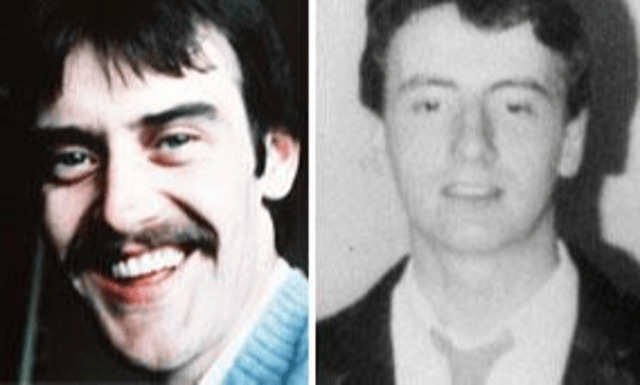

The inquest into the deaths of two Derry men shot dead by the SAS has been told of the moment that it became apparent a serious incident was underway.
Daniel Doherty (23) from Creggan and William Fleming (19) from the Waterside died after the motorbike they were travelling on was rammed by SAS soldiers and they were shot in the grounds of Gransha Hospital on December 6, 1984
A witness identified as Soldier J told the inquest that he was a member of the Specialist Military Unit (SMU) for over six years.
On December 6, 1984 he was acting as a liaison officer with the RUC and was in a police car with four RUC officers stationed close to Gransha Hospital.
He told the Coroner, Mr Justice Ian Huddleston, that he had a communication network linked to the SMU which the RUC could not access.
The witness said he heard the code word 'contact' which he said meant 'a serious incident had occurred' and he said he 'instinctively pulled my balaclava down' to protect his anonymity.
As the vehicle approached Gransha he said he relayed an order 'weapons tight' to the RUC which meant there was 'no present threat.'
The former soldier said he had little recall of the actual incident and could not recall seeing the bodies or the motorbike.
He was asked about a briefing prior to the incident and said while he was sure one had taken place he could not recall the actual details.
He described the work of the SMU as being a covert observation unit designed to counter terrorist activity.
Evidence from other witnesses that the operation had been ongoing for two weeks prior to the shootings was put to Soldier J and he said he had no memory of that.
Under questioning by Andrew Moriarity for the next of kin Soldier J acknowledged that the SMU would have been looking for 'high achievers proficient in the use of personal weapons.'
It was suggested to him that the SMU was 'an elite unit' but the witness rejected the word elite.
Mr Moriarity put it to the witness that while he said that the SMU's main function was covert surveillance there were incidents where the unit had used 'lethal force'.
The witness replied: "There had been occasions, yes."
Soldier J was asked was their training in firearms geared towards wounding or killing he replied that it was designed to 'extract themselves from a situation.'
The hearing continues.