
'Don't balance the books on the backs of children', says Brolly

The proposal raised by Paul Givan regarding school transport has caused understandable concern among rural families and parents who have exercised their right to choose the school they believe best suits their child.
Last week, the Minister stated that families using free school buses to send their children to denominational, grammar, integrated or Irish-medium schools which are not close to their home could be forced to pay as they would be targeted in any future spending review.
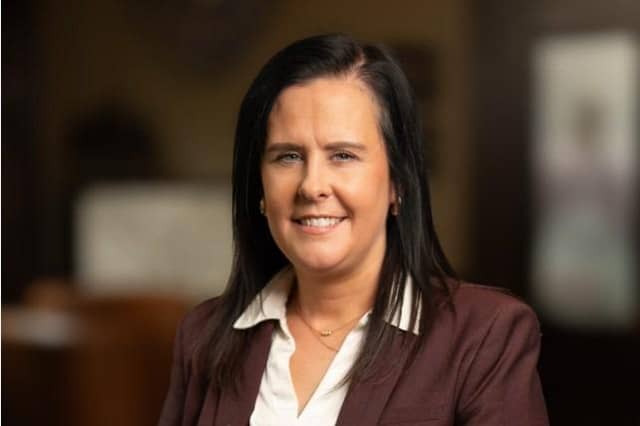
Aontú Deputy Leader and East Derry representative Gemma Brolly said the party believes any changes to transport provision must be judged not simply on cost, but on their impact on children's access to education and parental choice.
Gemma Brolly said: "Paul Givan's reported comments regarding restricting free school transport to a child's nearest school raise serious concerns for families across East Derry and right across the North. While every area of public spending should be scrutinised responsibly, children must never become the first target when budgets are under pressure. I have written to the Northern Ireland Commissioner for Children and Young People and the Children's Law Centre seeking their views on the legal and children's rights implications of any move which would significantly restrict access to free school transport. The response I received from NICCY shares my concerns and reiterates the importance of broadening rather than narrowing access to transport for children and young people.
"What makes these proposals even more concerning is that our office is currently dealing with a number of extremely worrying school transport cases involving children and families across East Derry. We are seeing first-hand the challenges many parents already face in simply getting their children to school. The priority for government should be improving access to education, not creating additional barriers to it."
The teacher and mother of four continued: "For many families, school transport is not a convenience. It is what makes educational choice possible. Remove that transport and, in reality, you remove access to a family's chosen school. Any reform must start from a simple principle: ensuring children can get to school safely, reliably and affordably. Any proposal that disadvantages children attending Irish-medium schools, Catholic schools, integrated schools or other schools chosen by their parents must be subjected to the highest level of scrutiny. Parents have the right to choose the educational setting that best meets the needs of their child and government should be facilitating that choice, not creating new barriers."
The East Derry representative added: "Policymakers must recognise the reality of rural life. Families across East Derry often have fewer schools within reasonable travelling distance and fewer transport options available to them. What may appear straightforward on paper could have serious consequences for rural communities. I am particularly concerned about the impact on lower-income families. We cannot create an education system where a child's opportunities are determined by their parents' income or postcode. Operational inefficiencies and waste should be addressed before children's access to education is put at risk."
"At a time when families are grappling with the cost-of-living crisis and when we are actively dealing with transport-related cases on behalf of constituents, now is not the time to make it harder for children to access the education that is right for them."
Brolly concluded: "Aontú's position is straightforward. Protect meaningful parental choice. Protect access to education whether it be Irish-medium, integrated, religious or otherwise. Protect rural families. Protect struggling households. Reform waste where waste exists, but do not balance the books on the backs of children.
“The Department's first responsibility must be to guarantee access to education. The size of a family's bank balance or the remoteness of their townland should never, ever determine what kind of education a child can realistically receive and we will work to ensure that is never the case.”