
NI-led trial offering hope of better recovery for intensive care survivors
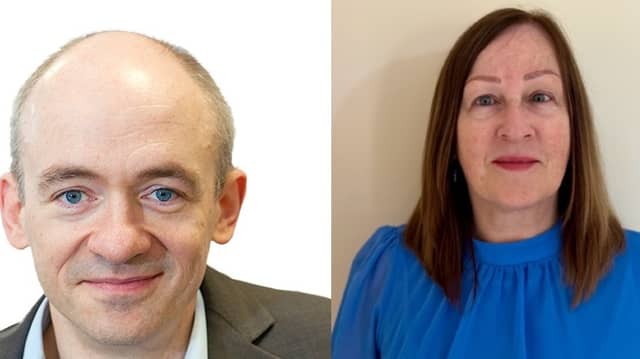

Major Ulster University and Queen’s University Belfast study published in leading US medical journal finds remote rehabilitation can improve recovery for some intensive care survivors after shorter periods of ventilation
A major Northern Ireland-led clinical trial involving hospitals across the UK has identified new opportunities to improve recovery for intensive care survivors through remote rehabilitation delivered in patients’ homes.
The iRehab Trial, jointly led by researchers from Ulster University and Queen’s University Belfast, has been published in the prestigious Journal of the American Medical Association (JAMA) following presentation at the American Thoracic Society International Conference in Orlando.
Funded by the National Institute for Health and Care Research (NIHR), the study demonstrates the leading role Northern Ireland researchers are playing in shaping the future of digital healthcare and rehabilitation across the UK.
The trial tested a novel remote rehabilitation programme for people recovering at home after treatment in intensive care units (ICU), including patients who had required ventilation during serious illness.
Researchers found that while the programme did not improve outcomes across all patient groups, people who had required ventilation for less than a week experienced meaningful improvement in health-related quality of life after taking part in the rehabilitation programme.
The iRehab Trial was a multicentre randomised controlled trial conducted across 52 NHS hospitals throughout the UK and managed by Warwick Clinical Trials Unit under the leadership of Professor Julie Bruce.
Professor Brenda O’Neill, Chief Investigator of the iRehab Trial at Ulster University, said: “The iRehab programme helped many people to recover after they went home from the intensive care unit. Rehabilitation for survivors of critical illness is underfunded, but findings from the iRehab trial demonstrate that fully remote processes in healthcare research and delivery are feasible from the consent stage through to intervention delivery.
“This research also highlights the strength of collaboration between Northern Ireland institutions and healthcare partners across the UK in delivering innovative, scalable healthcare solutions that can improve patient recovery and quality of life.”
People treated in intensive care often experience significant ongoing health challenges after discharge, including muscle weakness, fatigue, breathlessness, memory problems and poor emotional wellbeing, making recovery and everyday activities difficult.
The iRehab programme comprised a six-week remotely delivered rehabilitation intervention, including weekly symptom management, targeted exercise, psychological support and peer support.
The findings suggest that scalable remote rehabilitation programmes could play an important role in supporting recovery for some ICU survivors while helping health services transition towards more digitally enabled models of care.
Professor Danny McAuley, Consultant in Intensive Care Medicine at Queen’s University Belfast and Co-Chief Investigator of the trial, said: “We now need to deliver this package of care for the patients who will benefit, while at the same time continuing to find better personalised treatments to improve outcomes for patients where this intervention may not work as well. It’s not just clinicians that need to be considered; we really need to engage with policy makers to deliver care to improve the outcomes for patients who survive critical illness. We could not have delivered this without the support of the National Institute for Health and Care Research.”
Professor Liam Maguire, Pro Vice-Chancellor Research at Ulster University, said: “This study highlights the impact that collaborative research from Northern Ireland can have on healthcare delivery at a UK and international level. It is an important example of how our universities are helping to drive innovation in digitally enabled, patient-centred care.”
The trial reflects the growing contribution of Northern Ireland’s universities to the UK’s wider research and innovation ecosystem, particularly in developing inclusive, scalable and policy-relevant healthcare solutions aligned with government priorities around digital transformation in healthcare.
Professor Anthony Gordon, Director for NIHR's Health Technology Assessment (HTA) Programme, said: "Recovery from a critical illness can be a challenging and lengthy process for patients and their loved ones. This research demonstrates how using remote technology and moving from analogue to digital solutions, which is a key government priority, can make a difference to their rehabilitation and quality of life.
"The benefits the study team has identified are important. Not only can patient care be safely and effectively managed online, it also allows them to continue their recovery in familiar and comfortable surroundings. It ensures any disruption to their day-to-day lives is kept to a minimum, while at the same time, eases pressure on vital healthcare resources. Ensuring the right patients receive treatments that work also helps the NHS deliver care efficiently.”
Julie, a patient from Middlesbrough who took part in the iRehab trial after being admitted to ICU with sepsis, said: “I was elated to be allowed home, but terrified. As for iRehab, it gave me the chance to make me feel better and have someone else look at my care.
“I joined whatever I could – the weekly one-to-one support, the exercise class and the community café. Staff were fabulous. Checking in and caring and it all went too quick. If I could support the system to give this to everyone who attended ICU I would. Thank you from the bottom of mine and my family’s hearts – I’m here, I’m fitter and I’m happy.”
The findings were presented at the American Thoracic Society (ATS) International Conference in Orlando on May 18 2026 and published in JAMA.