
No Music A’ Level there in the Derry air
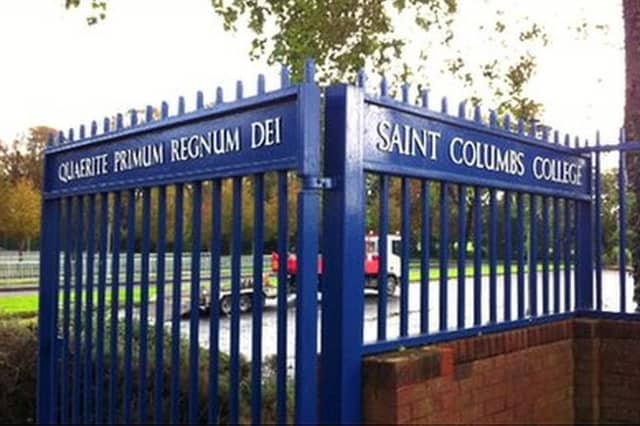

When a young man from Eglinton chose A’ Level Music, what followed revealed the perilous state of post-primary Music provision in the city.
Speaking to The Derry News, the St Columb’s College student’s mother said, initially, her son was asked to pick a different A’ Level because the school was not offering AS Level Music in the academic year 2026/27.
“Effectively this prevented him from taking A’ Level Music next year - 2027/28,” she added.
“My son was naturally very disappointed, as were the other students who wished to study A’ Level Music at the school.
“When we queried this, we were told the decision lay with the St Columb’s College Board of Governors. After much discussion, the Board decided it would provide five out of the 10 lessons per week required to complete the AS Level Music curriculum.
“After further discussion, it said it would provide eight out of the 10 lessons specified, and we would have to pay privately for my son’s remaining two lessons, if he wished to study AS Level Music at the school.
“On further enquiry, we discovered that no other post-primary school in the Derry area is offering A’ Level Music this year, which means my son cannot even study it at a different school as part of the Foyle Learning Community,” said the mother.
“Derry is renowned for its music,” she added, “but where will the next generation of musicians come from if we stop nurturing them in our schools?
St Columb’s College appears to be the last school in Derry attempting to sustain AS-level music. If that provision disappears, what meaningful options will remain for pupils who want to take their musical education further?
“Derry musical identity runs deep, from traditional sessions and celebrated performers to school choirs, brass bands and community ensembles. Music is woven into the fabric of the city - a living expression of its culture, creativity and spirit, passed from one generation to the next. It has produced some of the most exceptional musical talent.
“Yet there is a painful contradiction at the heart of this proud tradition. While Derry celebrates its reputation as a city of music, opportunities for young people to study music at A-level in its schools are disappearing.
“Schools face genuine financial pressures and small classes can be difficult to sustain. Music requires specialist teachers, instruments, facilities and practical tuition. But should a subject’s value be measured by the number of pupils in a classroom?
“When a course disappears, young people lose the opportunity to study it. Numbers fall further, making the subject even harder to justify. Eventually, a cycle of decline can become impossible to reverse.
“St Columb’s College appears to be the last school in Derry attempting to sustain AS-level music. If that provision disappears, what meaningful options will remain for pupils who want to take their musical education further?” she said.
“Could schools share specialist teachers or collaborate to provide sixth-form classes?” asked the concerned mother.
“Before another course is lost, these possibilities deserve serious consideration. “Musicians do not simply appear. Nor do music teachers, composers, performers or music therapists. They need opportunities to discover their abilities, develop their skills and progress into further study and professional training,” she added.
“For some young people, a school music class may be the first step towards a lifelong career. For others, it may be the only accessible opportunity to explore their potential.
“If pupils cannot study music at an advanced level, some may find alternative routes. Others may abandon their ambitions altogether. We cannot know how many future musicians Derry might lose.
“That's not all - fewer opportunities to study music will mean fewer pupils progressing to music degrees and fewer people entering specialist teaching and other music-related professions.
“We cannot complain about a shortage of musical opportunities in the future if we allow the pathways that create them to disappear today.” queried the mother.
She added: “Will art be next? There are also concerns that art may face similar pressures. If both subjects become harder to access, the consequences could reach far beyond the classroom.
It is disappointing that it has become so difficult for schools to provide A’ Level music.
“Music and art are not optional extras for pupils who have time left over after studying more conventional subjects. They require discipline, knowledge, creativity and perseverance. They can lead to careers and contribute enormously to the cultural and economic life of our city.
“Derry should want its young people to become doctors, engineers and scientists. It should also want them to become musicians, artists, teachers, composers and sound engineers. These ambitions are not in competition. A good education should help young people discover their talents, not restrict the futures they can pursue.
“And opportunity must not depend on family income. Private lessons, instruments, exam fees and travel can all cost money. When school provision disappears, pupils whose families cannot afford alternatives risk being left behind. Talent is everywhere. Opportunity is not.
“The Education Authority and Department of Education need to explain what is happening to music provision in Derry. Why have courses been withdrawn? What support is available to pupils who cannot access sufficient teaching? Could schools collaborate to protect provision? And what plans exist to safeguard art and other creative subjects?” she added.
“Most importantly, what is being done to ensure that young people can pursue music regardless of which school they attend or what their family can afford?” she asked. “These are questions about educational equality, future careers and the cultural life of our city. They deserve clear answers and a practical plan,” added the mother.
“Derry’s musical heritage has been built by generations of musicians, teachers, families and community organisations. It survives because people pass on what they know and give the next generation the chance to learn. But heritage cannot sustain itself. It must be nurtured.
“If we allow music to disappear from our schools, we risk losing more than a subject. We risk losing future performers, composers, teachers and therapists - along with talents that may never be discovered.
“The consequences may not be obvious today. They may emerge gradually, as courses close, opportunities narrow and fewer young people find a route into further study. By the time we recognise the full cost, rebuilding what has been lost may be far harder than protecting it now.
“Derry cannot rely on its musical past while allowing its future to fall silent. Where will tomorrow’s musicians, composers, teachers and therapists come from if we deny young people the chance to develop their talents today? If we allow these opportunities to disappear, we may never know the talent we have lost or the futures we have closed off,” she said.
A spokesperson for St Columb’s College told The Derry News: “Unfortunately, St Columb’s College is unable to comment on the circumstances or studies of individual pupils.
“St Columb’s College, however, is very happy to comment more generally on Music provision at our College. We continue to offer A-level Music as part of our Sixth Form curriculum provision and are proud to be one of the few schools within the Foyle Learning Community where students have the opportunity to study Music at this level.
“Students choosing A-level Music benefit from individualised teaching and learning, supported by specialist and experienced teachers who are committed to developing their musical knowledge, skills and talents,” said the spokesperson.
I am concerned by reports that pupils cannot access the full teaching provision they need. A young person’s opportunity to study Music as a subject should not depend on their parents’ ability to pay.
Asked for comment on the lack of A’ Level Music provision in Derry, a spokesperson for the Department of Education told this paper: “Schools are legally expected to offer a minimum of 21 subjects to post-16 learners but decisions about which A’ Levels to deliver are a matter for individual schools.
“AS and A’ Level Music qualifications are available for any school in Northern Ireland to deliver should they consider this an appropriate option for their students and their school.”
The Derry News also approached the Council for Catholic Maintained Schools (CCMS) and the Education Authority (EA) for comment.
The spokesperson for CCMS - the managing authority for Catholic maintained schools in the North - said: “While we appreciate you contacting CCMS, it is important to clarify that St Columb’s College is a Catholic grammar school and is not a CCMS-managed school.
“As such, CCMS does not have a governance or management role in relation to the school and is therefore not in a position to consider or investigate the issues raised.
“Reponsibility for the governance and management of the school rests with the Board of Governors, and any concerns or representations should be addressed directly to the Chair of the Board of Governors through the school’s established procedures.”
The spokesperson for the Education Authority (EA) - the public body sponsored by the Department of Education responsible for overseeing primary and secondary education, school admissions, transport, free school meals, special educational needs (SEN), and youth services in the North - said: “St Columb’s College is a voluntary grammar and is therefore managed by the school’s Board of Governors. The school would be best placed to respond to your questions.”
SDLP Foyle MLA, Mark H Durkan accused the EA and Department of Education of “pricing some pupils out of a subject they love”.
“It is disappointing that it has become so difficult for schools to provide A’ Level music,” he said.
“It isn’t fair on pupils who want to pursue that path, nor is it fair on teachers who want to guide them along it,” added Mr Durkan.
“There are a number of factors that have led to a decline in the numbers of pupils seeking to study Music at A’ Level, none of which are the fault of individual schools but the responsibility of the Department and the Education Authority.
“Some of these relate to the curriculum itself but another is the introduction of and increase in rental charges for musical instruments. This is actually pricing some pupils out of a subject they love and runs the risk of making music exclusive.
“The implications for children, potential opportunities and our future arts sector, don’t bear thinking about.
“This is so much more than learning to play an instrument or study music theory. This is harnessing talent, developing skills and embracing creativity. From music production and performance to understanding the business side of the industry, young people need opportunities to develop these skills and restricting access to A’ Level Music risks strangling the future talent pipeline into our creative industries,” said Mr Durkan.
“There is also a very real danger that music becomes a subject only open to families who can afford private tuition,” he added.
“This move will disadvantage pupils from poorer socioeconomic backgrounds, denying them the same opportunities to develop their talents and pursue their ambitions.
“It is clear that there needs to be a stronger progression route from GCSE to A-Level, and an overhaul of the current A-Level Music framework to ensure it equips pupils with relevant, practical skills.
“We should be widening access to music education, not narrowing it. If we allow these opportunities to disappear, we risk leaving a generation of young people who will be without the skills, opportunities and enjoyment that music can bring,” said Mr Durkan. DUP
Foyle MLA, Julie Middleton revealed she had been approached a few weeks ago by a young man “deeply disappointed that he could not pursue Music”.
“That brought home the impact this is having on young people with talent, ambition and a real love for the subject,” said Ms Middleton.
“I am concerned by reports that pupils cannot access the full teaching provision they need. A young person’s opportunity to study Music as a subject should not depend on their parents’ ability to pay,” she added.
“If no school in Londonderry is offering a fully accessible A Level Music course, that raises serious questions about choice and opportunity. Music can open doors to further study and careers in teaching, performance and therapy, as well as making an enormous contribution to our cultural life.
“I will seek clarity on what provision is available across Londonderry. Schools and the relevant education bodies should work together to find a practical solution so that these pupils can continue their studies and future students have a clear route to study Music,” said Ms Middleton.
A spokesperson for Thornhill College confirmed the school did not “currently deliver AS or A Level Music directly within the College”.
"However, the subject is available to our students through the Foyle Learning Community collaborative arrangements,” they added.
“The range of post-16 courses available through the Foyle Learning Community is reviewed annually and is dependent on a range of factors, including student demand and the viability of individual classes.
“Accordingly, students wishing to study AS/A Level Music may be able to access the subject through the Foyle Learning Community, subject to the courses offered in a particular academic year.”