
Peacemakers Museum success highlights Derry’s conflict tourism potential
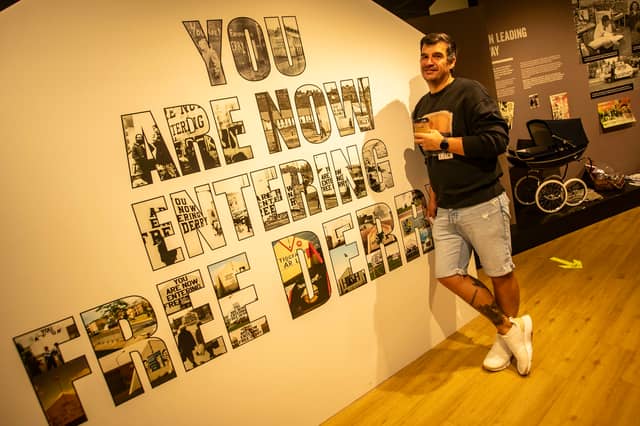

On the museum’s second anniversary, the veteran Good Friday Agreement negotiator Mitchel McLaughlin continues to share personal insights with global academic groups
This month marks the second anniversary of the opening of the Peacemakers Museum in Derry’s Bogside. Based in the Gasyard Centre, the museum charts the evolution of the conflict in the local area from Operation Motorman in July 1972 through to the peace process.
It is also designed to compliment the content of the Museum of Free Derry which already focussed on the origins of the modern conflict and key local events such as the Battle of the Bogside and Bloody Sunday.
It was also intended to act as an economic driver for the Bogside and wider city of Derry by attracting additional footfall and visitor spend. Museum Project manager and director Mickey Cooper says that on both counts the museum has proved to be a huge success:
“When we developed the concept of the museum, we wanted to relate the experience of the local residents throughout the conflict from Operation Motorman through the prison protests and hunger strikes right through to the Good Friday Agreement and beyond.
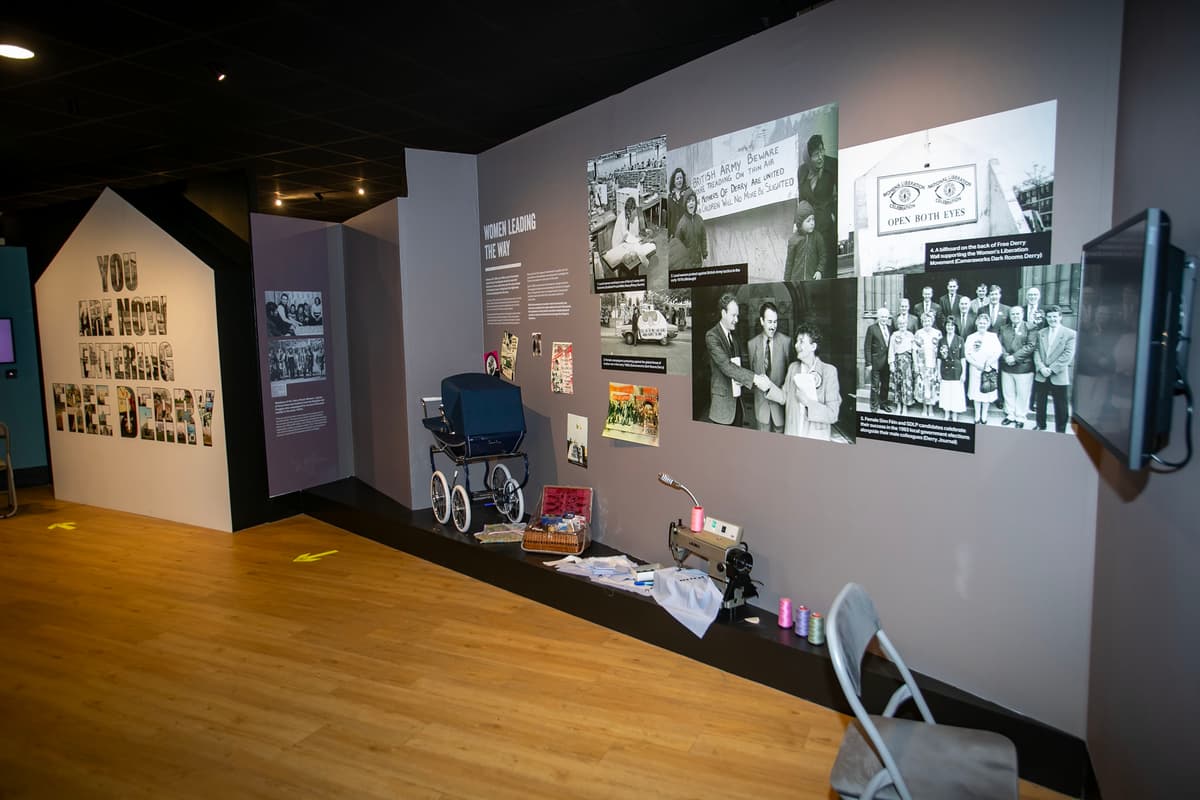
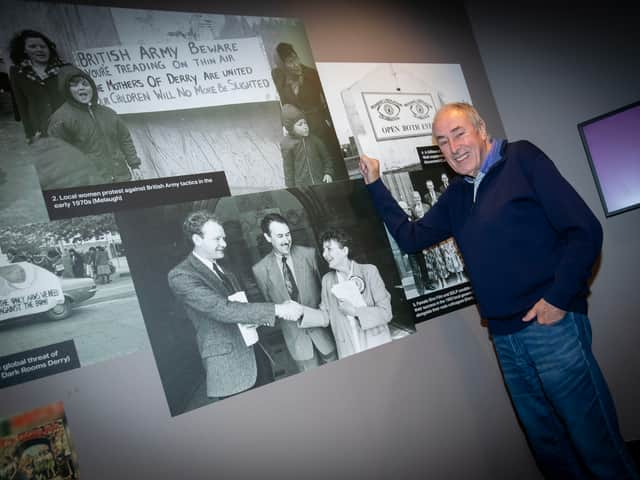
We also wanted to reflect the key role played by local residents Martin McGuinness, John Hume, Mitchel McLaughlin, Mary Nelis, Pat Hume, Martina Anderson and others in the peace process and wider societal change.
The local reaction to the museum has shown that the people of the Bogside are content that we have reflected their lived experiences throughout the period in an accurate and sensitive manner which was always of key importance to the Gasyard Trust.
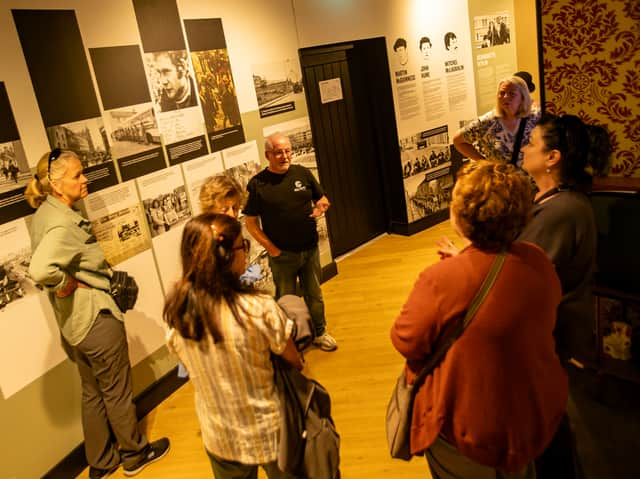
The feedback from our visitors from across Ireland and internationally has also been amazing and has been reflected in the reviews we have received on social media and from the numerous academic groups and tour operators who have sent groups to the museum.
The general manager of the Gasyard Centre Linda McKinney also commented: “We set out to tell the story of how the peace was built and by whom and we did it in the middle of a working community centre, with every penny of profit going straight back into the community.
“It was not an easy project to complete but seeing it now running smoothly and welcoming visitors from all over the world week in and week out makes every bit of that effort worthwhile.
“Since opening we have welcomed almost 15,000 visitors which has translated into real opportunities for people living in the area.
“We have been able to sustain ten new staff posts and those are local jobs held by local people. Hosting academic groups, tour operators and school parties has created steady work for local tour guides.
“Our museum shop buys from local suppliers and makers, giving small producers in this area aretail outlet they simply did not have before. The additional footfall supports the tenants of the new 'Gather at the Gasyard' café and the hospitality and retail businesses across the Bogside.
“The wider significance is that the key tourism agencies across the island, including Visit Derry, Tourism NI and Tourism Ireland, have now begun to promote peace and conflict tourism in a meaningful way.
“Driven by Economy Minister Caoimhe Archibald, proper marketing strategies are being developed to take peace and conflict tourism to a global audience, with both the Peacemakers Museum and the Museum of Free Derry featuring heavily in those campaigns.
“That will bring more visitors to the city and the wider North, and more benefit to the Bogside."
Whilst two of the key figures featured in the museum, Martin McGuinness and John Hume, have sadly passed away, local resident and fellow Good Friday Agreement negotiator Mitchel McLaughlin regularly meets academic and tourist groups visiting the museum to relate his own experience of peace building.
We set out to tell the story of how the peace was built and by whom and we did it in the middle of a working community centre, with every penny of profit going straight back into the community
Mitchel commented: “Over many centuries, conflict and repression in Ireland was a constant experience because of the colonial imperatives of successive British Governments.
“The denial of Self-Determination for the people of Ireland was continuously challenged by Irish Republicans and nationalists.
“In the early 1980’s, Sinn Féin developed a political initiative based on dialogue and negotiation.
“The slogan ‘Freedom, Justice & Peace’ was adopted, and subsequently formalised by the publication of the ‘Scenario for Peace’ and ‘Towards a Lasting Peace in Ireland’ policy platforms.
“These documents provided engagement and negotiating resources as well as kick starting the modernising of the Sinn Fein party structures. Additionally, a crucial check-list of strategic objectives was developed to assist Republicans in the emerging discussions with British and Irish politicians, educationalists & business leaders.
“The peace we enjoy today has created a platform for a democratic reunification process in Ireland after centuries of British colonial repression. The museum perfectly captures the story of how that peace was won.”
The Museum is open all year round from 9.30am to 7.00pm Monday to Friday and at weekends from 9.30am to 5.00pm between April and September. Full details are available at www.peacemakersmuseumderry.com