
'Stealth privatisation' of health service opposed
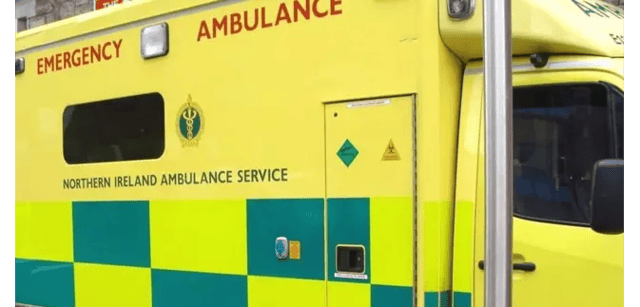

'Over the last five years nearly £50 million has been spent on private ambulance services. In the last year it amounted to £10 million' - Cllr Shaun Harkin
Derry and Strabane councillors have unanimously passed a motion highlighting what Cllr Shaun Harkin described as the “stealth privatisation” of the health service - particularly the Ambulance Service.
Speaking at Council’s July full eeting on Wednesday afternoon, Cllr Harkin said the Health Service has faced “tremendous challenges”.
“There has been an orchestrated plan coming from Westminster, primarily, to privatise the health service and destroy it. The challenges for our healthcare workers and the challenges for the thousands of people who are on waiting lists speaks volumes about the impact of that drive towards privatisation over many many years,” he said.
“I think the Stormont Executive in many ways has gone along with this and I think the example of what's happening to our ambulance services speaks volumes to that.
“Over the last five years nearly £50 million has been spent on private ambulance services. In the last year it amounted to £10 million.
“The trade unions who represent the workers who drive our ambulances on a day-to-day basis have a straightforward argument that the money available for frontline services should be invested into frontline services.
“Those frontline services are the Northern Ireland Ambulance Service and that's where money should be going.
“It should not be siphoned out and siphoned off to private companies. We have a Health Minister who is regularly telling us how little money there is to spend on frontline services. And this is only one example of where we have public money being spent on private companies and I just think that this is compounding the crisis and the challenges that our health service faces.”
Supporting the motion, which was seconded by Cllr Gary Donnelly (Independent), Cllr Sandra Duffy (Sinn Fein) described the Ambulance Service as a “frontline NHS service not a luxury”.
She said: “It is often the first point of contact in medical emergencies with really highly trained paramedics.
“If response times are slow due to underfunding, people die and that is the bottom line. A publicly funded ambulance service is the lifeline of the NHS emergency response. It's not just about keeping wheels on the ground. It is about keeping people alive and keeping a health care system public, equitable, and humane.
“Unfortunately, our funding crisis emanates from Westminster directly. We have consistently seen the block grant stripped and we have seen the North underfunded for too many years, which has led to chronic consequences for our health service.
“For our health service and indeed our ambulance service to thrive we need a rethink and we need services that are planned on an all Ireland basis.
“In my view Westminster has consistently failed us. It is a system that is set to look after the English needs. We need an all Ireland health system free at the point of delivery. You can't fix the system with Westminster crumbs.”
Cllr Rory Farrell said the SDLP was “opposed to any creeping privatization of the health service”.
He added: “That extends to ambulance provision as well. There was an Audit Office report released in March of this year and it highlighted serious failings right across the ambulance service.
“Only 7% of ambulance handovers were completed within the 15 minute time target. 20 TO 25% of capacity within the service is wasted due to handover delays and that is costing the service £50 million over the last 5 years.
“The Audit Office report has two specific recommendations regarding private ambulance companies. It recognises the over reliance on private ambulance companies and it has tasked the ambulance service with determining whether that is value for money or whether capacity within the service should be increased.
“It also recognises that private ambulances are completely unregulated and has asked the Department to ensure there is genuine oversight and regulation regarding standards.
“It is our view, those services should be delivered in-house. They should be delivered by the ambulance service but we need far more capacity.”