
Stroke Association research highlights how to find strength through support
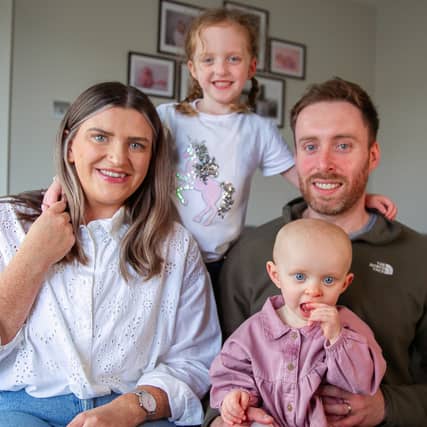

A quarter of stroke survivors say talking to others affected by stroke was the single most important part of their recovery
One in four stroke survivors (26%) say that talking to other stroke survivors was the single most important part of their recovery, but in fact only a quarter (26%) did so, according to new research released today by the Stroke Association.
To mark World Stroke Day (Tuesday 29 October), the charity, which connects survivors with each other to improve recovery from stroke, surveyed over 1,000 UK stroke survivors. The research findings highlighted just how important connecting with other stroke survivors was to their recovery.
Of those who spoke to other stroke survivors for support (26%), a staggering 100% said it helped them with their recovery. In fact, almost two thirds of them (60%) said it helped them to realise they weren’t alone, while almost half (40%) said it gave them hope. Almost half (40%) said talking to other survivors gave them emotional strength during their recovery.
The findings also uncovered that, of those who hadn’t spoken to other stroke survivors after their stroke, almost three quarters (71%) wished they had done so.
In light of the research findings, the Stroke Association has launched Stroke Encounters – a series of three short films which will debut on the charity’s social media channels - to raise awareness this World Stroke Day. These films tell the stories of three people who’ve recently had a stroke, meeting with survivors further along in their recovery journey to talk to them about their experiences and offer help and advice for their recovery.
Over 4,000 people survive a stroke every year in NI, but surviving a stroke is just the start of a long and traumatic battle to finding their way back to life. A stroke can leave survivors unable to move, see, speak, or even swallow. Mums, dads, grandparents, young people, even children can be stroke survivors, and the impact of stroke on them and their loved ones can be catastrophic.
The research demonstrated just how shattering the impact of stroke can be on the stroke survivor:
- Almost half of stroke survivors (47%) surveyed said they are worried about their future
- Almost half of stroke survivors (47%) felt scared after their stroke
- Over half of stroke survivors (53%) felt depressed
- Almost a fifth of stroke survivors (16%) felt alone
- One in 20 stroke survivors (5%) felt suicidal
Recovery after a stroke can take years and it can impact every aspect of the lives of the survivor and their family. Feelings of shock, anger, grief and guilt are common when faced with such a devastating change. Of the stroke survivors surveyed, over a third (42%) said the most crucial thing they needed during their stroke recovery was emotional support, while one in five (21%) said the most important thing was to understand what was coming next in their recovery journey.
When asked what advice they would give to a newly diagnosed stroke survivor, over a third (37%) of those surveyed advised to try to remain positive, 37% said that survivors will feel stronger if they get support, whilst the same number again (37%) recommended they talk to other stroke survivors.
Alasdair O’Hara, Northern Ireland Director at the Stroke Association, said; “Our new research highlights that connecting with others affected by stroke is often the most important thing in helping to recover after stroke. Sharing your experiences can help you understand stroke and learn new ways to cope.
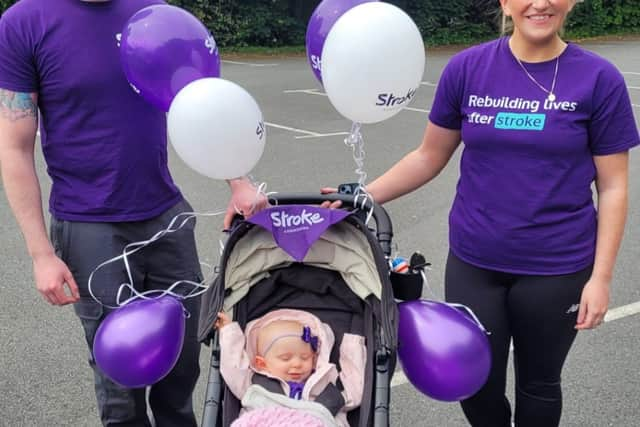
Anna with her parents Lauren and Craig
Anna from Derry was born in June 2023 by emergency C-section and was said to be a perfectly healthy baby. After a few days on the labour ward with parents, Lauren and Craig, Anna began to show signs of 'strange repeated rhythmical movements.'
“It was so overwhelming and scary,” said Lauren. “Everything was a blur at this time, I don’t think either of us could really process what was going on.”
Anna was quickly transferred to the Neonatal Intensive Care Unit (NICU), where she was tested and monitored relentlessly. On the seventh day at the NICU, doctors decided to carry out an MRI scan of Anna’s brain, which showed signs of a stroke.
“Once the stroke was detected, everything was fast-paced. We were given an endless list of likelihoods for Anna’s development. We didn’t know where to go or who to turn to.”
In their darkest hours, Lauren and Craig contacted the Stroke Association’s Childhood Stroke Support Team.
“The lady on the call listened to me for hours and provided our whole family with support and guidance. I will be forever grateful for this call,” said Lauren.
“We also received peer support from another Mum on the same journey as us. She provided us with so much hope that our future would be brighter and happier times would come. She is a friend that I never knew I needed and in turn I can pass on her advice to more parents and care givers.”
The Stroke Association is the only charity in the UK providing lifelong support for all stroke survivors and their families. The charity provides tailored support to tens of thousands of stroke survivors each year, funds vital scientific research, and campaigns to secure the best care and support for everyone affected by stroke.
The charity provides a number of ways to connect stroke survivors with people with lived experience of stroke. These include Stroke Association support groups where survivors can share experiences and make new friendships; a weekly phone conversation with a trained volunteer where survivors can talk to somebody who has had a stroke or cared for someone who has; and the charity’s Online Community which connects thousands of people who understand stroke first-hand, providing support throughout recovery.
The Stroke Association supports stroke survivors and their families by phone, at home, and in the community. Find out more at www.stroke.org.uk