
What does the future hold for the SDLP? by Ruairi O'Kane
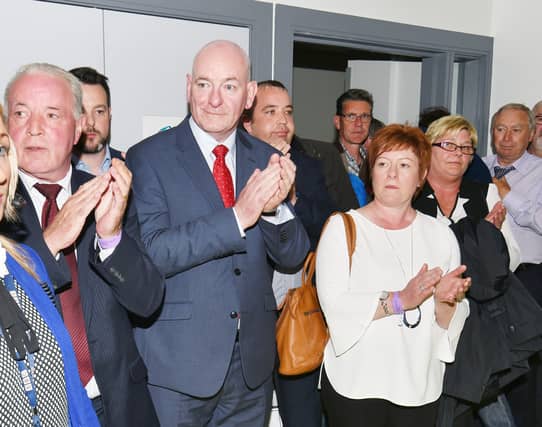

After a devastating election for the SDLP, Derry man Ruairi O’Kane, a former Director of Communications with the party, considers where it goes from here.
They have become known in the trade as ‘Portillo Moments’.
The political metaphor was born 20 years ago at 0310 on 2 May 1997 when Michael Portillo, the sitting Conservative MP, lost his Enfield Southgate seat to then relatively unknown Labour candidate Stephen Twigg.
This pivotal episode epitomised the electoral tornado that blew New Labour into power and Tories out of office after 18 years.
The ‘Portillo Moment’ of the 2017 general election was on our own doorstep in Foyle as Sinn Fein’s Elisha McCallion ripped the local Westminster seat from the hands of Mark Durkan and the SDLP.
In Northern Ireland politics, big hitters don’t come much bigger than Durkan whose scalp will be prized by the victors.
In years to come, the ending of four decades of SDLP dominance will be remembered as a critical event for both parties.
The defeat of Durkan and the SDLP in its’ spiritual heartland is a devastating one for the party.
It completes the hat-trick for Sinn Fein having already eclipsed its rival at council and assembly level.
McCallion’s poll topping performance in March’s Stormont ballot would have put the SDLP on notice that the seat they had held relatively comfortably since John Hume’s 1983 victory was up for grabs.
And its loss now poses fundamental questions for the party and its leader Colum Eastwood.
Durkan should be judged as one of Ireland’s finest parliamentarians and is a genuinely honest and decent man.
He can rightly lay claim to drafting significant portions of the Good Friday Agreement including the concept of the joint office of first and deputy first minister.
A former finance minister and deputy first minister he secured the gifting of former military sites such as Ebrington to the Northern Ireland Executive.
As MP he secured pension entitlements for the staff of the liquidated textile firm Desmonds and on the day of the publication of the Savile Report, evoking the words of Seamus Heaney, his tribute to the dead of Bloody Sunday brought the hurt and healing of his constituency to green benches of the House of Commons.
The loss of someone of Durkan’s calibre makes McCallion’s win more impressive and more damaging for the SDLP.
It would be unfair to lay the blame for the defeat at the door of Eastwood who has faced three elections and a referendum in his 18 months at the helm of his party.
The collapse of the Executive late last year meant he had little time to make an impact has an official opposition.
And on paper the return of 12 MLAs in the subsequent election appeared a reasonable result.
However, but for a few lucky bounces of the ball it could have been much worse and one is left with the increasing suspicion that another poll would erase quite a bit of this consolidation.
Eastwood is a polished media performer and impressive in televised debates. But this cannot be a substitute for political strategy.
Much has been made about the gargantuan effort put in by Sinn Fein to unseat Durkan.
In truth, Sinn Fein’s organisational ability is it such a level it is unlikely to be ever matched by the SDLP.
They cannot match the physical and financial resource of their nationalist rivals.
But the fundamental issue is that should they ask any individual for their time as an activist, their money as a donor or their vote as a constituent, not being able to answer the question ‘why?’ is quite the stumbling block.
The surge in nationalist electoral engagement has swept behind Sinn Fein but not the SDLP.
Many voters don’t know or don’t care that the SDLP was on the right side of history.
Having the best answers to Brexit or taking a seat in Westminster didn’t hit home either.
Voters like football fans like to see their teams win.
Voters unlike football fans tend to switch sides.
Electoral recovery is not beyond the SDLP. The likes of the SNP, the Conservatives and Fianna Fail have all hit the bottom only to bounce back in opposition.
But the road does appear to be running out for the party. It doesn’t have another bad election left in it.
Sinn Fein’s all-Ireland dynamic is one that has proved increasingly attractive to nationalists.
As such, political salvation for the SDLP is more likely to come from Dublin than Westminster.
Fianna Fail are expected to organise and compete in northern elections from 2019.
Realignment has been mooted in the past – it may now be the only option for the future.
Eastwood as a northern leader of a new all-island project may provide an attractive alternative to a re-energised nationalist electorate.
With the SDLP no longer ‘invictus’ in Foyle, Eastwood may be the master of his party’s fate but the captain of its destiny may be lurking on the other side of the border.