
Work on Altikeeragh bog restoration project halted


'We had to call a halt to it because it was way too wet, we were doing more damage than good at that stage' - Laura McAuley, Natural Heritage Project Officer.
A bog restoration project in County Derry has had to be paused due to the inclement weather.
Causeway Coast & Glens Heritage Trust is leading the Altikeeragh bog project, near Castlerock, and
hopes to start work again in the New Year.
“The work didn’t start until the last week of September and lasted for about a week,” said Laura McAuley,
Natural Heritage Project Officer.
“ We had to call a halt to it because it was way too wet, we were doing more damage than good at that
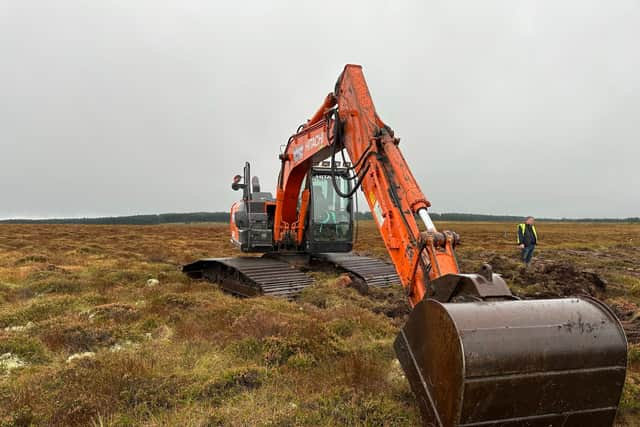
The team was unable to start the work earlier in the year due to the breeding season.
With the hope of reducing climate change, the restoration project aims to resume Altikeeragh bog
functions to a healthy bog ecosystem. It acts as a carbon sink, helping against climate change and for the
carbon to stay in the ground.
“We’re hoping to go back up at the beginning of the New Year, providing that it dries up a bit,” said
Laura.
Bogs are a vital part of Ireland’s life and culture. Used as a heating source for generations, bogs are
essential for the fight against climate change.
Beyond their value for the animals' and plants' biodiversity, bogs reduce carbon in the atmosphere, flood
risks and provide sustained flows to waterbodies in periods of drought and also reduce water sediment,
releasing cleaner water.
Altikeeragh bog has the story of a typical bog: cut for peat or creation of drenches to dry it. It is part of the
habitat called blanket bog. Draining bogs has a negative impact by lowering the water table and drying the
land. It leads to habitat change, resulting in the loss of species.
Dr. Raymond Flynn, associate Professor in Environmental Hydrology at Queen’s University Belfast, was
part of the project. He had to map out the existing dams and how well they functioned.
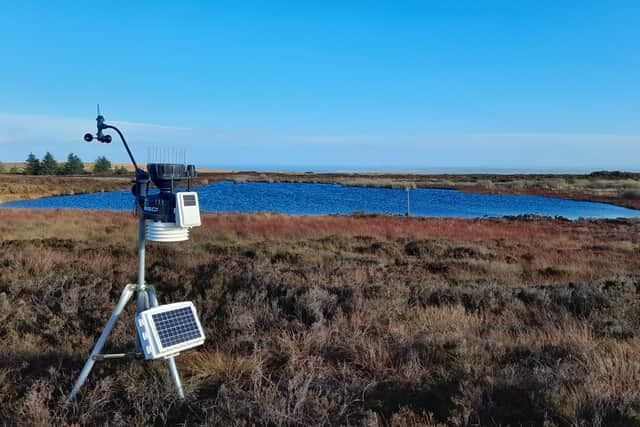
They also studied the water levels in the bog and installed devices to record water levels for years to
come. It will allow the team to know in the future if the peat dams function properly.
He said that bogs ‘cover anything between a quarter and 1⁄6 of the island of Ireland’ and 'occupy
“Altikeeragh is one of the least damaged pieces of blanket bog in all of Northern Ireland's protected area,"
said Dr Flynn. "It's an ASSI but despite that, it's experienced some very significant damage, notably from
drainage."
“So the idea here is that Altikeeragh is a wetland so we need to keep the water level high near the ground
surface all of the time for the plants to survive. The drains drop the water level and the plants that make
the peak basically die off.
“So the restoration program has the objective of restoring that to try and get the plants that make the peat
to come back grow more widely in the area.”
In the project, some of the most damaged drains will be blocked off by peat dams. Peat dams are a
technique where the soil is turned over to create an impermeable barrier to the water flow. These natural
peat dams ask for an excavator to come on-site. This technique, often used to regenerate bogs, reduces the
water movement and recreates a healthy bog environment.
“The reason we look at the water is quite simple," said Dr. Flynn. “When we put in the dams, the water
level responds much more quickly. Whereas if we're waiting for the plants to regrow, we have to wait for
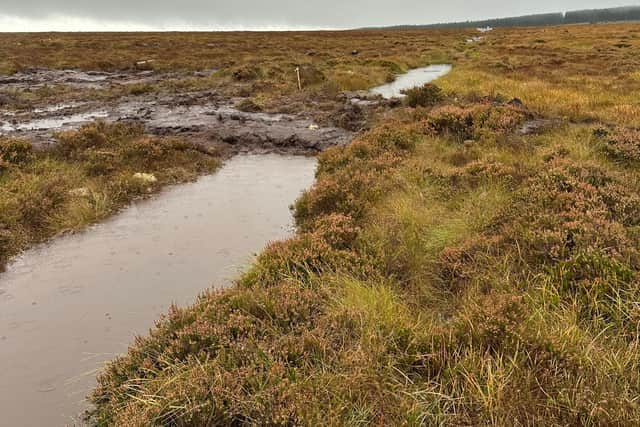
However, due to the weather and the wetness of the bog due to this summer’s rain, other methods are
considered. Laura said that if no other methods are studied, the project might not happen at all.
“It may be a case that we'll have to use some plastic dams. There are already plastic dams at the far end of
the peatland nature reserve. We were going to do remedial repairs on them because they're not totally
functional.”
These plastic peat dams date from the 1990s on Altikeeragh bog.
“We are going to put a sheet of plastic dam every 10 meters and that will block up the water behind or
have a little notch in the middle that will let water flow through.
“We're trying to think about alternative ideas that may not require as heavy a digger or an excavator on
site. But the plastic dams, you can put them on by hand. But we're not big fans of putting plastic
anywhere.
The plastic sheets used to create the peat dams will stay in the grounds for many years. Plastic dams are
used all over the UK to regenerate bogs as it is an efficient method.
With the restoration of Altikeeragh bogs, they hope for the return of Hen Harrier and Waders breeding in a
better quality habitat.
“By carrying out these restoration works on the bog we are breathing new life into a once well-established
bog which flourished with sphagnum mosses and priority bird species which have seen historical
degradation through peat cutting and drainage,” said Laura.
“We hope that by engaging the local communities we can raise awareness of the importance of water
quality in relation to our local peatlands and help people understand why improving our peatlands is so
important for our future generations.”
The National Lottery Heritage Fund, NIEA Water Quality Fund and the Binevenagh & Coastal Lowlands
Landscape Partnership Scheme are partners in this regeneration programme.