
Donegal can harness opportunities through diaspora engagement, study finds

Forty-seven per cent of respondents said they already actively engage with the diaspora, while a further 35 per cent said they would like to do more than they currently are
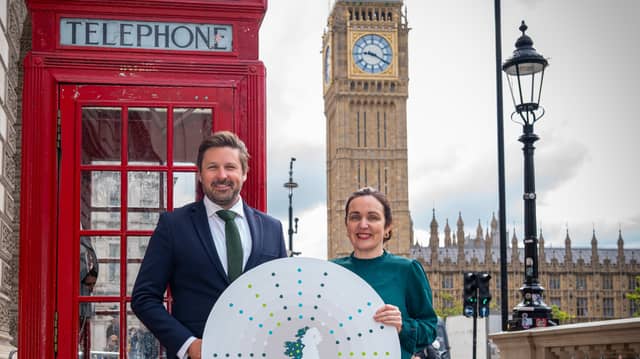
A new report launched today by the Western Development Commission has found that Donegal and other counties in the Western Region could unlock significant new opportunities.
These, it is stated, are possibilities for communities, enterprise, tourism, talent attraction and international connectivity through a stronger and more coordinated approach to diaspora engagement.
The report, Connected Communities, Global Relationships, is the first comprehensive regional study of its kind and examines how people and organisations in Donegal and the West of Ireland work to build meaningful links with people overseas who retain family, cultural, professional and emotional connections to the region.
Drawing on 240 responses representing 178 organisations and groups, the research found that diaspora engagement is notably strong across the region, led by local authorities, community organisations, heritage groups, tourism projects, sports clubs and educational institutions, with much of the activity underpinned by volunteerism and personal commitment.
Forty-seven per cent of respondents said they already actively engage with the diaspora, while a further 35 per cent said they would like to do more than they currently are.
The strongest motivation identified was maintaining bonds of friendship and connection, ranking ahead of fundraising or commercial return. Respondents also pointed to the importance of diaspora links in supporting tourism, local pride, skills exchange, business opportunities and long-term community resilience.
However, the report also found that much of this work is taking place without dedicated resources, shared systems or consistent strategic support. Many organisations cited lack of time, staffing capacity and difficulty maintaining long-term relationships despite strong goodwill and growing demand.
The study identified key international links for the region across Britain, North America, Australia and mainland Europe, with cities such as London, Boston and New York continuing to feature strongly as important centres of connection.
Speaking at the report launch, Allan Mulrooney, Chief Executive of the Western Development Commission, said: “For Donegal and the Western Region, diaspora relationships represent a significant strategic asset. They include skills, experience, networks, advocacy, cultural capital and investment potential. Few regions have experienced migration on the scale seen here or retain such strong emotional and practical connections across generations.
“With stronger coordination, dedicated support and sustained ambition, the potential exists not only to deepen existing relationships but to unlock new opportunities for communities, enterprise and future generations across the region.”
Dr Aisling Moroney, who led the research on behalf of the WDC, said: “This study shows very clearly that the foundations for stronger diaspora engagement already exist across the West and Northwest. Communities, local authorities, festivals, heritage groups and many other kinds of organisations are maintaining valuable relationships every day, often through volunteer effort and with limited resources. What emerged from the research was not a lack of interest or ambition, but a clear appetite to do more and to strengthen what already exists.
A notable theme of the work being done is the strong sense of responsibility towards ‘our people abroad’, accompanied by a desire to honour and maintain connections with the generations of people who emigrated from this region So the kind of diaspora engagement that we are talking about strengthening is not necessarily about ‘asks’ but about mutual respect and mutual benefit”.
The report highlights a series of case studies from across the region, including island communities, festivals, heritage projects, local authority strategies, cultural centres and international initiatives that demonstrate what can be achieved when strong local identity is matched with practical outreach and sustained relationships.
Donegal has a notably strong history of both emigration and of staying connected with its diaspora, reflected in the three case studies in the report, which feature organisations in the county. Donegal County Council is the only local authority in the country with a named Diaspora Officer, Eoin Leonard, who works within the economic development team.
Donegal County Council maintain a busy calendar of engagement across key cities, including London, Glasgow, Boston, Philadelphia and New York, runs the iconic Tip O’Neill Irish Diaspora Awards and due to having a dedicated role, has the capacity to do the kind of slower work of follow-up and relationship building that is central to this work. The potential to do more exists if additional resources were available. As Eoin Leonard puts it: “If I could photocopy myself, it’d be great”.
The Mary from Dungloe Festival, also featured in the report, has its origins in attempts to create something that would bring the diaspora back to West Donegal, even if only for a short time each summer.
In 2025, they had 45,000 visitors over a 10-day period but here again, they know they could do more with additional support. For committee member Gavin Doyle, the single most useful extra support would be someone focused on marketing and reach, a dedicated person, even part-time, who could help with promotion, visibility and contact-building, freeing up the volunteer team to manage everything else.
Engagement with diaspora is also part of the work of Comharchumann Forbartha Ghaoth Dobhair, which has been part of community life in the Gweedore area since 1989. Events like Scoil Gheimhridh Ghaoth Dobhair, and initiatives like the dedication of a room in their centre, An Chrannóg to genealogy and local history provide points of interaction with people with roots in the area but in a very informal way.
An Chrannóg is housed in the formal technical school, and Manager Caitríona Nic Gairbhigh has been surprised at “the amount of people that just wander in and they say my dad or my granddad learned his carpentry here before he moved to Boston, or whatever it is.”
To help support the work of the three organisations above and others seeking to amplify their diaspora engagement efforts, the WDC report recommends stronger regional coordination and networking, improved access to shared communications and engagement tools, more structured collaboration between organisations and a greater focus on converting goodwill into practical action. It also points to the value of recognising that different diaspora groups may engage for different reasons, from heritage and identity to business opportunity, return migration or skills exchange.
The Western Development Commission will host a public webinar on Tuesday, June 2, at 11am to examine the report findings and discuss how communities, agencies and diaspora networks can work together to build the next phase of engagement across the region.