
Glenties doctor recalls harrowing mission in South Sudan

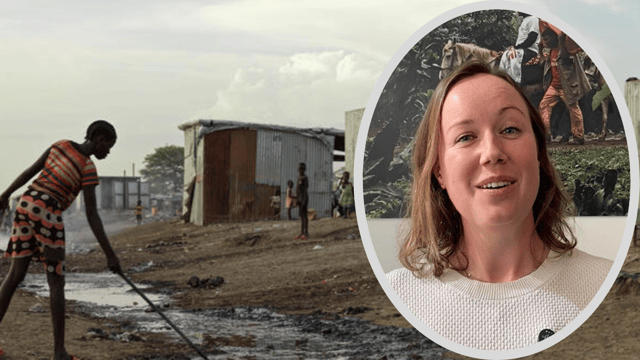

Dr Louise McKenna has just returned from her assignment working in the Bentiu IDP camp in South Sudan, where she was faced with a range of medical challenges, including treating patients suffering from severe dehydration, advanced HIV, and severe malaria.
A Glenties doctor has told of the challenges faced working in one of the world’s most difficult humanitarian environments.
Dr Louise McKenna has just returned from her assignment working in the Bentiu IDP camp in South Sudan
The Bentiu IDP camp is one of the largest displacement sites in the country, set up following the outbreak of the country’s brutal civil war to provide shelter and protection to those fleeing the violence.
She was faced with a range of medical challenges, including treating patients suffering from severe dehydration, advanced HIV, and severe malaria.
The hospital served as a critical healthcare facility for individuals who had travelled long distances, sometimes from conflict zones, to seek assistance.
“Our resources were limited, and often patients arrived incredibly unwell, with advanced conditions,” Dr McKenna said.
“Many of these cases I found particularly harrowing, especially as they were often preventable conditions.”
The already-challenging circumstances, in an area beset by conflict and with a humanitarian crisis taking a toll, were exacerbated by the baking temperature, often exceeding 40c.
Dr McKenna works with Médecins Sans Frontières (MSF) - ‘Doctors Without Borders’ - an international humanitarian organisation providing medical care in over 70 countries.
She said: “In South Sudan, unfortunately there is a lack of resources, including public health infrastructure and secondary level hospitals. In working in South Sudan, I found myself relying heavily on the resources available and especially my own clinical skills.
“Our MSF hospital was the only secondary healthcare unit for many miles and has a very large catchment area, including people seeking safety and medical care from across the border in Sudan where there is an ongoing war.”
She recalled how a young mother was sent home after a six-week hospital admission with a severe infection that resulted in her losing the power of her limbs, and she even had difficulty talking and swallowing.
Dr McKenna said: “Her little six month old baby girl, Nyayup, was with her, along with her sister as a carer, and they really became part of our ward family and team.
“There were times that she was very unwell and I didn't think she would make it, but with ongoing care and support of the team and her family, she slowly regained strength, her speech, ability to eat, and was able to sit up before we happily discharged home with the support of our community nursing team.
“We were sad to see them go but very happy that this was a good-news case. The last I heard was that she was continuing to recover well, and I hope that's still the case."
The limited resources and facilities available heightens the challenge for medial professionals further.
Dr McKenna said: “Many areas of South Sudan suffer from food insecurity, rising inflation, malnutrition, neglected tropical diseases, effects of climate change as well as the threat of violence.
“Since the war in Sudan began in 2023, South Sudanese returnees and Sudanese citizens seeking safety often make long and dangerous trips to our hospital to access healthcare they would otherwise not be able to receive and patients are often extremely unwell on arrival."