
Households urged to step up electronics recycling as rare earth crisis deepens
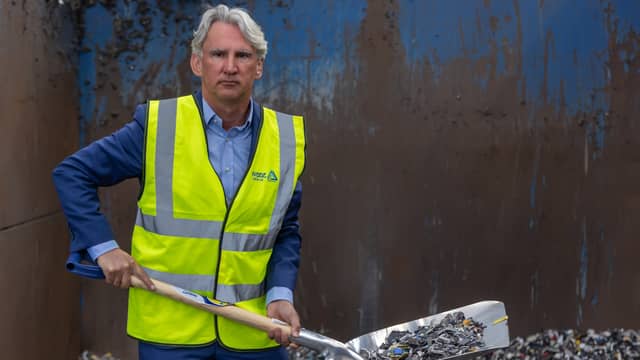

Donegal households are sitting on a treasure trove of old electronic devices and appliances that could help Ireland secure a supply of vital raw materials and weaken China’s grip on global technology production.
Donegal households are being urged to recycle more old electrical and electronic waste as new figures show the county lags behind the national average - and as Europe faces a growing crisis over access to rare earth minerals used in everyday technology.
Figures released by WEEE Ireland to mark International E-Waste Day show that consumers in Donegal recycled 1,109 tonnes of electrical and electronic waste in 2024, the equivalent of 6.6kg per person.
That’s below the national average of 9.5kg per person, and well behind the best-performing county, Carlow, at 11.6kg. Although it's well ahead of Leitrim which is the national laggard and recycles just 4.8kg per person.
The appeal to boost Donegal’s recycling efforts comes amid rising global tensions over the supply of rare earth minerals - the materials essential for manufacturing phones, computers, electric vehicles, wind turbines and other technologies that drive the green transition.
China recently extended curbs first introduced in 2024 on the export of these minerals and on the equipment used to mine and refine them on grounds of its own national security.
The EU’s trade commissioner, Maroš Šefčovič, described the move as unjustified, calling the restrictions “a matter of critical concern” for the European economy.
“These developments highlight just how vital it is that we recover every bit of value from our own e-waste,” said WEEE Ireland CEO Leo Donovan. “Every broken phone, hairdryer or game controller tucked away at home contains critical raw materials that Europe desperately needs if it’s to be less reliant on China.”
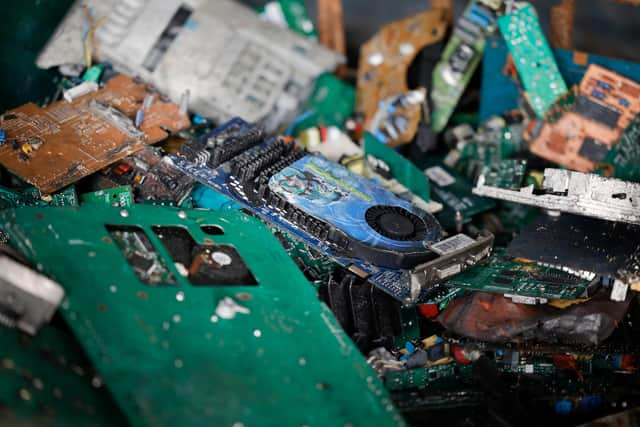
Old electronic devices and appliances contain critical raw materials
Research by WEEE Ireland shows that half of Irish consumers don’t realise their old devices contain critical raw materials such as aluminium, copper, lithium, and nickel - all of which are crucial to manufacturing and energy production.
A European report prepared for International E-Waste Day warns that one million tonnes of critical raw materials are hidden in Europe’s discarded electronics each year.
The EU’s Critical Raw Materials Act aims to meet a quarter of Europe’s demand through recycling by 2030, but currently only about 1% of those materials are recovered from e-waste.
Donegal residents can drop off old or broken electrical items, batteries, and cables for free recycling at civic amenity centres or participating electrical retailers across the county.
“With Irish consumers currently recycling only three old electrical items for every ten new ones purchased, the potential to make a difference is enormous,” said Mr Donovan. “If it’s old, broken, or obsolete - recycle it.”
For more information and local collection points, visit www.weeeireland.ie
.