
It Occurs To Me: The McConalogue betrayal
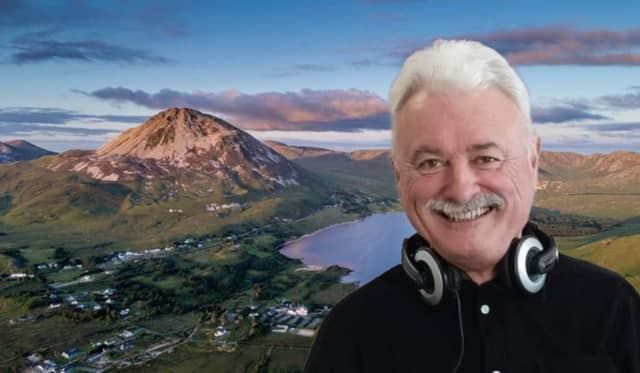

In his weekly Donegal Democrat column, Frank Galligan says the demotion of Fianna Fáil’s Charlie McConalogue from the Cabinet will only send more Donegal voters to Sinn Féin, and he also explores Donegal’s links to the battle of Little Big Horn
It doesn’t seem terribly long ago that many people were predicting that Charlie McConalogue would lose his Dail seat, because of the Mica controversy. Well, Charlie didn’t lose,
Pat ‘the Cope’ also took a seat, and Charlie Ward won for 100% Redress.
If we look at the breakdown of ministers last week , not only was Donegal ignored, but the whole border region around as far as Dundalk got the two fingers from HQ in Dublin.
The provincial breakdown of where ministers currently reside are eleven from Leinster, three from Munster, and one from Connaught.
Of the fifteen new Cabinet ministers, only three are women. Fine Gael has already been relegated in Donegal, and all that will be achieved by the demotion of Charlie McConalogue will be further apathy and disillusionment on the part of voters, many of whom will say: “A plague on all your houses!”, and switch to Sinn Féin.
Pearse Doherty had the highest vote in the last election, something that greatly displeased Micheál Martin in particular. Being unable to ‘punish’ Shinner voters - this is a democracy, after all - the county has been made to suffer by having no minister. To quote Dick Tuck, one of JFK’s chief advisers: “The people have spoken, the bastards!” They will speak again in Inishowen, and I foresee another Sinn Féin seat on the horizon.
The first Ward TD
Charlie Ward TD is not the first Donegal elected representative to grace the Dáil with that surname. The accompanying photo of the first Dáil, including Michael Collins and Eamonn DeValera, shows PJ Ward, known as Joe, (on left in third row), and according to his grandson Jack, “Apparently the first words on record in the Revolutionary First Dáil were from the Speaker to Joe, admonishing him when he stated ‘Deputy Ward, would you please put your rifle back in its allotted slot!‘.

The first Dáil, including Michael Collins and Eamonn DeValera, and PJ Ward, known as Joe
His first Dáil speech is worth reading: “I came here to this assembly opposed to this Treaty, as I believed then that the Dáil, by a big majority, would be opposed to it. It was not what we were fighting for; it was not the end the ultimate end—of what I had in view when I joined Sinn Féin; but, as I have said, I have listened here without interrupting any man, and I have formed my opinion from what I have heard, and from what I know are the facts of the situation. I have not been impressed by anybody on either side; nor has my opinion been formed for me; I have formed it myself.”
However, he later states: “I will vote for the Treaty under protest— not under protest in a sense, because I have a free will—but I will vote for it only as a stepping stone, and when the time comes I will be just as ready to take a part in the fight for independence as I have been in the past. After all, we here are split, as far as I can see, on which is the better way; that is the only thing that divides us.”
Joe was a man of great integrity but he suffered personally and politically as a result of his decision. He died in 1970 and was buried in Killybegs.
Little Big Horn: The Donegal Connection
In the late 1960s, one Orval Calhoun, who lived in Ontario, Canada, began pursuing his genealogy.
He interviewed all of his relatives, and ended up traveling to Ireland to record church records and gravestone inscriptions. He read extensively, learning of the aristocratic Colquhoun line going back to the 13th century. Then he published his landmark book: 800 Years of Colquhoun, Colhoun, Calhoun, and Cahoon History. It was a single volume that grew, over the next twenty years, into four huge volumes, filled with genealogies sent to him from all over the world.
The name Colquhon originated in Scotland, became Colhoun/Calhoun in east Donegal and one descendant was Lieutenant James Calhoun who was married to Maggie, a sister of Colonel George Armstrong Custer. Both men died at the Battle of the Little Big Horn. However, one soldier, who was actually born outside Donegal Town in May 1844, also perished there.
Sgt James Bustard was described as 5'6", hazel eyes, light hair with a fair complexion. His listed civilian occupation was clerk.
Bustard enlisted into the US Army on March 19, 1867, in New York, NY. On April 9, 1867, Bustard was assigned to Company K, 10th US Infantry Regiment. On August 4, 1870, he reenlisted and was assigned to Company I, 7th US Cavalry Regiment at Ft Leavenworth, KS. Company I was commanded by Captain Myles Keogh.
At the Battle of the Little Bighorn, Company I was considered one of the most senior and competent companies in the 7th. Bustard was killed during the battle. Burial parties found his remains near Myles Keogh's body in a low area between Calhoun Ridge and Last Stand Hill. Keogh was from County Carlow. As the 7th Cavalry rode into battle, the 600 men under Custer’s command included 103 Irishmen and 34 of those would die on the battlefield with their commander. James Bustard was likely first buried where he was found.
In 1908, Foolish Elk, a member of the Oglala Sioux, who fought with Crazy Horse related, in an interview: “As the soldiers started the firing, the Indians concluded that they desired to fight, and so they gave them what they appeared to want. In this fight the Indians thought they had won a victory, but it was understood that other troops were in the Indian country, and they concluded to go to the big village with Sitting Bull on the Greasy Grass Creek (Little Bighorn) without further loss of men and ammunition. They, therefore, withdrew and went over the divide to the Little Bighorn. He could not describe the exact route travelled, but did not think Custer's command could have followed any part of their trail except for a few miles before striking the village.
"They arrived at the village the day before the battle (June 24). There was then some kind of vague report that soldiers were coming, but they did not know whether it was the command of their recent enemy, Crook (Lone Star), or Custer whom they knew as ‘Long Yellow Hair’. In the village there were representatives of seven tribes of the Sioux. There was not much concern about the soldiers, as the Indians thought they had enough men to whip any force that would come against them, seeing that the Indians were all together for once - all the different tribes.
"On June 25 the fighting started at the Uncapapa tepees. On the part of the Indians there was no organised resistance, but men from all the tribes who happened to have their horses grabbed up their guns and went up the river to join in the fight. The fight did not last long, and before the larger part of the Indians could get there, they had chased the soldiers out of the river valley and up into the bluffs. The soldiers retreated across the river at the nearest point they could reach and seemed to be in too much of a hurry to take their back track to the ford where they had come into the valley.
"Before the Indians had decided what they would do with these soldiers who made the first attack, a force of soldiers was seen coming from the east (Custer). These men sat on their horses and fired across the river into the village, without getting into it.”
Foolish Elk afterwards heard that one man rode his horse over into the village and was killed, but he did not see him. That man was James Bustard.