
New book explores an alternative history of Partition and its impacts on Donegal
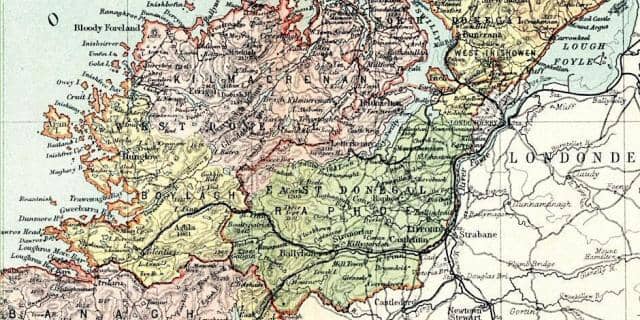

Dr Samuel Beckton, a historian from Belfast. is launching a new book with Peter Lang Publishers, as part of a commemoration of the centenary of the 1925 Irish Boundary Commission, on Saturday, October 4, at 2pm in the Donegal County Museum, Letterkenny
A major new work of counterfactual history, The Unbroken Covenant: Could Ulster Unionists Have Controlled a Nine-County Northern Ireland, 1920–1945?, will be launched in Donegal next month.
Dr Samuel Beckton, a historian from Belfast, is launching a new book with Peter Lang Publishers, as part of a commemoration of the centenary of the 1925 Irish Boundary Commission, on Saturday, October 4, at 2pm in the Donegal County Museum, Letterkenny.
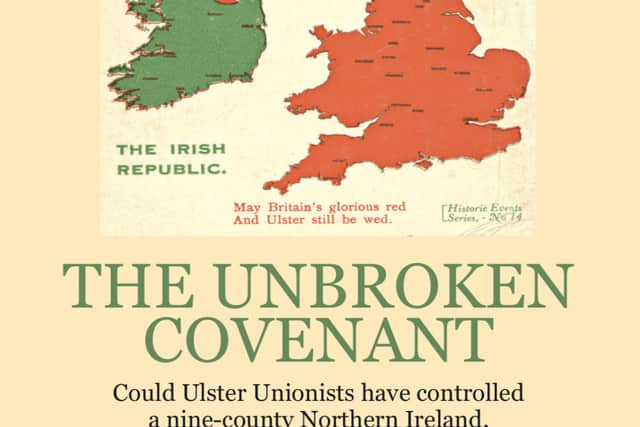
"This a counterfactual history to mark the centenary of the 1925 Irish Boundary Commission, as a reflection of the impact of partition, and subsequent questions of what the knock-on impact would have been. In particular, how would this altered timeline affected in the border counties?
"Could Ulster Unionists have controlled Monaghan County Council? Would Border County Unionists have been able to return representatives to Stormont? How would a nine-county Northern Ireland have influenced the Battle of the Atlantic during World War II? These questions, and much more, will be answered in this work as it looks at how history could have taken a different turn."
Through a series of thought-provoking chapters, the work considers whether Ulster Unionists could have maintained control in a nine-county state, and what that might have meant for Monaghan and Cavan in particular. It examines how border county councils and constituencies might have functioned under Stormont rule, and whether Unionists could have maintained their political dominance outside the traditional six counties.
The book also raises wider questions of geopolitics and conflict, including how a larger Northern Ireland might have influenced Britain’s war effort and the Battle of the Atlantic during the Second World War.