
'Piseoga' to Smartphones: How Donegal swapped superstition for screen


A Piseog is a traditional Irish folk belief or superstition, often expressed through charms, taboos, or rituals, used to bring good luck, ward off misfortune, or explain everyday events
For generations, Donegal people relied on Piseoga, superstitions, taboos, charms and rituals, to explain fortune and misfortune. Today, the same instinct for protection and order has simply shifted to the glow of the smartphone screen.
A Piseog is a traditional Irish folk belief or superstition, often expressed through charms, taboos, or rituals, used to bring good luck, ward off misfortune, or explain everyday events.
Today Donegal operates on the same modern rituals and behaviours you find in every western country. IBM once predicted the world would need only five computers. Bill Gates later imagined one in every home. Both were wrong. Now most homes have four, and a smartphone glued to every face in the Country.
Two weeks ago I was at the ALMC Rally in Oldcastle, Co Meath. Walking the track in search of a vantage spot to photograph the cars, I was greeted by a friendly local, Mark Elliott, who invited me in for coffee. Before long I was sitting in his conservatory with his wife and daughter. The conversation flowed easily at first, but within minutes I noticed all four of us had subconsciously slipped into our smartphones without even thinking.
The art of conversation is dying, and with it, respect for authority, spirituality, and belief in a higher power.
When you now go into a shop the lady behind the counter will always ask you "Are you all right" as opposed to the common courtesy of "How may I help you"
When Authority Still Mattered
But even before all that, Donegal life was shaped by an older system of belief, piseoga. From the 1910s through to the 1970s, these superstitious beliefs, taboos, and rituals guided farming, fishing, and community life. They offered explanations for fortune and misfortune and acted as unwritten rules of survival.
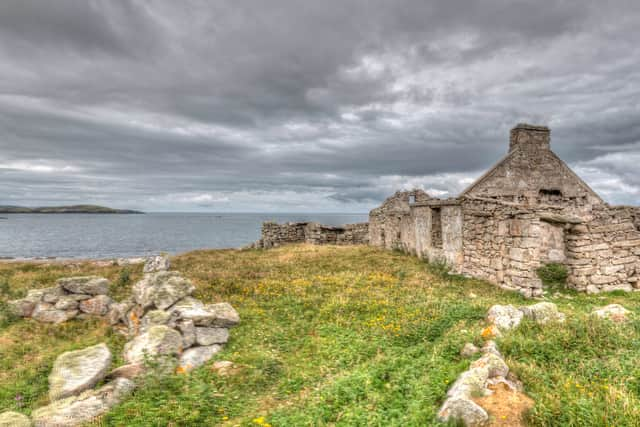
On the land, May Day was viewed as the most dangerous day of the year. If a neighbour borrowed milk, salt, or fire on that morning, it was said they could “take the butter of the year.” Families guarded against it by tying red cloths to cows’ tails, sprinkling holy water on thresholds, and refusing to lend. Women, as keepers of the churn, stood at the centre of both suspicion and defence.
My Aunt Biddie once told me that while visiting Brid Mhór Chonaill Chit around 1945 during milk churning, Brid quickly covered the churn for fear of Biddie ‘jinkising’ the operation. Only after Biddie left did the milk churning restart.”
Once Nellie Sheoirse boarded my father’s Mass bus with two large bottles of holy water. When asked about the rationale, she explained : “To protect against the lightning.”
An old lifelong unnamed friend, who passed away in 2021 at the age of 94, also comes to mind. A popular, pleasant and hopeful lady, she suffered many tragedies. Her husband died young, leaving her with four children and little means. Yet she survived it all, later explaining to me that it was her trust in Padre Pio that carried her through to her final years. My father organised an annual pilgrimage to Knock, and both Nellie Sheoirse and the unnamed lady were regular passengers. The belief in the healing power of Knock was indeed very strong.
Fishing communities had their own beliefs. Certain words, “rabbit” and “pig” among them, were never uttered at the pier. Boats were launched sunwise for luck. Fishermen carried medals, visited holy wells, and performed rounds at saints’ sites before the season. If someone broke a taboo, crews might refuse to sail until rituals restored order. Belief here was collective, not private, a way of controlling the uncertainty of the waves.

Wearing a scabál, a brown cloth for spiritual protection, was also a traditional ritual, and perhaps one that lasted longer than others. I clearly remember Martin McHugh wearing one in the 1992 All-Ireland Final. After he missed a score, Colm O’Rourke in the RTE commentary box, suggested that perhaps the miraculous cloth wasn’t working all the time.
Elsewhere, ritual places held their own authority. On Tory Island, the Cloch na Mallacht, the Stone of Cursing, was said to bring ruin on an enemy if turned. Such acts were often used to settle disputes over land or betrayal. Condemned by the Church, they nonetheless remained a part of the moral code of local life.
By the 1970s, these practices were fading. The Church, schools, electrification, and mass media dismissed them as superstition. Yet many clung on quietly. Farmers still refused loans on May Day, “just in case.” Fishermen still avoided forbidden words.
Today, smartphones may have replaced superstitions, and Wi-Fi may have replaced sacred wells, but the instinct is the same, a search for protection, safety, order, and meaning in a world we cannot fully control. Piseoga remain a living memory in
Donegal, reminders of how ordinary people once navigated faith, fear, and survival. With Ukraine, Gaza, crime, protests, and climate chaos, all impacting life in Donegal, maybe we need every Piseog we can find.
Eamonn Coyle is a Chartered Engineer and Chartered Environmentalist, originally from the Gaoth Dobhair Gaeltacht