
Post shredded and home entered, but Donegal tenant awarded no damages

RTB finds a technical breach of the tenant’s rights but rejects €5,000 compensation claim.
A Residential Tenancies Board (RTB) tribunal has rejected a Donegal tenant’s claims against a charitable housing foundation, despite finding a technical breach of his tenancy rights after a housing manager entered his home while he was away.
The case also involved the shredding of his post while he and his wife were abroad in the Philippines, along with a series of complaints about the landlord's handling of his tenancy.
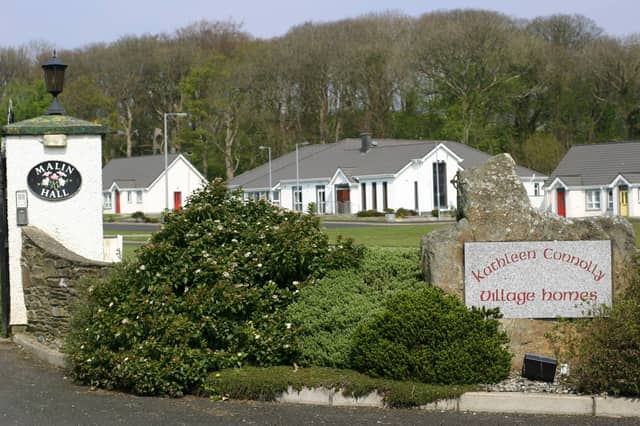
Bernard Vivian McLaughlin brought the case against the Kathleen and Michael Connolly Foundation, which provides housing at Kathleen Connolly Village Homes in Malin.
The tribunal heard that Mr McLaughlin and his wife had been tenants of a one-bedroom property since October 2015, paying rent of €433 per month.
At the centre of the dispute was what happened after the couple left Malin Town on March 13, 2025.
Mr McLaughlin told the tribunal that he and his wife had gone away on what he described as a holiday. He alleged that, during their absence, the foundation’s housing manager, Eleanor Farren, and her husband entered the property.
He also told the tribunal that some of his paperwork had gone missing while he was away. Mr McLaughlin said Ms Farren subsequently told him that some of their post had been shredded and that their postal service had been stopped.
Ms Farren told the tribunal that on March 14 her husband discovered a set of keys behind a stone outside the main entrance to the Foundation's facilities. She said she subsequently established that the keys belonged to the McLaughlins, who had left the village by taxi the previous morning. According to Ms Farren, the taxi driver told her that the couple had said they were leaving for good and would not be returning.
According to her evidence, Ms Farren and her husband went to the dwelling the following day. She described the property as being in a mess, with food everywhere. She said she obtained authorisation to clean up the food and subsequently secure the house, adding that she did not touch anything else inside the property.
The tribunal also noted that the couple had provided no forwarding address, given no notice of their departure and left both the property keys and postbox keys outside the Foundation's facilities. It also considered evidence that they had sold a number of their personal belongings before leaving Ireland.
Ms Farren outlined that the tenants’ external postbox was full and that she shredded the post because it had become water-damaged.
The tribunal ultimately accepted the landlord’s position on the post, finding that the Foundation had acted reasonably in collecting and shredding the post to protect the Tenants’ GDPR rights.
Ms Farren also outlined in her evidence to the tribunal that on 28 April 2025 she received a telephone call from a Donegal County Council employee informing her that the couple had presented to the council as homeless and Donegal County Council was wondering whether they could return to the property. She stated that the couple could return until they were "sorted.”
It was also confirmed at the hearing that the McLaughlins had remained tenants of the property, having first taken up the tenancy on 6 October 2015, with rent set at €433 per month. The Foundation had withdrawn a Notice of Termination issued on 13 February 2025.
The RTB panel also examined whether the housing manager had breached the tenant’s right to peaceful and exclusive occupation by entering the property without his consent.
Ms Farren acknowledged entering the residence, but maintained that she believed the tenants had vacated it permanently and that her actions were motivated by concerns for their welfare and the health and safety of the property.
The tribunal found that there had been a technical breach of section 12(1)(a) of the Residential Tenancies Act 2004.
However, it considered the entry to have been limited, undertaken for a specific purpose and based on circumstances in which the housing manager had good reason to believe the property had been permanently vacated.
The tribunal concluded that the impact of the breach was minimal and that an award of damages was not warranted. Mr McLaughlin also claimed that the handling of the post had affected his insurance arrangements, including his private health insurance.
The RTB tribunal examined correspondence concerning the couple's insurance policies. It noted that their health insurance had been cancelled from 9 February 2025 because of subscription issues, before they departed from Ireland.
The tribunal therefore found no basis for holding the Foundation responsible for the alleged increase in their tenants' insurance costs.
The case also covered complaints about a blocked toilet, a smoke alarm that continued to beep while awaiting a battery replacement, difficulties communicating with the Foundation's trustees and the operation of a new medical practice in the complex's common areas.
The RTB tribunal found insufficient evidence to uphold the complaints about repairs and communication with the Foundation. It also found no breach of the tenancy agreement in relation to the use of the common areas for the medical practice.
Mr McLaughlin had asked the tribunal to investigate how he and his wife had been treated and sought €5,000 in damages.
The Kathleen and Michael Connolly Foundation, represented by solicitor Philip White, maintained that it had acted fairly and conscientiously, believing the tenants had left the property permanently.
In its determination, the tribunal rejected the tenant's appeal over alleged breaches of the landlord's obligations. Although it found a technical breach in relation to the entry into his home, it ruled that an award of damages was not warranted.